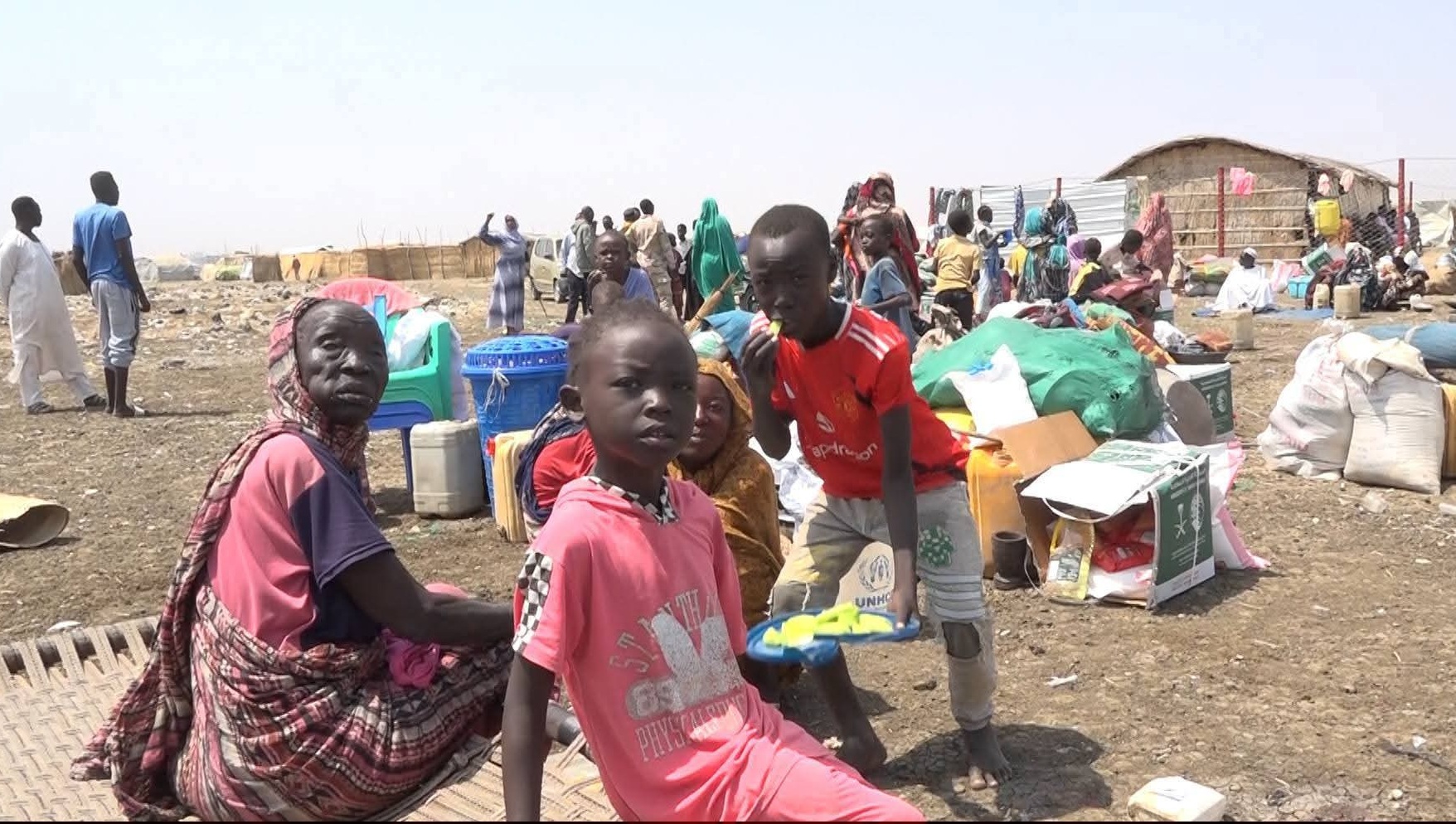
Prolonged hardship has forced most Sudanese families to grow accustomed to cutting their daily food intake to just two meals. As fighting has continued and intensified, household food stocks have run out, leaving dry bread and small amounts of lentils or beans provided by community kitchens as the main source of food.
“We ate only enough to keep from starving,” said Nahla. “Meat, milk, vegetables and fruit disappeared from our home, and even a cup of tea became a luxury. My children spent many nights hungry and frightened, while my husband’s health deteriorated because he has diabetes, food became scarce, and obtaining medication became increasingly difficult.”
After more than three years of war, Nahla’s story is no longer simply a reflection of the early days of the conflict. Food shortages have evolved into a widespread crisis, driven by the continuation of fighting, the collapse of the Sudanese pound, the loss of livelihoods and the deterioration of essential services.
The exchange rate of the Sudanese pound exceeded 6,000 pounds per US dollar on the parallel market in recent days, compared with rates ranging between 3,500 and 4,000 pounds per dollar at bank exchange offices.