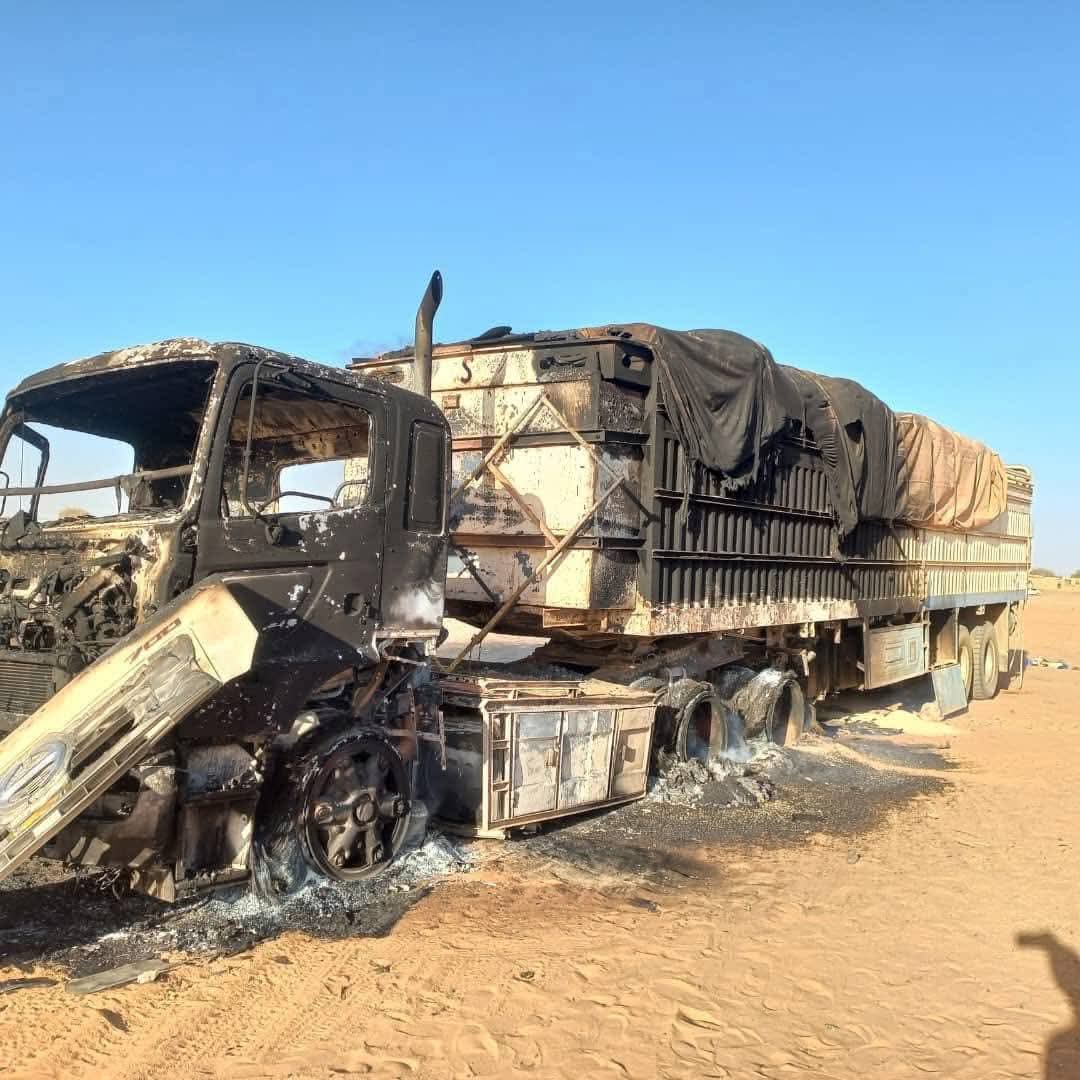
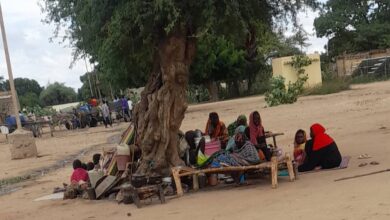
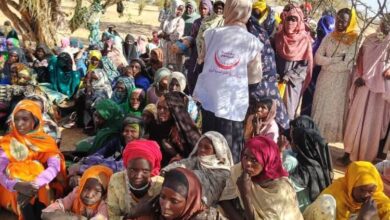
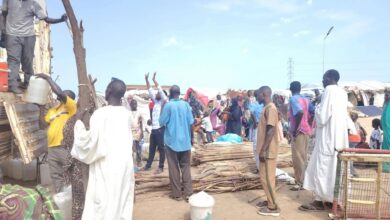
In recent weeks, attacks on humanitarian aid trucks by drones operated by both sides of the war—the Sudanese Armed Forces (SAF) and the Rapid Support Forces (RSF)—have escalated, despite international and regional warnings. This comes as humanitarian needs continue to grow among millions of Sudanese, particularly in areas affected by armed conflict, while aid organizations face security and logistical challenges in delivering assistance to affected communities.
Some 33.7 million Sudanese need humanitarian assistance this year, including 19.5 million facing severe hunger, amid warnings that 825,000 children are at risk of severe acute malnutrition and 3.4 million children are exposed to potentially deadly diseases.
Ongoing Attacks
The United Nations World Food Programme (WFP) said that two aid trucks belonging to the organization came under an air attack last Sunday east of Dilling in South Kordofan State.
In a statement, the WFP said: “The two trucks were carrying 50 metric tons of food supplies, including cereals, salt, peas and cooking oil, intended to save the lives of 5,800 people and provide enough food for one month.”
The statement described the airstrike as the latest example of the complex environment in which humanitarian organizations and aid workers operate. The programme said it had recorded eight attacks since the beginning of this year that damaged its facilities in Sudan and disrupted its humanitarian operations.
The WFP called on all parties to the conflict to respect international humanitarian law by protecting civilians, humanitarian workers and humanitarian assets. It stressed that attacks on aid workers and humanitarian operations are “unacceptable and must stop.”
War Crimes
Meanwhile, former Humanitarian Aid Commissioner in South Kordofan State Nasser Al-Tihami said that “targeting humanitarian aid convoys constitutes a grave violation of international humanitarian law and may amount to war crimes, particularly when food and medicine trucks are bombed or starvation is used as a method of warfare.”
He added that “air attacks on aid trucks have continued to increase by both sides of the war in Sudan, with little regard for the humanitarian crisis and the needs of millions for food and healthcare, particularly in active conflict areas such as Kordofan, Darfur and Blue Nile.”
Al-Tihami called for urgent action to strengthen accountability mechanisms and ensure the protection of humanitarian workers, as well as secure, non-discriminatory and unhindered humanitarian access to civilians. He warned that “the continuation of these violations will further aggravate the humanitarian crisis in the country.”
Determination and Pressure
Humanitarian affairs specialist Murtada Al-Sharif said that “the continued bombing of humanitarian aid trucks must be met with firm action and pressure from regional and international institutions,” adding that such a response had not been evident in the past despite documented attacks on more than 17 humanitarian convoys.
Al-Sharif noted that “the delivery of humanitarian aid has become a subject of mutual suspicion and reservations between the Sudanese Army and the RSF, in addition to the lack of trust and the possibility of either side controlling crossing points, which could potentially turn them into channels for arms transfers.” He also pointed to the absence, so far, of a clear mechanism for managing humanitarian operations.
The humanitarian specialist argued that “the solution lies in activating a humanitarian truce, opening corridors for aid, and allowing humanitarian actors to reach those in need so that the growing hunger can be contained,” amid rising food prices. He also suggested that the UN refugee agency could consider delivering assistance through direct cash transfers.
Restrictions and Hunger
Meanwhile, volunteer activist Hassan Jamal said that “the simultaneous obstacles to humanitarian access and continued drone attacks on aid trucks are among the factors making the situation more complicated and casting an even darker shadow over the future of the catastrophic humanitarian situation in Sudan.”
Jamal explained that “ongoing fighting and airstrikes in the states of Kordofan, Darfur and Blue Nile, along with looting and restrictions imposed on the movement of humanitarian convoys, are among the biggest obstacles preventing food and medicine from reaching millions of people in need. This is increasing the risk of famine and severe acute malnutrition among millions of civilians.”
He continued: “Basic humanitarian assistance in the Darfur region has been suspended for months, while displacement camps are facing severe shortages of essential resources and healthcare services. Food, medicine and shelter supplies are repeatedly targeted, threatening civilians’ lives and obstructing the delivery of humanitarian assistance.”
Condemnations and Outrage
At the same time, the European Union and the diplomatic missions of Britain, the Netherlands, Sweden, Ireland, Germany, France, Denmark, Canada and Norway condemned the attack on a World Food Programme humanitarian aid convoy in South Kordofan, which resulted in injuries to two civilian drivers and damage to humanitarian supplies.
In a statement, the diplomatic missions said that “the trucks were clearly marked with World Food Programme insignia, and all relevant parties had been notified of the convoy’s movements, as required under the circumstances of the conflict.”
The statement added that “acts that prevent civilians from accessing life-saving assistance and directly contribute to harming them, as well as attacks targeting humanitarian workers and their activities, constitute violations of humanitarian law.”
The missions stressed the need for a credible investigation into the incident, including clear accountability mechanisms where appropriate, in order to prevent similar attacks from recurring. They noted that “repeated attacks on aid convoys and continued obstruction of humanitarian operations will only exacerbate the suffering of millions of civilians.”
The group of Western countries renewed its call on both parties to the conflict to take the necessary measures to protect civilians, including humanitarian workers, and to facilitate safe, rapid and unhindered humanitarian access.
The statement also said: “We renew our calls on those contributing to these violations through arms transfers, including the use of drones, to recognize the consequences of their actions for civilians.”