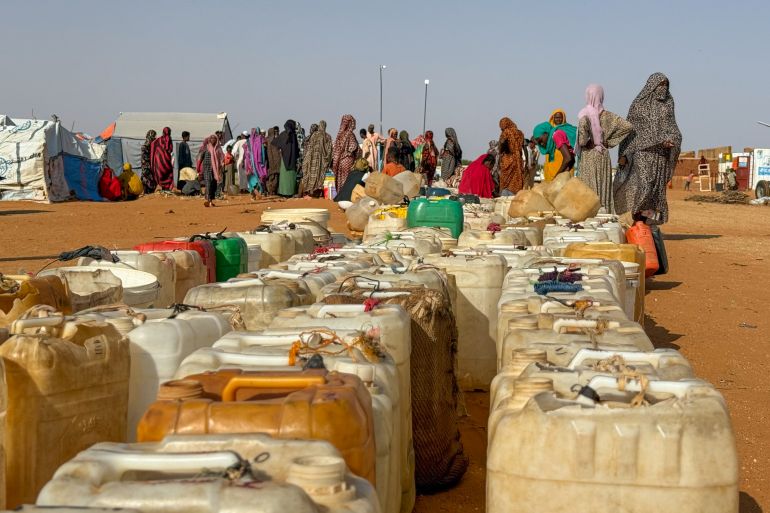
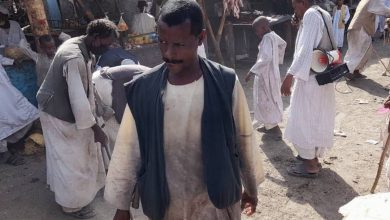
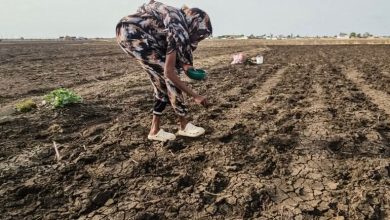
Cities, conflict-affected areas and displacement settlements across Sudan are facing a severe drinking water crisis following widespread destruction of infrastructure and water stations. Attacks by the Rapid Support Forces (RSF) using suicide drones on electricity generation facilities across Sudan have also disrupted water supplies from groundwater wells that rely on electricity.
These conditions have led to an unprecedented deterioration in access to drinking water, particularly as the number of displaced people has increased in the states of Kordofan, Darfur and Blue Nile. Thousands of Sudanese have resorted to drinking water from shallow wells and using alternative water sources, contributing to the spread of diseases.
Destruction and Recovery Efforts
The United Nations Children’s Fund (UNICEF) said that attacks on water stations across Sudan were depriving families of access to safe water and worsening the humanitarian crisis.
The organisation noted that it was working with its partners to rehabilitate water stations and restore essential services to ensure that children and families could access clean water.
In a statement issued in May 2025, UNICEF reported that the conflict had damaged water and energy infrastructure in 13 of Sudan’s 18 states, affecting the operation of approximately 70 per cent of water facilities through partial or complete damage.
The statement confirmed that damage to water treatment plants, wells, storage reservoirs and distribution networks had deprived approximately nine million women and children of access to safe drinking water in their homes, schools and healthcare facilities.
The organisation stressed that displaced people living in camps and shelters face even greater risks because they have fewer opportunities to access safe drinking water and adequate sanitation services.
Deepening Crisis and Human Suffering
Meanwhile, Al-Fadil Mohamedin, a resident of Al-Rusairis locality in Blue Nile State, said that continuous RSF drone attacks on several towns and areas across the region had destroyed most drinking water stations. This had placed enormous pressure on already limited water sources, particularly following the increase in the number of displaced people over the past week.
Speaking to the Mashawir platform, Mohamedin said the water crisis was worsening without any fundamental solutions. Although volunteers had intervened by distributing water using tanker trucks, their efforts had provided only temporary relief in some displacement camps.
He explained that children, older people and patients were suffering severely from the consequences of the water shortage in displacement settlements. He called on international and regional organisations to intervene and reach the camps to address the drinking water crisis.
Diseases and Deaths
For his part, Hamouda Al-Nayer, a humanitarian volunteer working in displacement settlements in West Kordofan State, said that a densely populated town hosting people fleeing fighting in Al-Khowei, Al-Fula, Khamas and Abu Zabad was experiencing a severe water crisis. The situation had exceeded volunteers’ capacity to respond to growing needs as most of the town’s water sources remained out of service.
Speaking to Mashawir, Al-Nayer pointed out that the lack of access to clean water in towns and villages across the region had contributed to the spread of diseases, leaving hundreds of people infected and resulting in dozens of deaths.
He also noted that the number of displaced people arriving in Al-Nuhud from Um Sumeima, Al-Dawadiya and Ghubaysh continued to increase daily. These families urgently needed clean drinking water.
Al-Nayer said volunteers were working to address the crisis and prevent a severe humanitarian catastrophe among people fleeing the fighting.
Risks and Infrastructure Damage
Hazem Al-Numair, a specialist in irrigation and urban water systems, explained to Mashawir that water infrastructure in conflict zones had sustained extensive damage, either through direct attacks or prolonged neglect and lack of maintenance.
He added that several cities and towns depend on pumping stations requiring a stable electricity supply. Repeated power cuts force these stations to shut down, interrupting water supplies even in areas where the distribution networks have not been directly damaged.
Al-Numair explained that drone strikes in Kordofan, Darfur and Blue Nile states had significantly reduced the production capacity of drinking water facilities. Meanwhile, maintenance operations had become extremely limited because of insecurity, meaning that breakdowns persisted for longer periods without repair.
“What we are facing is not merely a temporary interruption, but a structural failure of the service delivery system that requires comprehensive intervention to rehabilitate it, rather than temporary solutions alone,” he said.
The urban water specialist added that the problem extended beyond the water infrastructure itself because water supplies were closely linked to electricity. When power is cut, water pumps stop operating. Consequently, even when water should be available, it fails to reach residents in nine Sudanese states affected by armed conflict.
Urgent Appeal for Assistance
Meanwhile, volunteers issued an urgent appeal to the North Kordofan State government to rescue approximately 102 villages surrounding the town of Um Sayala, where residents have reached a critical level of water deprivation due to shortages caused by damage to water stations and major water sources.
The volunteers called for wells to be equipped with solar-powered systems and for modern, high-efficiency water pumps to be provided to meet the needs of residents and livestock, enabling people to remain in their communities.
Thousands of villages across North and West Kordofan states depend on traditional water sources, including facilities locally known as dawanki, as well as water pumps.
The situation has become increasingly difficult due to the lack of safe access routes, the presence of armed groups, the suspension of maintenance operations and ongoing fuel shortages.