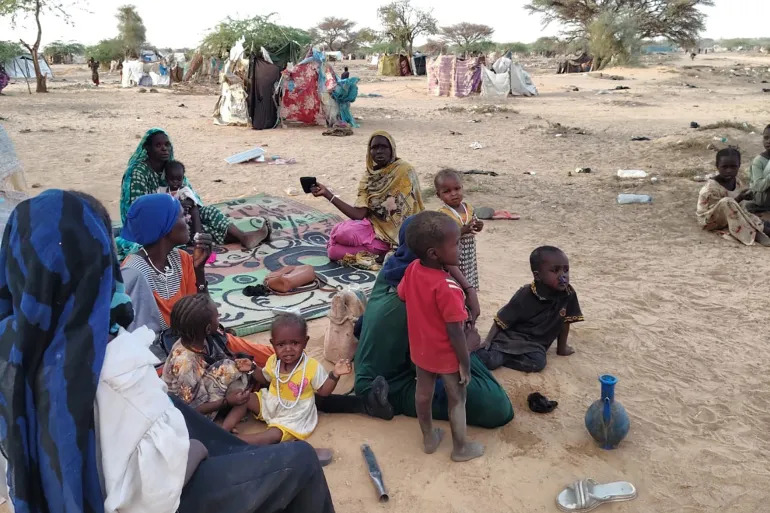
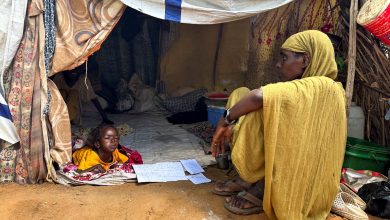
In the Ennedi region of eastern Chad, Kariari camp is no longer providing a safe haven from war. After receiving thousands of Sudanese fleeing western Darfur, the camp has been hit by severe shortages of food, water and shelter.
In October 2026, the fire beneath the pots of the communal kitchen, which had been providing daily meals to thousands of refugees, went out after funding ran dry and volunteers could no longer afford to buy food.
Displacement and Hunger
Waves of people fleeing Ambaro, Tina, Kornoy, Jirjira, Abu Leha, Kulbus, Bir Saliba and Sarba continued to arrive, most of them women and children. Some families travelled on foot, while others were forced to sleep in the open or under trees due to a shortage of tents. In March, the International Federation of Red Cross and Red Crescent Societies (IFRC) warned that reception sites in eastern Chad were overcrowded and unable to accommodate new arrivals.
In August, rains and strong winds damaged approximately 50 homes and injured 16 refugees, according to the Darfur Victims Advocacy Organization. Kariari Emergency Response Room also reported, in an appeal carried by media outlets, that the destruction of classrooms and educational facilities, coupled with insufficient maintenance funding, had delayed the reopening of schools.
Sudanese volunteers initially launched an initiative to prepare 20 meals of lentils and rice. The initiative later developed into an emergency response room with 25 volunteers, providing food and water while monitoring health conditions and identifying families’ needs.
Saddam Abakar Al-Safi, a representative of the Emergency Response Room, told Mashawir that the number of newly arrived families had exceeded 7,000, while a subsequent report indicated that the camp was hosting even more families.
Al-Safi said the kitchen had operated around the clock, delivering meals to elderly people, patients and children who were unable to reach distribution points. However, operations eventually came to a halt after support was cut off and volunteers could no longer afford to purchase sorghum and millet.
In a statement to Mashawir, one volunteer summed up the crisis:
“We no longer have even a single sack of sorghum to get started with. The kitchen has completely shut down because funding has run out.”
Saadia Yousif Abdullah, a member of the Emergency Response Room, told Mashawir that volunteers had registered beneficiaries and recorded the locations of their tents to ensure that food reached the most vulnerable, including elderly people, patients and children with disabilities.
The kitchen’s closure has deprived these groups of a vital food source on which they had depended, leaving them without adequate alternatives.
Wells Under Pressure
The crisis extends beyond the absence of meals. The camp’s wells are now serving approximately 6,000 families, compared with their original capacity of 1,000 families. This represents a sixfold increase in the number of households relying on the same water sources.
Al-Tayeb Mohamedain, a camp resident, said water had become a major crisis, with available supplies no longer sufficient even for drinking. Women and children are increasingly forced to walk long distances in search of water.
These conditions have raised fears of worsening dehydration, malnutrition and disease outbreaks, amid shortages of medicines and inadequate healthcare facilities.
Saadia reported a daily increase in cases of diarrhoea, dehydration and malnutrition among children, while the camp lacks a properly equipped medical facility.
In the town of Adré, Médecins Sans Frontières (Doctors Without Borders) warned in April 2026 of outbreaks of measles and meningitis.
The organisation reported that dozens of children had died from meningitis. Although these conditions were not specific to Kariari, they reflect the health risks facing overcrowded refugee settlements.
The Funding Gap
The funding shortfall has been a major factor behind the deterioration of services.
Last April, the United Nations High Commissioner for Refugees (UNHCR) and the World Food Programme (WFP) announced a funding gap of $428 million, including $289 million for UNHCR and $139 million for WFP.
The two agencies reported that UNHCR’s available resources could cover the basic needs of only four out of every ten refugees. Approximately 80,000 families were living without shelter, while WFP had been forced to cut food rations by half for the majority of refugees.
The funding crisis has also undermined refugees’ confidence in humanitarian assistance.
Human rights activist Ramadan Adam said:
“People living in the camps no longer believe the promises made by international organisations, amid reduced food rations, declining healthcare services and water supply disruptions.”
He attributed this frustration to poor coordination and inadequate communication with families, adding that:
“Trust has become like the fragments of the shells they fled from.”
In October 2026, Chad’s Minister of Social Action, National Solidarity and Humanitarian Affairs said that the country was hosting more than 1.5 million refugees as of September 30, including approximately 1.35 million Sudanese, in addition to internally displaced people and returnees.
She called for increased international support and greater burden-sharing to help Chad cope with the growing refugee population.
According to UNHCR figures released on September 21, approximately 959,126 Sudanese had crossed into Chad since April 2023, including more than 55,000 who arrived during 2026.
Misfortunes Come One After Another
With the communal kitchen remaining closed for a second consecutive month as of late November, Kariari residents have lost their daily meals and the food distribution network that once supported the most vulnerable members of the camp.
As the dry season sets in and nighttime temperatures begin to drop across northern Chad, families sleeping in the open face growing needs for shelter and blankets, particularly children and elderly people.
The Kariari Emergency Response Room has warned of worsening diseases associated with contaminated water and malnutrition, especially following the depletion of well-disinfection supplies.
It has appealed to the Chadian authorities, humanitarian and international organisations, and donors to intensify their response and provide a comprehensive package of assistance, including food, safe drinking water, shelter, healthcare, medicines, and essential supplies for women and children, alongside support for local food production and livelihood activities.