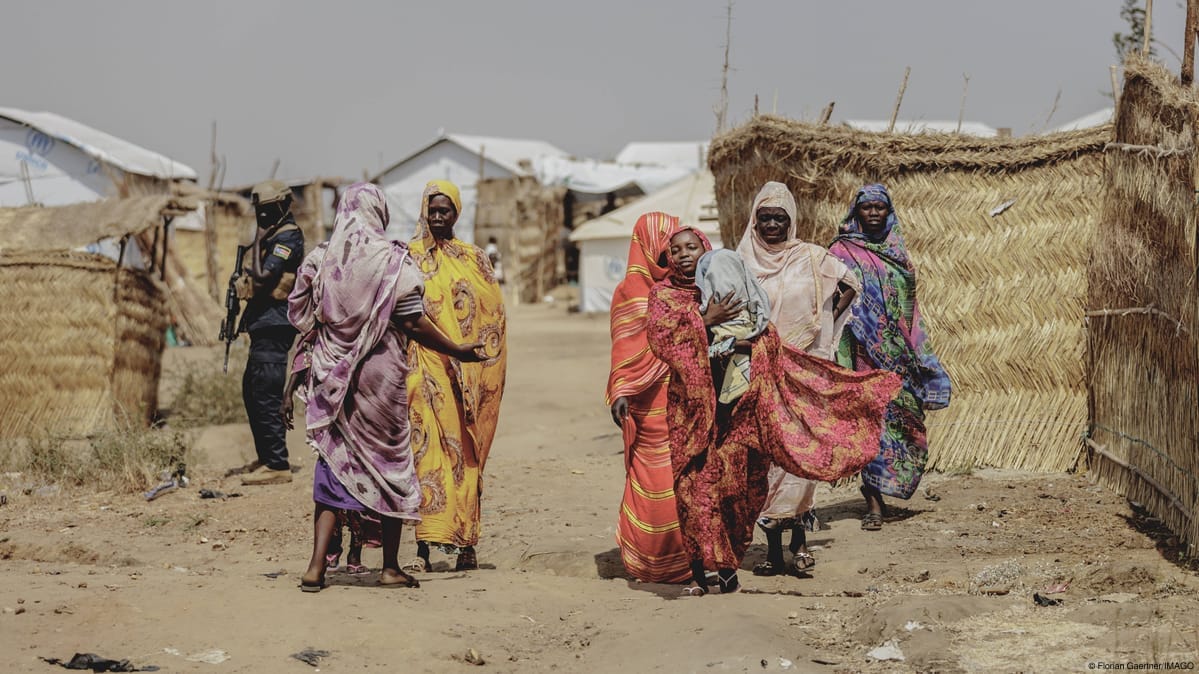
The ongoing war between the Sudanese Armed Forces and the Rapid Support Forces (RSF), which erupted in mid-April 2023, has contributed to a significant escalation in violence against displaced women. This violence has taken horrifying forms, with numerous violations reported, including sexual assaults, forced displacement, loss of privacy, and other forms of abuse.
All this is unfolding as the world marks the International Day for the Elimination of Violence Against Women, an occasion that recognises and honours women’s achievements in politics, culture and the economy, as well as their contributions to equality, development and peace.
A Sudanese Campaign
Sudanese women’s and human rights groups have issued calls for the protection of women against war-related violations and for accountability for perpetrators of sexual and physical violence, coinciding with the launch of the 16 Days of Activism Against Gender-Based Violence campaign.
The Women Against Injustice campaign stated that “violence against women in Sudan has gone beyond individual violations to become a weapon of war used to destroy families and communities.”
Several women human rights activists pointed out that Sudanese women have been subjected to extremely high levels of violence, particularly conflict-related sexual violence. Other violations include abductions, enforced disappearances, forcing women to assist armed fighters against their will, and rising rates of rape in areas directly or indirectly affected by the war. They also highlighted the emergence of slavery and human trafficking involving women.
Harrowing Experiences
In this context, a young woman, who preferred to remain anonymous, told Mashawir that she had been subjected to several violations by armed individuals while travelling back from displacement, from Abu Zabad in West Kordofan State to El Obeid.
She said she was detained for three hours and interrogated about how she had travelled alone without being accompanied by a family member.
“It was an extremely difficult day for me, and I went through painful moments. I had often heard stories of violations experienced by displaced girls, but I never imagined that I would one day become a victim myself. I was beaten and humiliated before being released and allowed to rejoin the vehicle taking me to my destination,” she recounted.
She added: “During the journey, women were ordered to get off the vehicle and were treated in a provocative and degrading manner. Girls who refused to have their belongings searched were subjected to verbal abuse and obscene insults.”
Protection Mechanisms
Meanwhile, women’s rights activist Tasabih Al-Tayeb told Mashawir that the need to strengthen protection mechanisms and responses to gender-based violence had increased significantly in light of the grave violations suffered by displaced women and girls during the war, particularly sexual violence. She stressed the importance of providing for their basic needs and safeguarding their dignity.
She explained that priorities included highlighting and addressing the essential needs of women and girls, particularly those living in displacement and refugee camps, especially in the Adré border area adjoining Chad.
Al-Tayeb expressed regret that the 16 Days of Activism Against Gender-Based Violence campaign was being launched amid the devastating war in Sudan and the catastrophic humanitarian consequences it has caused, both in the short and long term. She particularly highlighted conflict-related sexual violence committed in various parts of the country.
She called on international organisations working on women’s issues to provide for the needs of Sudanese women and girls, particularly displaced women, and to offer all forms of support that strengthen their psychological resilience, safeguard their dignity and protect their right to a decent life.
Psychological Distress
For her part, psychological specialist Aida Bashir told Mashawir that the circumstances facing Sudanese women, particularly displaced women, have made them resilient. However, the conditions created by the war have placed even greater pressure on them due to violence in all its forms, displacement, loss of stability and other related factors.
Bashir added that some displaced women have been subjected to sexual assault and blackmail, leaving them with psychological consequences, including anxiety attacks, depression and excessive irritability. Many have lost their sense of security and constantly fear that similar experiences will happen again, leaving them in a state of psychological instability.
Regarding the long-term psychological and social effects on women who have experienced violence, she explained that these may include persistent fear, depression, frustration, difficulty communicating with close friends, feelings of helplessness and reluctance to form new friendships due to low self-esteem. Some may also withdraw from society because of feelings of shame and stigma associated with their experiences as women.
The psychological specialist stressed that violence against women remains a major obstacle to achieving equality, development and peace, as well as to the full realisation of women’s human rights.