The United Nations: Sudan and South Sudan Resume Border Talks on Abyei
Abyei – Mashawir
The United Nations Assistant Secretary-General for Peace Operations and Political Affairs, Martha Pobee, said on Friday that the governments of Sudan and South Sudan had reaffirmed their commitment to demilitarizing the disputed Abyei region and reviving joint bilateral mechanisms, including the political and security mechanism and the Joint Oversight Committee.
Pobee told the UN Security Council that both sides had informed the United Nations of the officials assigned to follow up on the political and security mechanism, a step expected to pave the way for an official meeting between Khartoum and Juba to discuss shared border issues — the first such move in years.
The UN official also pointed to the deteriorating security situation in Abyei in recent months due to the spread of weapons and the presence of unauthorized armed groups.
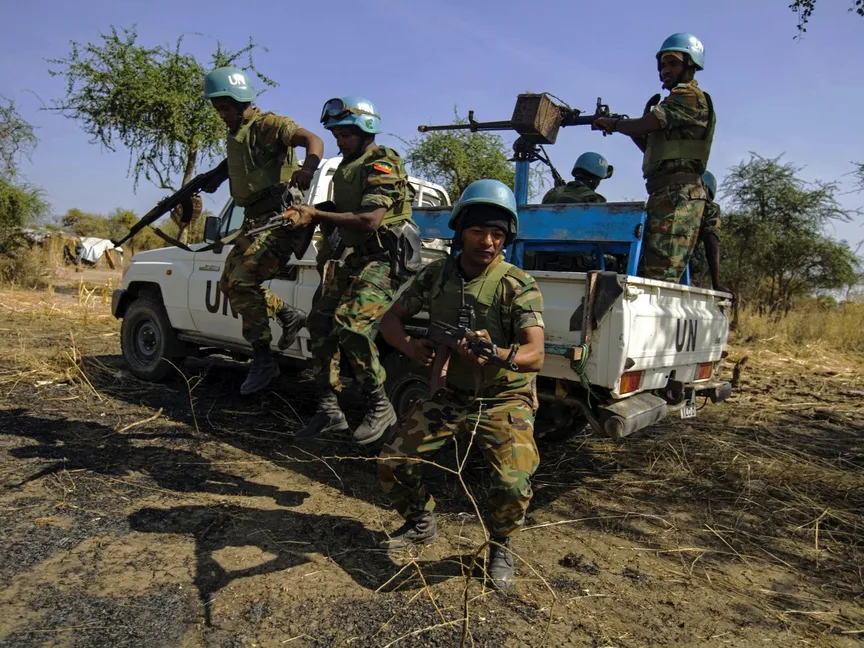
At the same time, she confirmed that no direct attacks against civilians or the UN Interim Security Force for Abyei (UNISFA) had been recorded during the reporting period.
She stressed that the UN mission continues to protect civilians and prevent escalation, but cannot substitute for political will, calling for the reactivation of bilateral mechanisms, the withdrawal of unauthorized forces, and the establishment of a dedicated police force for Abyei.
The oil-rich Abyei region is jointly administered by Sudan and South Sudan, with both countries claiming sovereignty over it. The Ngok Dinka community, which is affiliated with South Sudan, mainly inhabits the southern part of the region, while the Sudanese Misseriya tribe lives in the north.
The Abyei issue has remained one of the major unresolved disputes between Sudan and South Sudan since before South Sudan’s independence in 2011, as the region lies along the border between the two countries.