War Drives Sacrificial Animal Prices Higher in Sudan for the Fourth Consecutive Year
Mashawir – Report by Ishraqa Ali Abdullah
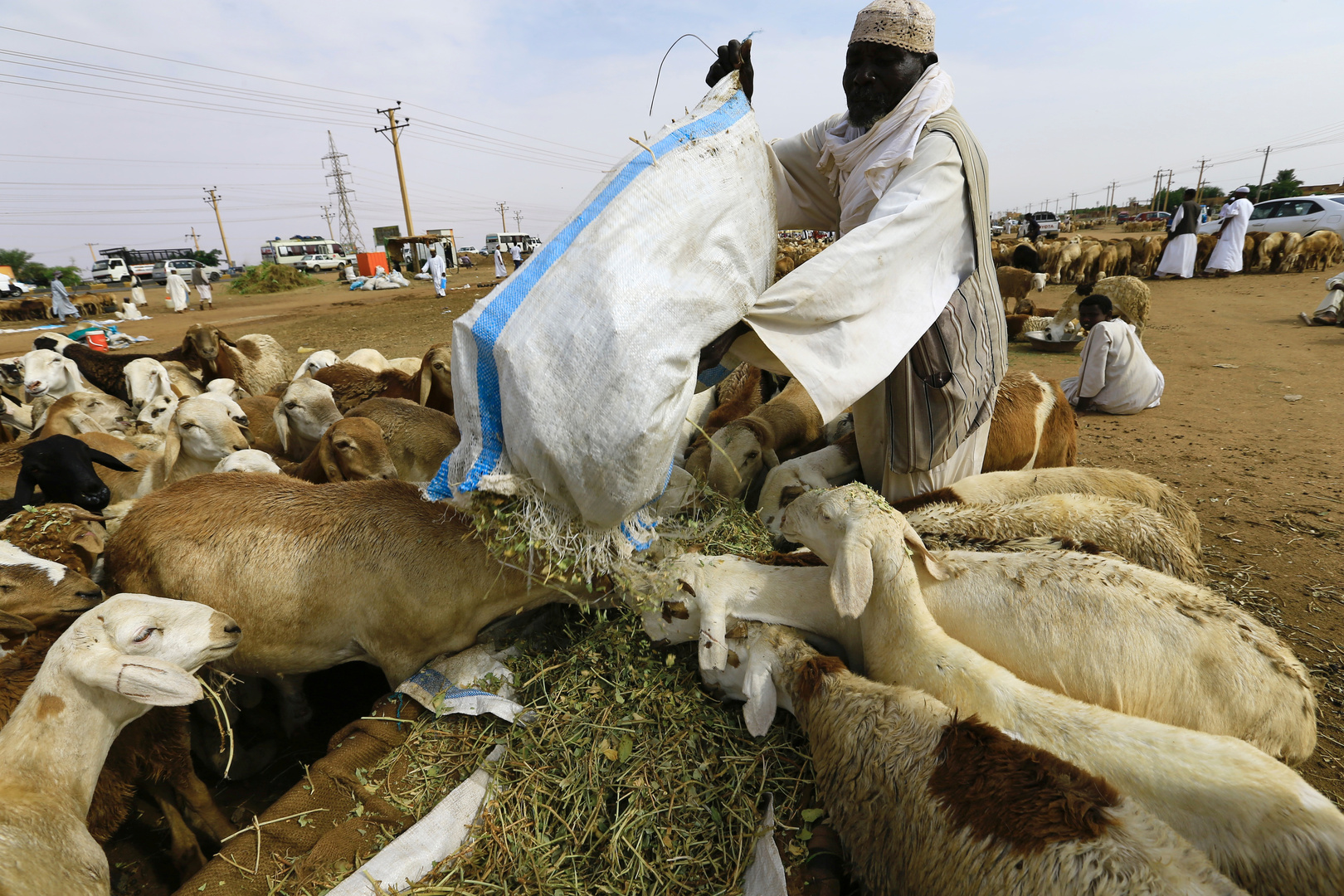
Although Sudan is considered one of the African and Arab world’s largest livestock-owning countries, with an estimated 103 million head of livestock, animal prices have witnessed an unprecedented rise ahead of Eid al-Adha compared to previous years. This comes amid a worsening economic crisis caused by the ongoing conflict between the Sudanese army and the Rapid Support Forces (RSF), which has continued for more than three years. The situation has sharply weakened purchasing power, leaving many families unable to afford Eid sacrifices this year — the fourth Eid since the outbreak of war.
Livestock traders attributed the price surge — with sheep prices ranging between 850,000 Sudanese pounds (around $200) and 1.5 million pounds (around $350) — to rising fuel and transportation costs, security risks, and road closures, especially since livestock are transported from the Darfur and Kordofan regions. They also pointed to the soaring cost of animal feed, which has contributed to a relative stagnation in buying and selling activity across the markets of Khartoum, Bahri, and Omdurman.
Shocking Figures
Citizen Ahmed Al-Tayeb, who works in a government institution, said:
“For many Sudanese people, the sacrificial animal is essential regardless of the religious aspect. Every head of household tries his best to buy a sheep for Eid, not as a symbol of pride or showmanship, but because it is a deeply rooted tradition in a country historically rich in livestock. Sadly, the war has prevented many people from maintaining this custom due to soaring prices and the lack of money caused by job losses and weak salaries that often cannot cover even a week’s living expenses.”
Al-Tayeb added:
“As I do every year, I visited the livestock market in Omdurman to check prices. Honestly, I was shocked by the prices being asked. I do not think that I, or many others, will be able to buy a sacrificial sheep this year. The figures are astronomical and completely beyond the means of citizens who have already lost their savings due to displacement. It seems that the joy of Eid has become a luxury in times of war and a dream that is difficult to achieve.”
He continued:
“A large segment of state employees and workers in major companies used to rely before the war on installment payment plans for purchasing sacrificial sheep, deducted monthly from their salaries. This used to ease a major burden on these groups, which represent the majority of citizens. But after the war, these arrangements stopped, making it impossible for most people to buy sacrifices.”
He further noted:
“Most visitors to livestock markets today simply look around without buying, after exhausting their savings and losing their sources of income. They now face a difficult dilemma amid worsening living conditions, which has led to an unprecedented recession in livestock markets, despite this season historically being the busiest in Sudan.”
Deeply Rooted Traditions
Meanwhile, Amal Abdelgaioum, a housewife, explained:
“In Sudan, the sacrificial animal is a deeply rooted tradition that families do not easily abandon. People do everything possible to secure enough money to buy a sacrifice, even if it is small, because it brings joy to children. We practice it collectively, and it has a strong social role in Sudanese culture, where neighbors exchange meat and families gather for barbecues and festive breakfasts hosted by respected elders in the neighborhood, especially in working-class communities.”
She pointed out that:
“The ongoing war has stripped families of this joy, placing heavy pressure on daily life and turning it into a painful reality amid declining purchasing power.”
Challenges and Deprivation
Livestock trader Awad Adam said:
“Indeed, sheep prices in livestock markets have risen sharply. This is mainly due to the increase in fuel prices, which has significantly raised transportation costs between states, in addition to record-high feed prices that have directly affected livestock costs. There are also fears over security threats and sudden road closures because of the continued fighting between the army and the RSF, especially since livestock are transported from western states, particularly Kordofan.”
He added:
“Sheep prices in Khartoum’s markets vary according to type and size. Some sheep are selling for around 850,000 Sudanese pounds (about $200), while premium large-sized sheep have exceeded 1.5 million pounds (about $350). As for the Hamari breed, known for the quality of its meat, prices have reached 2 million pounds (around $450), especially since they are often exported abroad due to high demand.”
Adam continued:
“Purchasing is now mostly limited to lower-priced livestock, but bargaining over prices is almost impossible because profit margins are already very small. Before the conflict, prices were reasonable due to the abundance of livestock arriving from production areas, especially Darfur and Kordofan.”
He warned:
“In my view, prices will continue rising in the coming days because of limited supply, although I expect purchasing power to gradually improve.”
Chaos and Greed
Economic researcher Abdelwahab Gomaa said:
“The wave of rising livestock prices has exceeded the income levels of government employees, placing families before difficult choices. The prolonged conflict in Sudan has increased economic pressures and weakened the local currency, both of which have greatly complicated the overall situation and made buying sacrificial animals extremely difficult for many people under current conditions.”
Gomaa added:
“Concerns also extend to butchers and those involved in slaughtering services, as their costs rise significantly during Eid al-Adha. However, they themselves face the same economic hardships, especially in securing professional supplies and equipment.”
He explained:
“Before the outbreak of war, Sudan was considered one of the richest countries in Africa and the Arab world in terms of livestock wealth, possessing around 103 million head of livestock and exporting animals annually to Gulf countries and beyond. Despite this enormous wealth, Sudan is now experiencing one of its worst economic crises.”
The economic researcher further noted:
“The price chaos is directly linked to the war, which disrupted supply chains and caused a decline in livestock production across Darfur and large parts of Kordofan. In addition, fuel prices have risen due to the war involving Iran and the closure of the Strait of Hormuz, which pushed global oil prices upward. These developments coincided with Sudan’s war, further obstructing transportation and increasing transit fees. Meanwhile, the absence of effective state oversight has contributed significantly to market disorder and trader greed.”