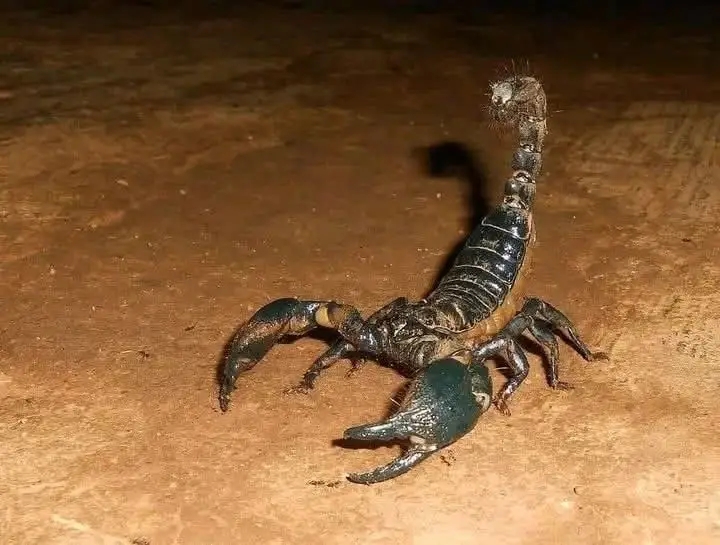
Scorpions Terrorize Northern Sudan Residents as Hospitals Run Out of Antivenom
Mashawir – Report by Ishraqa Ali Abdullah
Venomous scorpions have become a real threat and a source of fear for residents of northern Sudan, particularly in River Nile State and the Northern State. The crisis intensifies every year during the summer and rainy seasons, when large numbers of scorpions emerge from their burrows, causing dozens of casualties, most of them children.
Many towns and villages in both states, especially those located along the Nile River, suffer from a heavy presence of these deadly scorpions. During the summer, when temperatures can reach 50°C, the so-called “silent killers” crawl through and infiltrate homes and human surroundings, striking unexpectedly with potentially fatal stings and causing widespread anxiety among local communities.
Scorpion stings pose serious health risks and can lead to death, particularly because many small health centers in these areas lack antivenom. Delays in transporting victims to major hospitals in Atbara and Al-Damer, often due to difficulties in securing rapid transportation, place residents at significant risk and sometimes cost them their lives.
Fear and Deprivation
Sida Al-Taj, a resident of Al-Manasir village in the Northern State, said: “My eight-year-old son was stung by a scorpion while playing outside our home with other children. It appeared to be a highly venomous species, but it was difficult to identify because its color blended with the soil. He died while his father was trying to provide first aid at home and transport him to Atbara Hospital.”
She added that the incident spread panic among residents, whose fears increase every summer. Many families have completely prohibited children from playing outdoors, especially at night, as the area experiences prolonged electricity outages.
According to Al-Taj, residents of villages, rural areas, and even towns along the Nile are constantly exposed to scorpion and venomous insect stings. These creatures emerge from cracks, burrows, and rubble and often multiply inside storage facilities in search of cool and damp environments. Children, elderly people, and women carrying out household activities are among the groups most vulnerable to scorpion stings.
She further noted that Al-Manasir village and many communities across the Northern State face continuous hardships, including drowning incidents and deadly scorpion stings, which require urgent government attention. She warned that neglecting basic safety requirements leaves residents exposed to ongoing dangers.
Antivenom Shortage
Mohamed Abdelrahim, a resident of a remote area in northern Sudan, explained that despite precautionary measures taken by villagers, venomous scorpions are present across both agricultural and residential lands, creating constant anxiety among residents.
“It is unfortunate that local health units have limited capabilities and lack antivenom, which is essential to prevent the venom from affecting vital bodily functions,” he said. “By the time victims reach larger hospitals, many have already lost their lives due to the collapse of healthcare services since the outbreak of the war more than three years ago.”
He added that recurring heat waves and annual floods force scorpions to leave their rocky burrows and move toward residential areas. In response, local youth have launched volunteer campaigns to capture scorpions, often collecting hundreds within minutes from known hiding places. However, these efforts expose volunteers to additional risks, although they believe such actions are necessary to protect their communities.
Interconnected Challenges
Community activist Walid Mahmoud believes that prolonged darkness caused by power outages is one of the main factors contributing to scorpion attacks in villages and towns, particularly in Al-Manasir and other settlements near open desert areas.
“Summer is one of the most worrying seasons for residents because scorpions emerge from underground and infiltrate homes and public roads, posing a deadly threat,” he said.
Mahmoud noted that despite the availability of some control measures, government efforts remain insufficient. The region faces multiple overlapping challenges, including poor healthcare services. Residents often travel to Kabna village, where a main hospital provides limited treatment for malaria and fevers.
He added that social media has helped draw attention to the crisis among Sudanese living abroad, some of whom have contributed by supplying vaccines and antivenom. However, these efforts remain voluntary and irregular.
Mahmoud stressed the need for urgent and sustainable interventions to protect residents and improve access to essential services.
Environmental Imbalance and Precautionary Measures
Rania Balila, Director of the Center for Research on Venomous Creatures in Khartoum, said the spread of scorpions, snakes, and other venomous insects is no longer confined to the Northern State. The war has altered environmental conditions across many regions of Sudan, disrupting natural ecosystems and allowing venomous creatures to proliferate in abandoned homes and neighborhoods.
She explained that accumulated waste and rubble have created favorable conditions for their spread. The shortage of antivenom in northern villages may also be linked to transportation and storage challenges, particularly in hot climates. Antivenom requires proper refrigeration and protection from direct sunlight and excessive heat.
Balila emphasized that antivenom should never be stored in homes or purchased and transported individually. Ensuring the availability of safe and approved antivenom is the responsibility of the National Medical Supplies Fund following registration by the National Medicines and Poisons Board.
She also stressed that administering antivenom must take place under medical supervision, as patients require close monitoring for at least 24 hours in hospitals or health centers.
According to Balila, scorpion stings typically cause severe pain and swelling at the site of the sting and may progress to nausea, fever, convulsions, or irregular heart rhythms. In severe cases, they can be fatal.
She advised against causing panic around victims, especially children, because fear increases heart rate and may accelerate the spread of venom through the body. Recommended first-aid measures include washing the sting site with soap and water, applying a loose band above the sting without restricting circulation, and using cold compresses for ten minutes to reduce pain.
Balila warned against common mistakes such as taking painkillers before reaching a hospital, cutting the sting site with a blade, attempting to suck out venom by mouth, or applying burning substances. She emphasized that antivenom remains the primary treatment and that victims should be transported to the nearest healthcare facility as quickly as possible.
In conclusion, she highlighted the importance of public awareness campaigns through social media and volunteer initiatives to educate citizens about venomous creatures and safe response measures. She also called for strengthening local research and developing Sudan’s toxin-related industries through the establishment of venom banks and regulated breeding programs to prevent the loss of valuable scientific and economic resources through smuggling or unprocessed exports.