Thousands of Sudanese Refugees Face Harsh Conditions in Camps Across Neighboring Countries
Mashawir – Report by Minhaj Hamdi
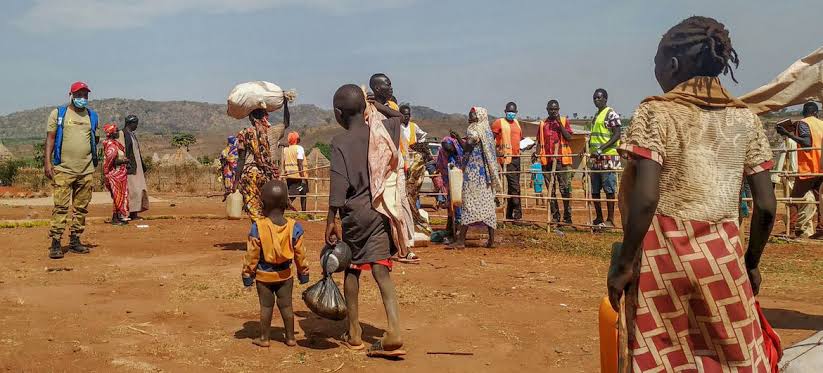
As the war in Sudan enters its fourth year with no clear prospect of a resolution that could end the conflict and facilitate the return of millions of Sudanese refugees to their homes, the suffering of refugees in camps across neighboring African countries continues to worsen. In particular, refugees in Chad, Uganda, Ethiopia, and South Sudan are facing extremely difficult humanitarian conditions due to shortages of food, medicine, and healthcare services, as well as a decline in aid and services provided by international organizations because of funding shortfalls.
Hunger has affected a number of refugee camps, while deadly diseases and epidemics continue to spread. At the same time, thousands of refugees are unable to cope with these challenges as their financial resources have been exhausted and assistance from international organizations has been reduced, further aggravating the situation.
Harsh Conditions
Babiker Jibril, a Sudanese refugee currently living in Biyale Camp in Uganda, told Mashawir that hundreds of Sudanese refugees are living in tragic conditions and suffering from food shortages and a lack of healthcare amid the spread of diseases, which has particularly affected children and the elderly.
He added that most refugees are no longer receiving humanitarian assistance, especially following cuts in U.S. funding and the inability of aid organizations to meet the growing needs of thousands of Sudanese refugees.
Jibril explained that the camps lack adequate healthcare services. Although there are three health centers, they are located far from the camps and do not provide life-saving medications. Their services are extremely limited, offering mainly painkillers and antibiotics, leaving Sudanese patients in increasingly difficult circumstances.
Without Shelter
For her part, Kultum Bakhit, who fled from El Fasher and now lives in Wadi Camp in Chad, said that recently arrived Sudanese refugees are facing severe hardship due to the spread of diseases, lack of healthcare, medicine, clean drinking water, and poor sanitation services.
She told Mashawir that humanitarian organizations do not provide permanent shelter, particularly for new arrivals from North Darfur State. Instead, aid workers distribute plastic sheets to provide minimal protection from the sun.
Bakhit noted that families urgently need adequate food supplies, medicines, and blankets to protect them from harsh weather conditions, especially children and pregnant women. She warned of the risk of disease outbreaks due to the shortage of medical supplies and medications.
Dangerous Levels
Abdel Hafiz Salem, who has been living in a refugee camp in the Kufra area of Libya for more than a year, told Mashawir that most Sudanese refugees depend on humanitarian assistance to meet their daily needs. However, the reduction of food assistance since January to approximately five U.S. dollars per person per month, along with the exclusion of many vulnerable groups from support programs, has significantly worsened living conditions in the camps.
He explained that shrinking aid allocations have deepened the suffering of thousands of Sudanese refugees as food assistance has been reduced and healthcare services have deteriorated to alarming levels, raising concerns about the spread of diseases and malnutrition among children and women, especially during the rainy season.
Salem also noted that hundreds of families now wish to return permanently to Sudan because of the worsening conditions and the difficulties of remaining in refugee camps. However, many cannot afford travel expenses, while voluntary return programs continue to progress very slowly.
Figures and Statistics
According to official statistics, approximately 650,000 Sudanese had arrived in Libya by 2026.
According to the European Commission, Uganda hosts more than 110,000 Sudanese refugees who have fled since the outbreak of the war in April 2023.
The Norwegian Refugee Council reported that Chad hosts more than 720,000 Sudanese refugees.
In addition, there are 643,254 Sudanese refugees in South Sudan and 51,666 in Ethiopia, while smaller groups have sought refuge in Eritrea and the Central African Republic.