The Simplest Needs of Returnees from Displacement and Refugee Camps Exceed the Capacity of War-Ravaged Khartoum
Khartoum – Mashawir Report
The Sudanese government faces significant challenges in creating a suitable environment for people returning to the capital, including the three cities of Khartoum, Omdurman, and Bahri. Key priorities include restoring electricity, water, healthcare, and education services, as well as re-establishing security and stability and launching a new phase to end the suffering caused by war and successive crises.
According to the International Organization for Migration (IOM) mission in Sudan, about 1.8 million displaced persons and refugees have voluntarily returned to their homes in Khartoum. However, thousands still lack basic services and continue to face difficult living conditions, with limited access to healthcare, education, and employment opportunities.
Significant Potential
Mohamed Farah, a resident of Al-Thawrat area in Omdurman, believes that the government possesses substantial capabilities that could help meet the needs of residents across the capital. He noted that the return of service ministries such as Health and Education, as well as electricity and water authorities, in addition to the resumption of police operations, are key factors in restoring security and stability.
He added that the presence of the central government in the capital facilitates the return of public institutions and encourages workers and employees to return to the industrial sector and daily economic activities in major and local markets.
Farah called on the government to implement urgent emergency plans to rehabilitate infrastructure in Khartoum State, including repairing bridges and overpasses damaged by destruction and vandalism.
Urgent Services Needed
Zakaria Al-Tom, a resident of Al-Kalakla in southern Khartoum, pointed out that neighborhoods across the capital are witnessing a steady influx of returning residents, making it essential for the government to provide at least the minimum level of vital services, particularly electricity, water, healthcare, and education.
He stressed that the government’s current approach of dealing with issues on a day-to-day basis is insufficient, warning that slow progress in improving services will only worsen the situation as thousands continue to return home.
Al-Tom emphasized the urgent need to reopen medical centers and clinics, restore electricity, telecommunications and internet services, secure drinking water supplies, and address energy shortages.
Emergency Measures
Meanwhile, the Sudanese Council of Ministers discussed a package of urgent measures related to living conditions and the improvement of electricity and water services, aiming to overcome the challenges facing citizens and enhance security and stability in Khartoum to accommodate the growing number of returnees under voluntary return programs.
The Council, chaired by Prime Minister Kamil Idris, also reviewed preparedness plans and emergency measures ahead of the rainy season and received several diplomatic reports.
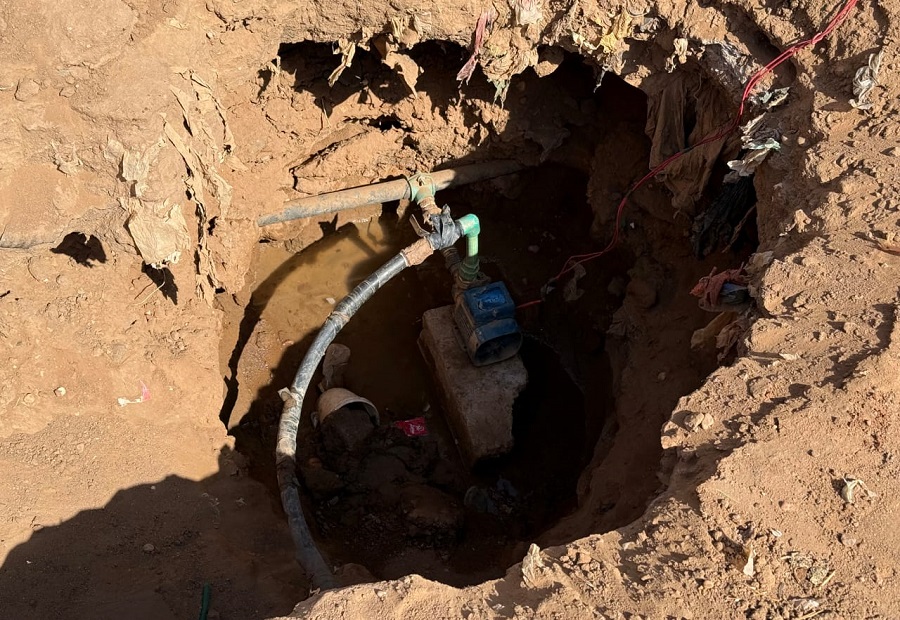
Earlier, Chairman of the Transitional Sovereignty Council and Commander-in-Chief of the Sudanese Armed Forces, General Abdel Fattah Al-Burhan, directed the immediate rehabilitation of water stations and the provision of technical and logistical support to ensure the regular pumping of water and improve water supply services in several neighborhoods.
Conditions Remain Difficult
Kamal Younis, who recently returned with his family to East Nile locality in Khartoum, said that electricity and water services are functioning only partially, although there has been some gradual improvement. He noted that hospitals and police stations resumed operations more than ten months ago.
He warned that the suspension of economic activities and the need to rehabilitate educational institutions remain among the most serious challenges facing returning residents.
Younis urged authorities to rehabilitate damaged factories to create employment opportunities, facilitate the return of traders and craftsmen to their businesses, and improve electricity, water, healthcare, and education services.
Government Commitments
Prime Minister Kamil Idris stated that the government seeks to begin a new phase by reactivating executive and service-related work from within the capital.
He pledged further improvements in healthcare services, reconstruction of hospitals and health centers, enhancement of educational services, schools and universities, as well as upgrades to electricity, water, and sanitation services.
Idris called for national unity and collective efforts to overcome the current challenges, stressing that the government’s return to Khartoum reflects the state’s determination to restore stability and place Sudan on a path toward recovery.
Challenges and Obstacles
Economic analyst Al-Fadil Al-Sinnari believes that the rapid provision of basic services is essential for development and for improving healthcare, education, electricity services, and overall security.
He concluded that restoring life to Khartoum depends on rebuilding services and creating jobs through market recovery, restructuring the productive sector, granting exceptional tax exemptions, and suspending fees and levies to enable returnees to resume normal lives. Stability, he argued, is closely linked to employment opportunities and economic dignity.
Al-Sinnari also warned that the large-scale return of displaced persons and refugees expected in the coming months will place enormous pressure on Khartoum State, further complicating daily life, as the currently available services—despite government efforts—are barely sufficient to meet the needs of existing residents.