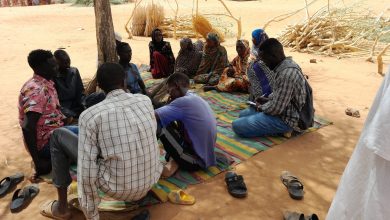
As drone attacks on El Obeid, the capital of North Kordofan State, continue to intensify, and electricity, water, and health services remain largely unavailable amid worsening hunger, displacement has become the only option for many residents living in the city’s displacement camps, despite the uncertain future awaiting them.
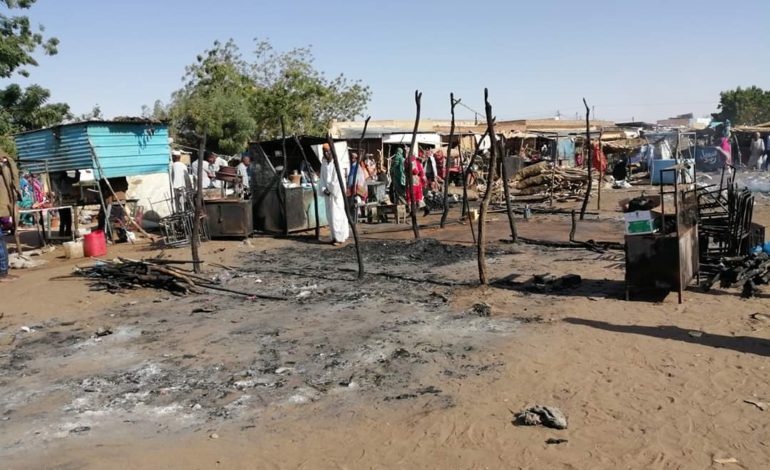
For the past three weeks, El Obeid has been subjected to relentless drone and heavy artillery attacks, resulting in dozens of civilian deaths and injuries. The bombardment has also caused extensive damage to civilian infrastructure and public services, particularly water storage facilities and electricity stations, amid reports of large military deployments surrounding the city and threats of a major ground offensive.
Difficult Choices
The hardest moment for Mariam Issa was not deciding to leave the displacement camp in the Khor Tagat area of El Obeid, but finding herself and her children sleeping on the ground in Goz Al Salam Camp in Kosti after a journey that exhausted everything the family owned.
Speaking to Mashawir, Issa said:
«”We had no choice but to flee the danger posed by drone and artillery attacks, especially after dozens of displaced people suffered serious injuries during the past few weeks.”»
She added:
«”We arrived at a place where we do not even have a tent to protect us from the scorching sun, heavy rains, flooding, or strong winds, especially now that the rainy season has begun.”»
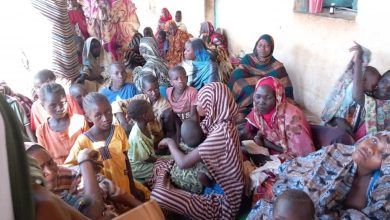
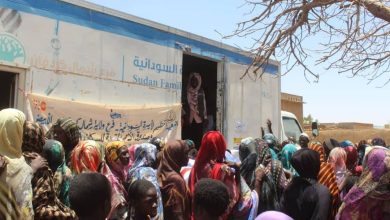
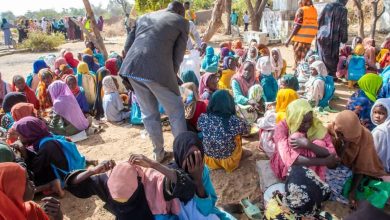
At Goz Al Salam Camp in Kosti, White Nile State, hundreds of people who fled El Obeid are enduring extremely harsh conditions due to the lack of safe shelter, food supplies, and healthcare services.
A Shelter Crisis
Malak Osman, who left a displacement camp in eastern El Obeid after it came under bombardment, told Mashawir that she arrived at the camp five days earlier following an exhausting journey from El Obeid. However, the promises she received regarding assistance and basic services have yet to materialize.
She said:
«”Dozens of families who arrived in White Nile State are suffering because there is simply no safe shelter available, as the displacement camps are already overcrowded.”»
Osman explained that:
«”On some nights, I have to seek refuge inside my neighbors’ tents while my children sleep in the open. We have lost everything we owned and no longer have any source of income.”»
She also expressed concern about the rainy season, warning that the spread of deadly diseases—including cholera, malaria, and measles—is becoming increasingly alarming.
The Hardships of Displacement
Neamat Ali Adam also shared her experience with Mashawir, saying:
«”We never wanted to leave, but the continuous drone attacks and the suffocating siege on the city forced us to do so, even though we are now facing an uncertain future.”»
She explained that she eventually reached Rabak in White Nile State after a difficult journey, noting that a one-way ticket cost 500,000 Sudanese pounds (approximately US$100)—an enormous amount that leaves many displaced families with no option but to remain in El Obeid despite the worsening conditions.
Adam added that:
«”Most of those who fled once again are unable to find accommodation in White Nile State’s displacement camps because the centers are already overcrowded with thousands of displaced people, despite the considerable efforts being made by the local authorities to address the crisis.”»
Growing Displacement
Meanwhile, the Humanitarian Research Lab at the Yale School of Public Health reported, based on satellite imagery collected between 25 May and 25 June this year, that vital infrastructure in El Obeid sustained extensive damage from ongoing drone strikes attributed to the Rapid Support Forces (RSF).
According to the analysis, the attacks damaged eight fuel stations, the city’s power station, fuel storage facilities, the central market, and several residential neighborhoods.
The laboratory also documented a significant expansion of displacement camps within the city. Satellite images revealed the construction of more than 700 new temporary structures in just one month to accommodate additional civilians fleeing nearby conflict zones.
El Obeid continues to face an acute humanitarian crisis as repeated drone attacks targeting essential infrastructure have caused severe shortages of water, fuel, electricity, and other basic services, further worsening the living conditions of civilians trapped in the city.