Sudanese in Libya: Displacement Easier Than Going Home
Mashawir – Report by Ishraqa Ali Abdalla
Mansour Adam is one of thousands of Sudanese in Libya who now see returning home as their only hope of escaping the harsh humanitarian and security conditions they have endured in the Libyan towns and cities they fled to after war broke out in Sudan in mid-April 2023.
Adam said, “I arrived in Libya with my family of five through the desert using irregular routes in search of safety and a livelihood. Instead, I found neither. We have faced mistreatment, constant security harassment targeting Sudanese nationals, and repeated demands to present valid passports, despite the authorities knowing that most Sudanese refugees entered Libya through irregular migration routes.”
He continued, “These violations became impossible to endure, prompting me to decide to return home, especially after the fighting subsided in Khartoum. We packed our belongings and set off, but I never imagined our journey would end at the Sirte checkpoint, where dozens of stranded people, including children, who had left western Libya were gathered. We were forced off our vehicles and prevented from continuing east toward Ajdabiya, Benghazi, and Kufra before crossing into Sudan, without any explanation.”
“I left Tripoli after security restrictions and arbitrary arrests intensified, intending to travel through Tobruk and then to Dongola in Sudan. Although I had completed all administrative and health procedures at the Qaryan checkpoint in Misrata before reaching Sirte, security officials informed us that foreigners were no longer permitted to travel from western Libya to the east and ordered us to return to where we had come from.”
Adam said the return journey had turned into an open-ended crisis.
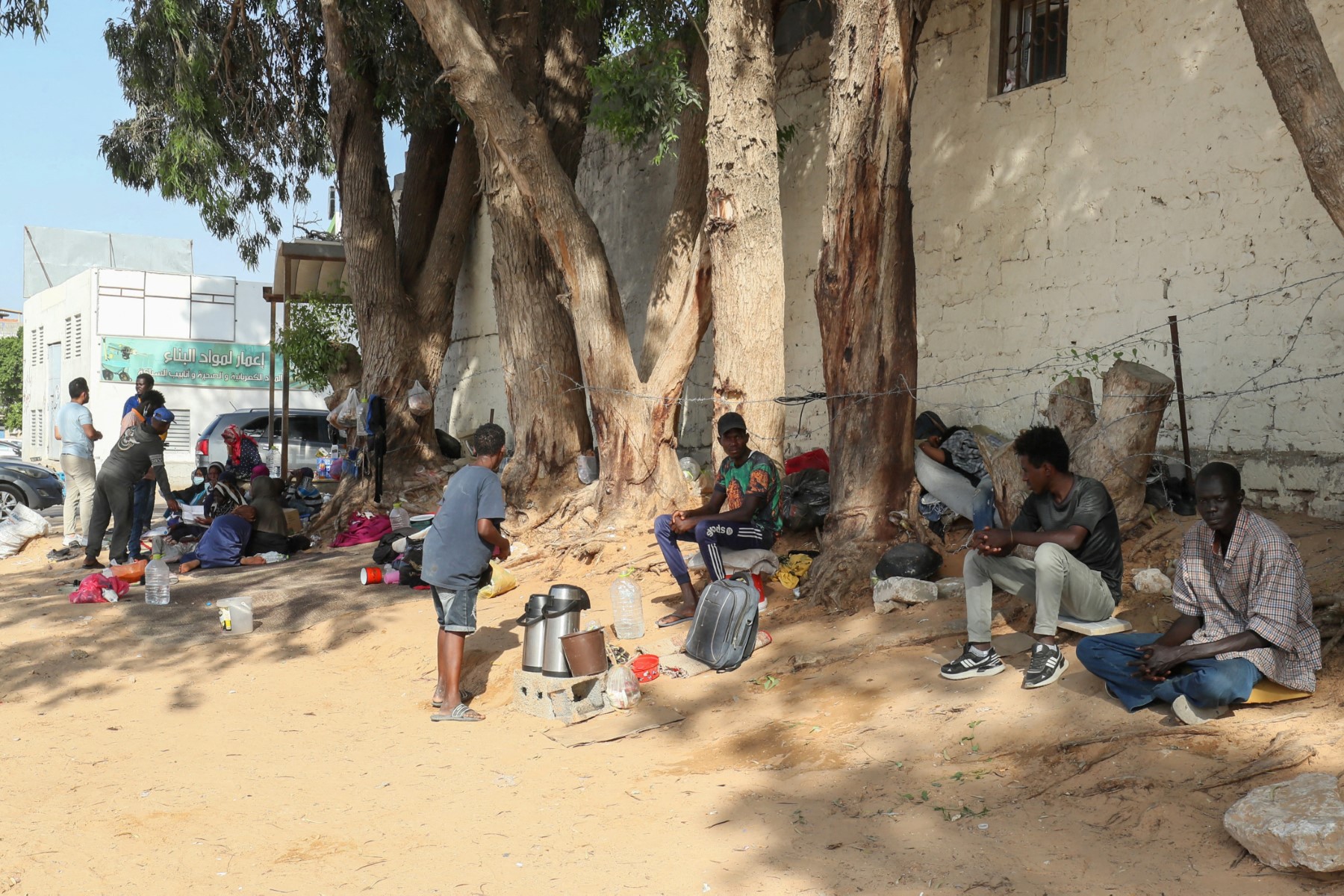
“We are now stranded without shelter or basic services such as water and food. We have had to rely on truck drivers, bus operators, and volunteers for small amounts of food because there are no official solutions and complete silence surrounds our situation.”
Deepening Suffering
Another stranded Sudanese national, Abdelbaqi Hamad, said fleeing the war in Sudan for neighboring Libya had been an ordeal from the moment they decided to leave until their arrival.
“The suffering has only intensified as restrictions on Sudanese residents continue to grow, even for those trying to regularize their status and build a decent life,” he said.
“Today I am determined to return to Sudan regardless of how difficult life may be there. It will still be better than remaining in Libya. We face enormous hardship trying to survive, jobs are scarce, wages are poor, and we are constantly subjected to humiliation, detention, and security harassment.”
Hamad said dozens of returnees are currently stranded in a barren desert.
“We are suffering from thirst and hunger, and children are with us. We have been stranded for more than two weeks and were never prepared for such conditions. Women are using their clothes to build makeshift shelters from the scorching sun, while there are no toilets or places to wash.”
He appealed to international humanitarian organizations to intervene urgently and coordinate with both eastern and western Libyan authorities to facilitate the safe return of those stranded.
A Graveyard for the Stranded
A humanitarian volunteer currently in Libya, who requested anonymity for security reasons, said Sudanese asylum seekers in western Libya have become convinced that returning home is their only option.
“They are heading toward the Sirte checkpoint believing it remains a passage east after being told by transport operators that the road is open. Instead, they arrive in an area devoid of basic life, sleeping in the open by the roadside. If the situation continues, Sirte checkpoint could become a graveyard for stranded Sudanese.”
He explained that the traditional route through Kufra had previously allowed Sudanese to cross after completing official procedures. However, internal political disputes between Libya’s rival administrations have effectively closed the crossings and blocked Sudanese from passing.
“People continue arriving from western Libya, but their journey ends at Sirte. Hundreds of families have now been stranded for more than ten days under extremely difficult humanitarian conditions. Social media is flooded with videos of men, women, and children pleading for water, food, and evacuation, yet no effective response has followed.”
He added that requests for evacuation through the Libyan Red Crescent had reportedly been rejected, while authorities now require travelers to possess valid passports.
“This requirement is unrealistic. Libya allowed Sudanese to enter because of the war, fully aware that many had no valid passports and had crossed through irregular routes.”
The volunteer stressed that the crisis now requires urgent official intervention to allow those wishing to return to Sudan to leave safely, identify the locations of stranded families, and evacuate them before the situation deteriorates further.
Calls for Immediate Action
As the crisis at the Sirte checkpoint continues without a solution, organizations representing the Sudanese community in Libya issued a statement expressing deep concern over the situation of stranded returnees.
The statement said the returnees had been stopped in remote desert areas without clear information about their fate or humanitarian conditions. They had been on their way back to Sudan after years of displacement, only to be prevented from completing their journey while facing extreme heat, severe shortages of essential services, and limited communication with relatives.
The organizations urged the Sudanese Embassy in Libya and the relevant authorities to act immediately to assess the situation, ensure the safety of stranded Sudanese nationals, and facilitate their return to Sudan, warning that continued silence was increasing the anxiety of their families and worsening their suffering.
According to estimates by the International Organization for Migration (IOM), Libya hosts approximately 125,363 Sudanese refugees and migrants, including around 6,000 who arrived after the outbreak of the conflict. Other figures indicate that 31,000 Sudanese migrants had entered Libya by the end of last January through dangerous smuggling routes across the Sudan-Libya border, where many risk death from thirst or becoming lost in the desert.
Thousands remain hopeful of returning home following the Sudanese Embassy’s announcement of voluntary return programs, which include exit permits and transportation to army-controlled areas across Sudan. However, significant obstacles remain—particularly for those traveling from western Libya—most notably being stopped at the Sirte checkpoint.