We Suffer from Food and Healthcare Shortages: Testimonies of Sudanese Women Displaced During Their Escape from El Obeid
Mashaweer – Report by Minhaj Hamdi
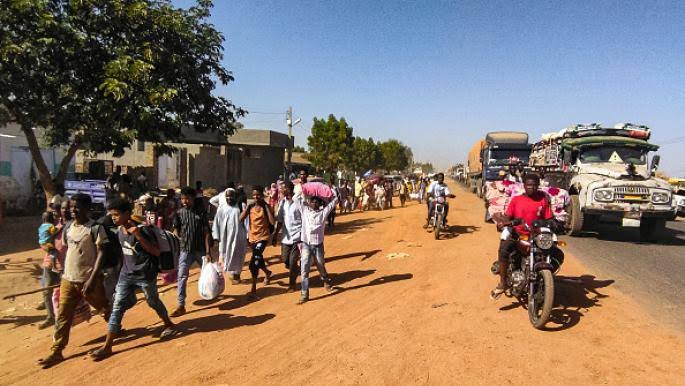
In front of temporary tents in the city of Kosti, in Sudan’s White Nile State, dozens of women displaced from El Obeid, the capital of North Kordofan State, sit together after the escalation of drone attacks and the injury of several displaced people following strikes on displacement shelters.
Although hundreds of women and girls survived the danger of continuous aerial bombardment that lasted for more than three weeks, their escape did not bring relief. They are now facing a severe shelter crisis that fails to meet their privacy and protection needs as women, in addition to shortages of food, medicine, and safe drinking water.
Hardship and Multiple Crises
Speaking to Mashaweer, Fatima Abdullah said:
«”We decided to flee El Obeid after the Rapid Support Forces (RSF) intensified their drone attacks on the city. Fires and thick smoke filled the area, while shells and munitions rained down on us from every direction. Under these terrifying conditions, a number of girls sustained serious injuries, as did several pregnant women.”»
She added:
«”We were forced to leave for the safer White Nile State. After an exhausting journey and paying extremely high transportation costs, we reached the city of Kosti, which hosts many displacement camps, but they are severely overcrowded.”»
Abdullah explained that assistance provided by local authorities and humanitarian organizations is insufficient to meet the needs of displaced women fleeing the fighting in North Kordofan, particularly in terms of shelter, food, and drinking water.
Risks and Urgent Needs
Similarly, Mawahib Taha, who arrived in the Al-Jabalain area of White Nile State, said:
«”Temporary tents and makeshift grass shelters provide no protection from either heat or cold. With the onset of the rainy season, the risks become even greater, especially if floods occur, threatening the lives of displaced women living in the camps.”»
She told Mashaweer that hundreds of displaced women are living in extremely difficult and degrading conditions. They are deprived of the most basic necessities, particularly privacy in shelters, in addition to the lack of essential hygiene supplies for girls, pregnant women, and breastfeeding mothers.
Taha also noted that women who fled El Obeid to White Nile State are suffering from severe food shortages. Their families rely on limited humanitarian aid, while obtaining drinking water requires walking long distances, exposing women and children to additional dangers.
Deteriorating Conditions
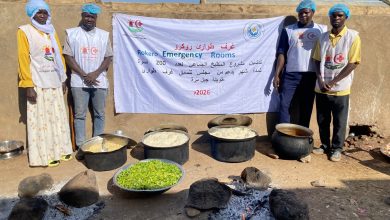
Sara El Sheikh, a volunteer in displacement camps in White Nile State, told Mashaweer that women and girls arriving from El Obeid are facing serious shortages of shelter, food, drinking water, and healthcare, while volunteers are making tremendous efforts to provide emergency assistance.
She stressed that the situation of pregnant women is particularly alarming because of inadequate nutrition for both mothers and their unborn babies. Pregnant women require increased nutritional support, and ensuring access to balanced and sufficient meals is essential.
She added:
«”The condition of newly arrived displaced women from El Obeid is deteriorating rapidly. Many community kitchens have shut down, residents are sharing the little food they have with displaced families, and 12 charitable kitchens have ceased operating due to a lack of funding.”»
An Urgent Appeal
For his part, Fathi Al-Nour, a member of the North Kordofan Emergency Room, told Mashaweer:
«”What is happening in El Obeid can only be described as horrific and extremely dangerous. The Rapid Support Forces bear responsibility for these atrocities through the shelling of unarmed civilians and attacks on electricity, water, and healthcare facilities.”»
He added that the humanitarian situation of displaced people in the city has deteriorated dramatically due to shortages of food, medicine, healthcare, and drinking water.
Al-Nour concluded with an urgent appeal:
«”We call on humanitarian organizations to move immediately to provide relief for children in the displacement camps. They are in desperate need of food, clean water, and healthcare. The situation is catastrophic by every measure.”»