Voices of Peace in Sudan: Youth Initiatives and Artistic Efforts Confront the Violence of War
Mashaweer – Report by Minhaj Hamdi
Amid the noise of war, “Voices of Peace” initiatives have emerged as an effort to amplify the voices of Sudanese calling for an end to the fighting and the rebuilding of trust among the country’s diverse communities. As millions reject the continuation of armed conflict, these initiatives seek to promote peaceful coexistence and counter hate speech through dialogue, community action, cultural and artistic activities, and media engagement. At a time when hope is desperately needed, they aim to lay the foundations for lasting peace.
Despite enormous challenges, the organizers behind these initiatives believe that ending the war will not come solely through negotiating tables, but also through the voices of ordinary citizens who see peace as the only path toward Sudan’s future.
Theatre Addressing Women’s Issues
To support women and girls who have suffered severe violations during the war, Sudanese actors and dramatists have staged theatre performances focusing on child marriage, girls’ education, women’s employment, and women’s economic, political, and social empowerment. These productions seek to raise awareness of women’s rights, strengthen self-confidence, and encourage social change.
Performed in several towns across eastern Sudan, the plays are based on real stories reflecting the experiences of women and girls. Through these performances, actors portray the challenges women face while highlighting inspiring examples of resilience and the pursuit of justice and equality. The productions also encourage audiences to challenge harmful stereotypes and restrictive social norms while promoting women’s participation in public life.
Youth at the Heart of Peacebuilding
In Kampala, Uganda, the African Centre for Justice and Peace Studies has continued implementing its “Voices of Peace” campaign, which aims to engage Sudanese youth in efforts to end the war and build sustainable peace by promoting civic awareness and rejecting violence and inflammatory rhetoric.
Speaking to Mashaweer, the Centre’s Executive Director, Saed Mohamed, said:
«”Through this campaign, we seek to build an inclusive peace process with young people at its core, making use of the power of social media to shape public opinion.”»
Asjad Bahaa, one of the campaign’s founders and participants, explained that Voices of Peace represents the second phase of a broader project that initially focused on documenting cases of enforced disappearance and officially began in April.
She said the campaign trains young people to monitor and document human rights violations, particularly as many activists have been forced to leave Sudan because of security threats.
According to Bahaa, the campaign will cover the states of Gedaref, Kassala, Red Sea, River Nile, White Nile, and Al Jazirah, while maintaining monitoring teams in Kordofan and Darfur. It also plans to publish monthly reports documenting violations to strengthen youth participation in future peace negotiations.
Countering Hate Speech
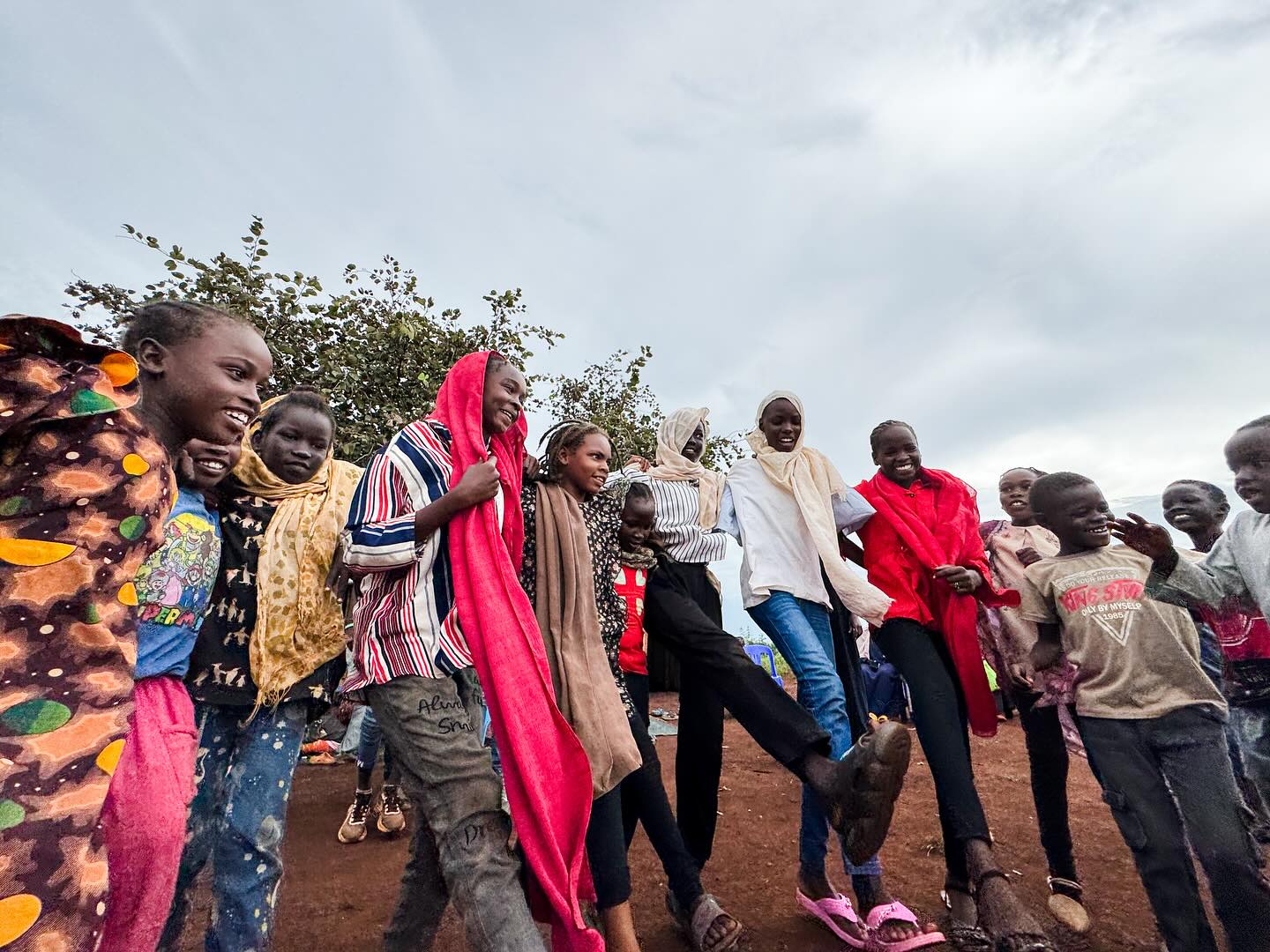
Sudanese actors have also organized artistic performances in displacement centers in Kassala, Wadi Halfa, and Gedaref. Their theatre productions address the spread of hate speech, environmental awareness, challenges facing displacement camps, sexual harassment, mental health, and disease outbreaks linked to the ongoing conflict.
Beyond performances, theatre practitioners are discovering and training new talent through workshops on interactive theatre, enabling participants to portray the realities of violence, displacement, and fear experienced by civilians fleeing armed clashes.
Theatre as a Tool of Resistance
Film and theatre director Ghadir Mirghani told Mashaweer that interactive theatre is “one of the tools of peaceful resistance,” helping communities raise awareness and confront social violence through dialogue.
He said the productions have focused on girls’ education, child marriage, and women’s participation in society, transforming issues that often remain unspoken into subjects for meaningful public discussion.
Mirghani added that theatre provides women with a platform to tell their own stories while increasing public awareness of women’s rights and their essential role in development.
He also noted that drama professionals organized training workshops on theatre and interactive performance, where young women and men received both theoretical and practical instruction on developing productions and incorporating local storytelling traditions, music, and performance techniques.
Songs of Peace
Artists and drama performers have also organized musical and theatrical events in displacement centers in El Obeid, North Kordofan, and across the Blue Nile Region.
Their performances promoted peace, rejected hate speech, encouraged peaceful coexistence among Sudanese communities, and emphasized the importance of accepting diversity.
In Damazin, the capital of the Blue Nile Region, theatre groups organized cultural evenings featuring children’s theatre, puppet performances, and productions focusing on girls’ and women’s issues.
Hatem Makki, a member of a puppet theatre group in Damazin, told Mashaweer that children were engaged through interactive performances using puppets and cartoon characters designed to reduce fear, stimulate imagination, promote ethical values, and support emotional healing.
He stressed that art is not a luxury but an essential community tool for promoting peace and ending war.
Makki added that the group also staged educational performances encouraging environmental awareness, disease prevention, and healthy practices among children.
Safia Bashir, who participated in the theatrical performances for the first time, described the experience as both successful and inspiring.
She explained that life in displacement centers often leaves people with little meaningful activity, making artistic initiatives an important way to use time creatively while supporting psychological well-being.
According to Bashir, theatre addressing women’s issues is one of the most effective tools for education and awareness. Beyond entertainment, it exposes the challenges women face and gives voice to experiences that are too often marginalized during times of war.