Trade Unionists and Researchers: War Has Weakened Workers’ Rights in Sudan and Deepened Their Livelihood Crisis
Nairobi – Mashaweer
The Sudanese Professionals and Trade Unions Coordination held a discussion forum in Nairobi, Kenya, on Saturday under the title “Workers Against War”, with the theme “The Voice of Workers in the Face of War and Peace.” The forum examined the impact of the war on workers’ conditions, its economic, social, and psychological consequences, and the role of the media and trade unions in the peacebuilding process.
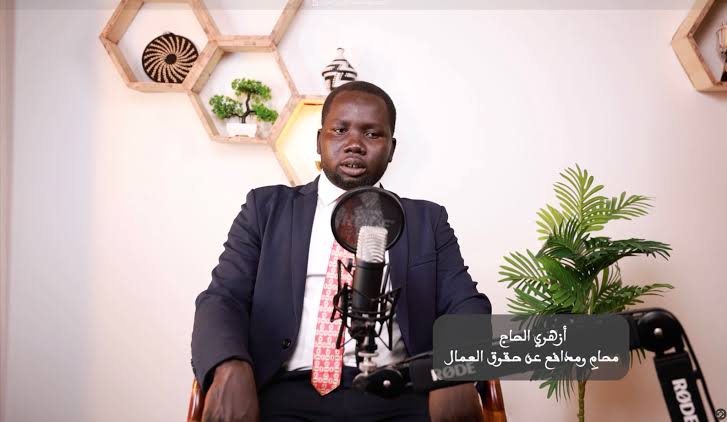
Researcher and civil society advocate Azza Mustafa told Mashaweer that the war has caused widespread harm to workers, particularly daily wage earners and employees in both the public and private sectors, after many stopped receiving salaries and countless others lost their sources of income.
She explained that the consequences of the conflict have also affected workers’ families, many of whom are facing severe financial hardship. At the same time, insecurity has become a daily concern, with property and livelihoods increasingly vulnerable to looting, even when they still exist.
Mustafa added that some professionals also face challenges related to hate speech and discrimination based on identity or appearance. Combined with soaring inflation, these factors have significantly eroded wages. The absence of effective social protection mechanisms has further intensified the hardship, especially for low-income workers.
She noted that the suspension of labor offices and trade union activities during the war has limited workers’ ability to claim and defend their rights, further worsening their living conditions.
Meanwhile, trade unionist and former Secretary-General of the National Council for Press and Publications, Hossam El-Din Haider, discussed the developments that led to the war and the parties benefiting from its continuation.
Speaking to Mashaweer, he said that organized media operations are actively fueling the conflict through coordinated campaigns promoting misleading narratives.
He stated that the media has become increasingly polarized during the conflict, while professional journalists continue to face restrictions, making many media institutions vulnerable to misinformation.
Haider emphasized that professional journalists face significant challenges and stressed that journalism should remain focused on reporting citizens’ concerns rather than becoming a tool of propaganda.
He argued that the current media landscape has increasingly taken on the characteristics of war journalism.
In a separate statement to Mashaweer, Azza Mustafa warned that the suspension of vocational training and professional development programs for workers will have long-term negative consequences for development.
She noted that four years of war have undermined substantial opportunities for progress and capacity building.
Mustafa further explained that the loss of income, unstable employment, and the absence of a sense of security have left many workers with deep psychological impacts.
She concluded that the combination of unemployment, unstable income, and insecurity has contributed to a significant increase in psychological distress among workers.