Why Is the Independent International Investigation into Violations in Sudan’s War Facing Obstacles?
Mashaweer – Report by Siddig Al-Dukhri
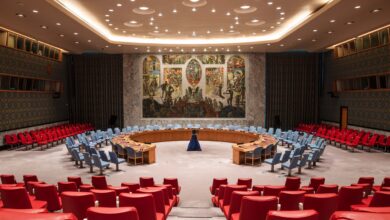
Sudan’s refusal to cooperate with the United Nations Independent International Fact-Finding Mission on Sudan during a session of the UN Human Rights Council in Geneva has sparked renewed debate over the future of the investigation.
The Sudanese delegation argued that the mission “was established without a legally binding basis for the Sudanese state.”
In contrast, governments and human rights organizations have called for investigators to be granted access to victims and witnesses, stressing that such cooperation is essential for documenting violations.
Renewed Dispute
The controversy resurfaced in May 2026 following the adoption of the Banjul Declaration by the United Nations Fact-Finding Mission and the African Commission on Human and Peoples’ Rights. The declaration called on all parties to the conflict to cooperate with investigative mechanisms, facilitate investigators’ access to victims, and preserve evidence.
The dispute dates back to October 2023, when the UN Human Rights Council established an independent international fact-finding mission to investigate violations committed since the outbreak of the conflict between the Sudanese Armed Forces (SAF) and the Rapid Support Forces (RSF).
From the outset, the Sudanese government rejected the decision, arguing that the mission had been created without its consent. As a result, it has not granted mission members visas or authorization to operate inside Sudan.
During Human Rights Council sessions, Sudan’s delegation has consistently maintained that the mission lacks a valid legal mandate, while countries supporting the resolution argue that the ongoing conflict and widespread violations require an independent international investigation.
The disagreement intensified again after discussions of reports concerning the situation in El Fasher during 2025. Sudan objected to assigning the mission an urgent investigative role, arguing that the Council’s decision imposed no legal obligation on the government.
The Government’s Position
The Sudanese government maintains that its objection concerns the way the mission was established and the scope of its mandate, rather than opposition to investigations into human rights violations.
Officials argue that the Human Rights Council’s decision places both the Sudanese Armed Forces and the Rapid Support Forces within a single investigative framework, which they consider inconsistent with the nature of the conflict.
The government also states that national accountability mechanisms already exist, alongside the country office of the UN Office of the High Commissioner for Human Rights (OHCHR) and the UN Expert on Human Rights in Sudan, which it believes are capable of addressing these issues.
In an official statement, Sudan’s Mission to the African Union criticized the Banjul Declaration, describing it as lacking a legal foundation and insisting that any investigations should be conducted inside Sudan in cooperation with Sudanese judicial institutions.
Calls for Cooperation
The Banjul Declaration, however, called for independent investigations into violations allegedly committed by the Sudanese Armed Forces, the Rapid Support Forces, and their allied groups.
It also urged all parties to cooperate with both the UN Fact-Finding Mission and the African Commission, ensure investigators’ access to victims and witnesses, preserve evidence, end attacks on civilians and civilian infrastructure, facilitate humanitarian access, support the International Criminal Court (ICC), and establish an African accountability mechanism.
“Cooperation Does Not Weaken the Government’s Position”
Sudanese legal expert Nabil Adib believes that continued refusal to cooperate with the fact-finding mission does not serve the government’s interests.
He said:
«”Cooperating with the mission does not mean accepting its conclusions. Rather, it gives the authorities an opportunity to present their own evidence and respond to the allegations.”»
He added that if the government seeks accountability for crimes committed by the Rapid Support Forces, it is in its own interest to cooperate with bodies documenting violations.
Adib further explained that:
«”The Human Rights Council and the International Criminal Court have different mandates. The Human Rights Council monitors human rights conditions, whereas the ICC is responsible for prosecuting individuals accused of international crimes.”»
Similarly, Geneva-based human rights expert Abdel Bagi Jibril said that allowing investigators to enter Sudan would give the government an opportunity to present its narrative directly, rather than having investigators rely solely on testimony collected outside the country.
Investigations Continue
Human rights organizations argue that preventing investigators from entering Sudan has not halted documentation efforts.
In a statement to the Human Rights Council, the Justice Commission said that attacks on the city of El Obeid in June 2026 demonstrate the need to maintain the mandate of the Fact-Finding Mission and strengthen its resources. It also emphasized that the role of the Office of the High Commissioner for Human Rights should complement—not replace—the mission’s work.
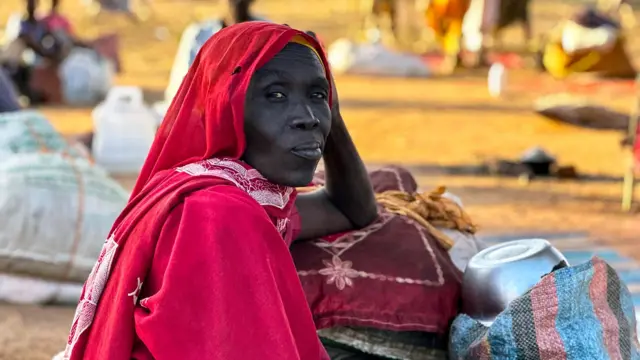
The mission currently relies on interviews with refugees and internally displaced persons, satellite imagery, analysis of videos, open-source intelligence, and information provided by humanitarian organizations.
An Absent Official Narrative
A former Sudanese diplomat, who requested anonymity, told Mashaweer that cooperating with international fact-finding missions does not constitute acceptance of their conclusions. Instead, it allows governments to present their official account, documents, and evidence during the investigative process.
He added:
«”Failure to cooperate weakens the state’s ability to influence the course of the investigation or challenge its conclusions later. Many countries have cooperated with international investigative bodies while still reserving the right to reject their findings.”»
While the Sudanese government continues to reject the mission’s mandate, the United Nations and human rights organizations maintain that investigations into violations should encompass all parties to the conflict, in accordance with the rules of international humanitarian law.
Meanwhile, the UN Fact-Finding Mission continues to collect evidence from outside Sudan as the disagreement over the investigation’s mandate and the government’s cooperation remains unresolved.