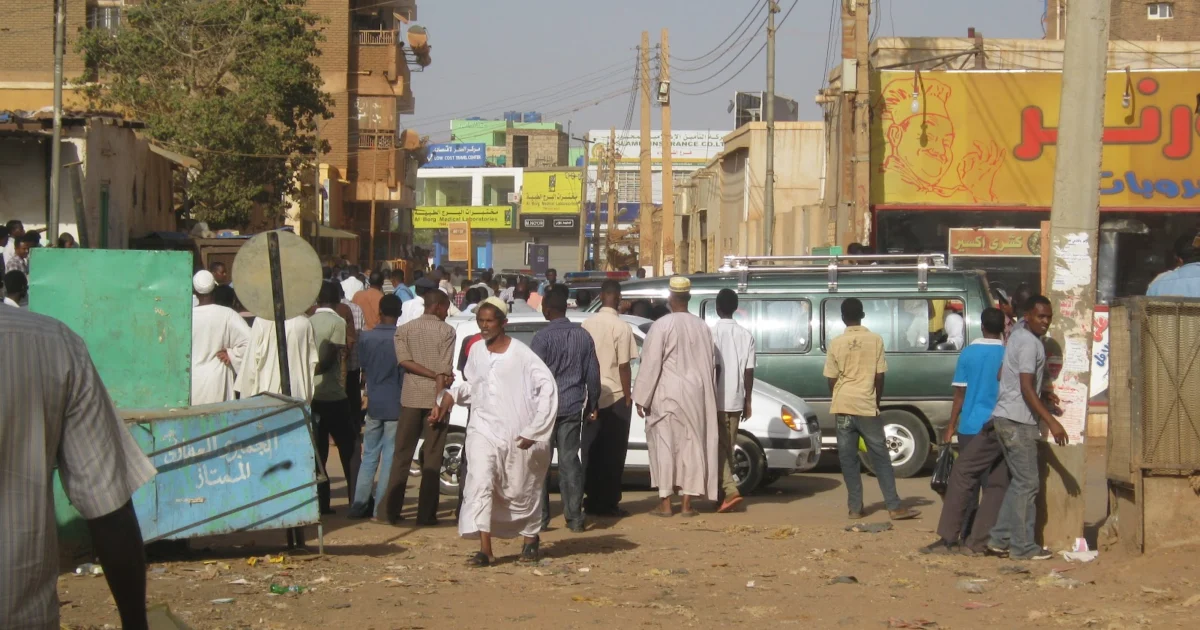
Markets in the Sudanese capital, Khartoum, are witnessing continued increases in the prices of consumer goods, which have reached unprecedented levels, with some prices rising by as much as 50 percent. The increases have been driven by fluctuations in the exchange rate of the Sudanese pound against the US dollar on parallel markets, as well as higher import and transportation costs.
The price increases have added to the hardships faced by citizens, who are already under growing cost-of-living pressures due to the ongoing war between the army and the Rapid Support Forces (RSF), which began in April 2023.
According to traders in consumer goods, prices are rising steadily as the Sudanese pound continues to lose value against foreign currencies. Some traders have also been reluctant to release their stocks for fear of incurring heavy losses, contributing to a slowdown in buying and selling activity.
Economic experts, meanwhile, say Sudan needs to revive local manufacturing to strengthen the economy’s ability to withstand external pressures, while also combating corruption and curbing speculation in foreign currencies.
A Package of Measures
The Central Bank of Sudan previously announced that it had injected 400 million UAE dirhams (approximately US$109 million) into banks to meet import financing needs. According to Central Bank Governor Amna Mirghani, the bank’s interventions and implementation of its policies had led to a noticeable decline in the exchange rate.
She said the foreign-currency injections would continue until conditions return to normal and would be used to meet importers’ needs. Mirghani said the measure was part of the Central Bank’s efforts to stabilize the exchange rate.
In April, the Sudanese government also announced a decision banning the import of 46 commodities in an effort to reduce demand for foreign currency. The economy is facing structural imbalances amid the ongoing conflict, including declining imports, rising expenditures and a severe shortage of foreign-currency resources.
Market Fluctuations
Against this backdrop, Sumaya Mohamed, a housewife living in the Al-Fitihab suburb of Omdurman, said: “Every morning, we wake up wondering what the market will bring in terms of price increases. Rising prices have become part of daily life and a source of anxiety for most Sudanese households following the return of residents to their areas.”
Mohamed said rising food prices had reduced families’ purchasing power and changed their lifestyles by making it increasingly difficult to meet basic needs.
“People can no longer do without essential commodities such as cooking oil, onions, flour, lentils and rice, because most citizens have come to rely on these foods as a main part of their diet,” she said.
She added that many people had stopped buying meat, with a kilogram costing around 48,000 Sudanese pounds (about US$20). Bread prices have also increased, with three pieces selling for 1,000 pounds (approximately US$1.20). Cooking gas prices have risen sharply as well, with a 12.5-kilogram cylinder reaching 100,000 pounds (about US$40).
“We have become confused about how to keep up with prices that are now beyond the means of ordinary citizens, who are economically vulnerable, particularly in the absence of stable sources of income,” she said. “Many people spent their savings during displacement, while there are no effective official mechanisms to protect us from the escalating cost of living.”
The housewife also noted that consumers had increasingly turned to street vendors who sell goods in small quantities according to what families can afford, adopting the slogan, “Buy according to your circumstances.” This means purchasing only small quantities or buying according to the day’s needs.
“Before the war, we used to buy enough supplies to last an entire month,” she said.
Stockpiling Commodities
Meanwhile, Muawiya Ibrahim, a trader at Omdurman Market, said the sharp depreciation of the Sudanese pound, combined with some traders’ reluctance to release stored goods for fear of losses, had contributed to higher consumer prices and a decline in market activity.
Ibrahim explained that most traders in Greater Omdurman had stopped importing goods from abroad after the exchange rate reached 5,000 pounds to the US dollar on the parallel market, amid rising demand for foreign currency and its limited availability through banks.
He said food prices had increased by as much as 50 percent, including essential commodities such as flour, sugar, tea, rice, lentils and cooking oils.
“We had hoped that the slight recovery seen last month, when the pound strengthened somewhat against the dollar, would continue,” he said. “But the exchange rate quickly deteriorated again, reaching around 6,000 pounds to the dollar, compared with approximately 4,800 pounds before the latest surge.”
He added that many traders had turned to purchasing foreign currency out of fear that their savings would lose value in local currency, further intensifying speculation in parallel markets.
“It is unfortunate that Sudanese customs authorities increased the customs dollar rate from 3,517 pounds to 3,743 pounds, an increase of 6.4 percent,” Ibrahim said. “This is expected to have a negative impact on the prices of imported goods in the coming period.”
The Omdurman trader expected the pound to continue losing value given the country’s current economic conditions and what he described as the failure of measures aimed at containing its depreciation.
Growing Pressures
Economic researcher Abdelwahab Gomaa said Sudan was experiencing extremely complex conditions as a result of the ongoing conflict, which had negatively affected citizens and subjected them to growing pressures on their livelihoods.
He said efforts to find solutions to economic imbalances, improve living conditions and contain exchange-rate volatility had so far failed to achieve the desired results.
“There is clearly a significant gap between currency movements and price levels,” Gomaa said. “The slight improvement in the exchange rate has not translated into price stability in local markets.”
He added that the success of the Central Bank’s policy depended on sustained foreign-currency injections.
“Any temporary injection will only lead to another increase and uncontrolled rise in prices,” he said. “Stabilizing the foreign-exchange market requires addressing the structural causes of the foreign-currency shortage, rationalizing imports and building adequate foreign-currency reserves.”