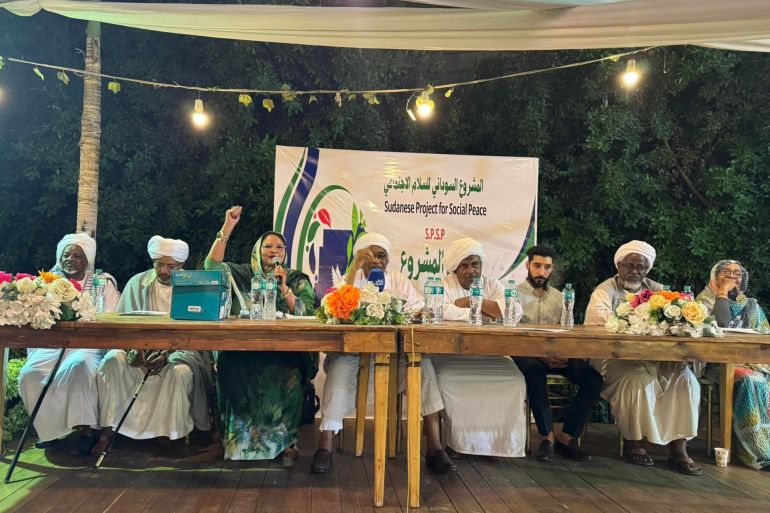
Sudanese Researchers Discuss the Role of Art in Countering Hate Speech
Nairobi – Mashaweer
Speakers at a seminar titled “The Role of the Arts in Combating Racism” said that hate speech in Sudan is no longer merely passing words spoken in the streets or circulated via mobile phones. Instead, it has become part of a broader system shaped by the repercussions of war, political and economic crises, insecurity, rumors, and weak accountability.
The online seminar, organized by the Sudanese Center for Peace and Justice, discussed the ability of the arts to counter hate speech and their potential contribution to changing the culture that creates an environment conducive to violence and war.
Participants agreed that art has a significant ability to reach people emotionally and reshape perceptions of others. However, they stressed that art alone cannot address a deeply rooted societal crisis unless its role is integrated with education, law, media, cultural policies, and civic action.
Samar Fath Al-Rahman, a researcher in the arts, told Mashaweer that “hate speech does not necessarily begin with direct violence. It may start with a word, a stereotype, or an idea that appears simple, before developing into violent practices, conflicts, and wars.”
She referred to what she described as the “law of unfamiliar faces” that has emerged during the current war, considering it an extension of an older form of discourse that categorizes Sudanese people according to their regions and geographical affiliations.
Fath Al-Rahman emphasized that “art cannot stop the war on its own, but it can contribute to changing the culture that makes war possible by building empathy, restoring human dignity, and confronting stereotyping and exclusion.”