In Blue Nile Region… Stories of Sudanese Who Fled Barefoot from the Fires of Fighting
Blue Nile – Mashaweer
The fighting in Geissan locality, in Sudan’s Blue Nile Region, left Sudanese civilians with little choice but to flee. Families escaped with their children and meager belongings through rain and gunfire before reaching Wad Al-Mahi, where they found overcrowded schools, limited shelter, and increasingly harsh humanitarian conditions.
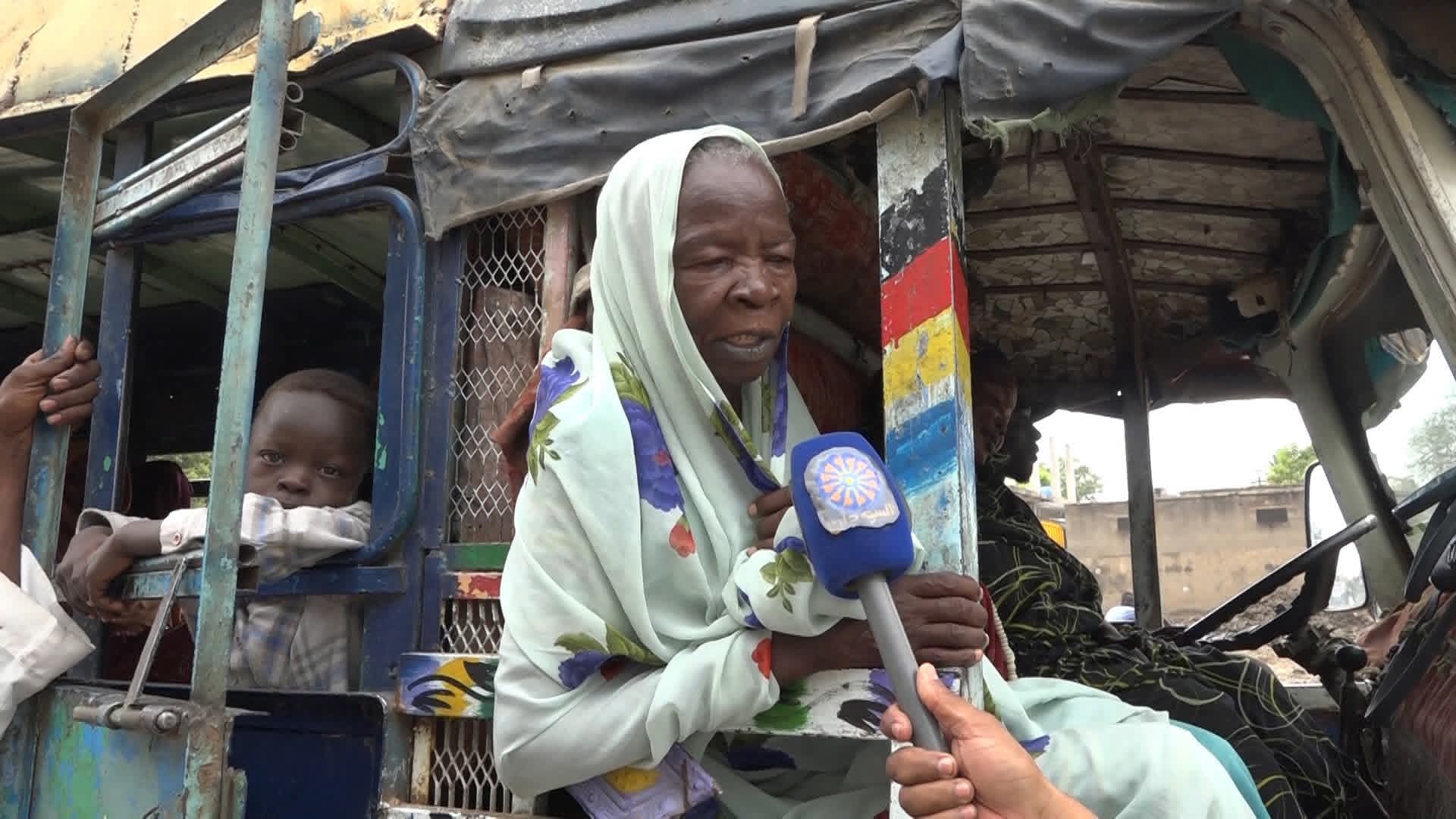
In a report prepared by Al Jazeera correspondent Haitham Oweit, the effects of the arduous journey were clearly visible on the faces of displaced people arriving in Wad Al-Mahi after traveling long distances to escape the fighting. A displaced woman, Bahriya, said they walked with young children barefoot, without shoes or adequate clothing.
For Aisha, the experience was even more difficult. She was forced to carry her children and flee with them through trees and flooded areas while gunfire surrounded them. She said her family spent two days outdoors in the rain, mosquitoes, and hunger, amid ongoing gunfire.
Aisha recounted that bullets were falling among the trees and the straw shelters used by displaced people. Everyone was running through the rain in search of a safer place. Throughout the journey, she did not know where they were heading or when it would end, until they finally reached Wad Al-Mahi.
Mass Displacement
According to the report, more than 12,000 people have been displaced from Geissan town alone, fleeing fighting between the Sudanese army and allied forces on one side, and the Rapid Support Forces (RSF) and the Sudan People’s Liberation Movement (SPLM) on the other. The displacement is part of continuing waves of forced movement across Sudan.
Displaced people continued traveling by river boats from Geissan to Village Six in Wad Al-Mahi locality, carrying whatever belongings they had managed to save. Authorities opened schools to accommodate them, forcing displaced families to share courtyards and classrooms with students amid the rainy season and a shortage of basic services.
Shelter Under the Rain
The conditions facing newly arrived Sudanese reflect the limited humanitarian response to steadily increasing numbers of displaced people, at a time when local authorities are suffering from a shortage of resources and essential services.
Mahgoub Al-Sheikh, Commissioner of Wad Al-Mahi, said that displaced people in other areas are living in the open under small plastic sheets.
Al-Sheikh explained that a single covering measuring no more than 4 by 4 meters may shelter more than 40 or 50 people, including children, elderly people, and men. Such harsh conditions provide inadequate protection from the rain and highlight the widening gap between humanitarian needs and local capacity.
The suffering of those fleeing does not end when they reach displacement areas. The war continues to force more Sudanese to search for new places of refuge inside and outside the country. The United Nations High Commissioner for Refugees (UNHCR) says Sudan is experiencing the world’s largest displacement crisis.
Speaking from Geneva, UNHCR spokesperson Yugen Pion said around 12 million people remain displaced inside and outside Sudan. She noted that the fighting, which has continued since April 2023, is repeatedly forcing civilians to flee, with some being displaced for a second, third, or even more times.
Pion said humanitarian needs continue to grow without a corresponding increase in international support, warning that insufficient funding is limiting humanitarian organizations’ ability to meet the basic needs of displaced people. She added that neighboring countries, including Chad and South Sudan, are also facing increasing pressure.
She stressed that humanitarian access represents a challenge comparable to funding shortages, noting that aid convoys have come under attack and relief organizations face difficulties reaching affected communities amid the ongoing fighting.
Crisis Expands
The UNHCR spokesperson said Darfur and Kordofan have witnessed the most intense fighting in recent weeks, alongside drone attacks targeting civilian sites, displacement areas, and humanitarian convoys. She stressed that limited access to those in need, combined with insufficient funding, is hampering the delivery of assistance.
Pion warned that continued inability by humanitarian organizations to reach displaced people could trigger new waves of displacement, as civilians are forced to move again in search of safety and essential services, and may ultimately cross borders into neighboring countries that are themselves facing mounting crises.
Chad is among the countries most affected, having received hundreds of thousands of people fleeing Sudan. The UN official said around 940,000 Sudanese have arrived in Chad since 2023, in addition to approximately 400,000 who were already there before the war began.
According to the UN official, Chad is facing increasing pressure due to poverty, climate variability, heatwaves, and funding shortages, contributing to heightened risks of disease outbreaks, including cholera. Pion warned that without adequate support, the situation poses a serious threat to refugees’ lives.
The risks extend beyond shortages of food, shelter, and basic services. The UN official also spoke of violations faced by displaced people and refugees during their journeys, including theft, road blockages, and abuses at checkpoints, stressing the need to establish safe humanitarian corridors for those fleeing.