Pregnant Women in Sudan Face a Catastrophic Health Crisis Due to the War
Report – Mashaweer
Halima Al-Bashir is struggling to stop rainwater from flooding her tent. With her other hand, the eighth-month pregnant woman tries to protect her abdomen, fearing that she may fall and lose her unborn baby. As heavy rains continue to fall in Sudan’s Blue Nile region, the suffering of displaced people has intensified, leaving them facing increasingly dire humanitarian and health conditions.
The days Al-Bashir had once looked forward to with joy as she awaited her baby have turned into a daily struggle marked by anxiety and fear. She wakes up with pregnancy pains, but her first concern is no longer when she will give birth. Instead, she worries about whether reproductive healthcare will be available, particularly after clinics inside displacement shelters in Damazin were closed 60 days ago due to a lack of funding.
Challenges and Risks
The Sudanese displaced woman said, “Accessing doctors during pregnancy has become a challenge for hundreds of women who have suffered infections, high blood pressure, and severe bleeding because of inadequate healthcare. Dozens of others are also suffering from anemia during and after pregnancy.”
She added, “We are living in extremely difficult conditions where the hardship of displacement intersects with a lack of healthcare, the high cost of treatment, and difficulties accessing food and clean drinking water. We fear that pregnancy and childbirth could become additional threats to the lives of mothers and their children, given the limited health services and needs that exceed the capacity of many shelters to respond.”
She explained that “healthcare facilities and hospitals in the Blue Nile region have been destroyed and bombed, particularly in areas that have witnessed fighting between the Sudanese Army and the Rapid Support Forces, while some facilities have closed because of shortages of medicines and funding.”
Deaths Reported
Meanwhile, Buthaina Badawi, who lives in the Al-Karama 4 displacement shelter, said that “the small number of health centers in areas where displaced people are concentrated has affected women’s reproductive health. According to volunteer doctors, high-risk pregnancies account for 10 percent of all pregnancies, while around 12 percent of women suffer from anemia during and after pregnancy.”
Badawi noted that “there have been deaths among pregnant women as a result of infections, high blood pressure, and severe bleeding, with healthcare shortages preventing them from being saved.”
The displaced woman added, “Several women are forced to give birth in unsanitary conditions, increasing the risk of complications and sepsis, a life-threatening condition in which the body’s response to infection damages its own tissues and causes organs to malfunction.”
Mobile Clinics
Midwife Siham Suleiman similarly described the situation facing pregnant women as “catastrophic,” saying their fate remains uncertain because of the difficulty of reaching the few hospitals that are still operating. This is due to a lack of transportation and ambulances in areas where displaced people are concentrated in Blue Nile State.
Suleiman said that “the health centers have been closed for more than 60 days, forcing me to provide assistance with limited resources and move between displacement shelters in search of equipment to help pregnant women, particularly after the clinics were shut down.”
She expressed hope that health centers would reopen in areas hosting displaced people to provide the minimum level of healthcare for pregnant women, especially as more than 500 pregnant women are reportedly unable to access reproductive healthcare.
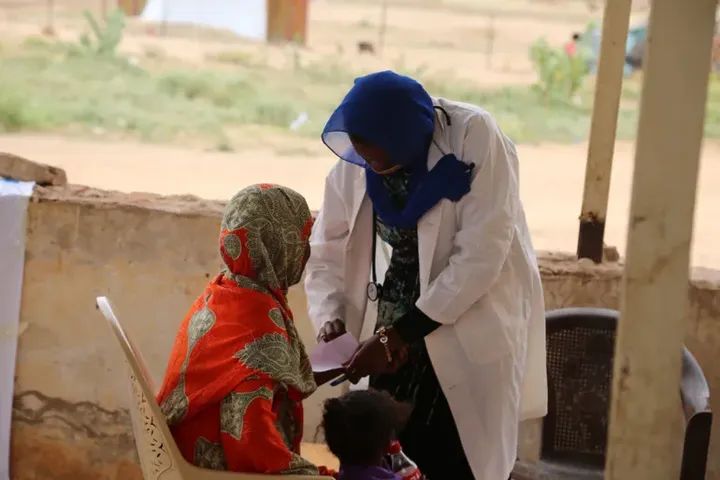
The Sudanese midwife noted that the Sudanese Red Crescent Society has been providing services to displaced women through a mobile clinic, assisted by volunteer nurses and midwives who conduct medical examinations, monitor pregnancies, and address conditions that can be treated in the field.
Lack of Healthcare
Amira Adam, a reproductive health specialist working in areas hosting displaced women, explained that “cuts in funding for humanitarian organizations have led to the suspension of clinics and the closure of essential healthcare facilities in Blue Nile State, including those serving displaced people.”
She said that “hundreds of displaced women are suffering severely, and several maternal deaths have been recorded because of inadequate antenatal care, alongside the lack of healthcare for newborns, contributing to increased maternal and infant mortality rates.”
Adam warned that “the lack of healthcare in displacement shelters is putting the lives of thousands of girls and women at risk because of severe shortages of medical personnel and medicines.”
Hardships and Threats
Meanwhile, Mashaer Shaaban, a member of the Sudanese Family Planning Association, said that “the health conditions of women and girls have deteriorated significantly inside shelters due to the lack of necessary medical care and severe shortages in reproductive health services, particularly vitamins and nutritional supplements.”
Shaaban added that “the hardships of displacement are forcing women to give birth in unsanitary conditions in areas where they cannot access adequate healthcare or medicines, particularly in the Blue Nile region, which has been experiencing armed conflict for more than three months.”
She continued, “The scale of the health crisis has become catastrophic and reached unprecedented levels. Women and girls are facing enormous hardships and threats and have become among those most severely affected by war and displacement.”
Dangerous Complications
Obstetrician and gynecologist Khogali Hafez said, “There have been many cases of maternal deaths due to shortages of essential medical supplies, such as antibiotics. Some women have suffered infections, high blood pressure, and severe bleeding, but they could not be saved because of critical blood shortages, a lack of life-saving medicines, and delays in transporting patients from displacement shelters to healthcare facilities amid the war.”
Hafez explained that “hundreds of pregnant women in Blue Nile State are suffering from malnutrition this year, in addition to serious health complications during and after childbirth. This is particularly affecting women who skip meals and go to bed hungry so that their children can eat, severely limiting the nutrients available to their developing fetuses and raising serious concerns about the health of these children at birth.”
He stressed that “the situation of pregnant women in areas hosting displaced people is extremely poor because sufficient food is not available for mothers and their unborn children. Pregnant women have increased nutritional requirements, and ensuring that they receive adequate and balanced meals is essential. When this element is absent, we are seeing an increase in miscarriages and deaths among pregnant women.”