Arms Embargo… Is Washington Opening a Breach in the Wall of Sudan’s War
London – Mashaweer | Report by Eidros Abdel Aziz
The United States has thrown a stone into the stagnant waters of Sudan’s war by announcing its intention to expand the arms embargo imposed on Darfur for more than two decades to cover the entire country. The move appears aimed at shifting from a policy of limited sanctions toward a more direct attempt to reduce both sides’ ability to continue fighting and push them to reassess the cost of pursuing a military victory versus returning to negotiations. While the step appears fraught with risks, it also signals Washington’s determination to create a breach in the wall of a war that has come to be described as one of the world’s largest and most severe humanitarian crises.
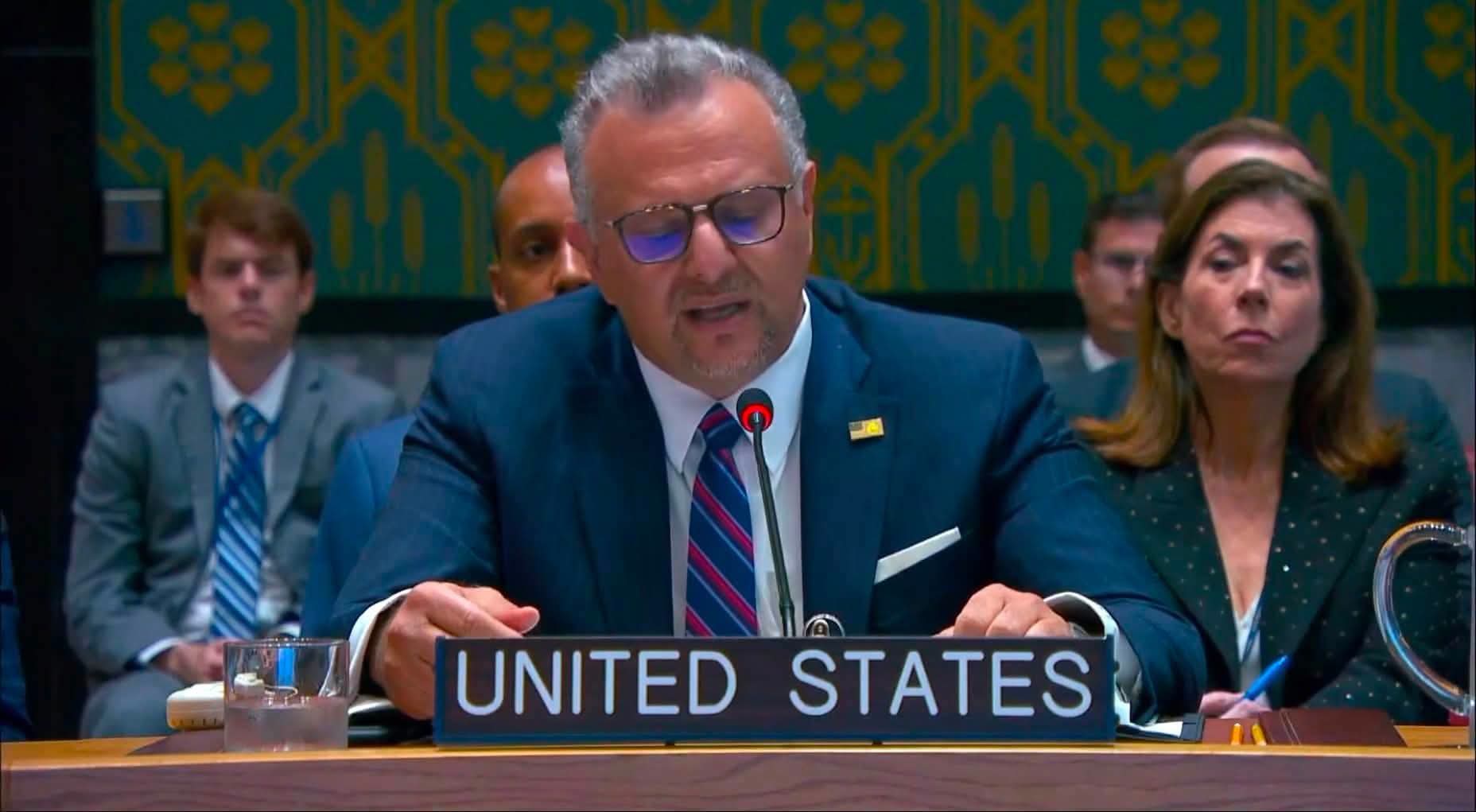
Masad Boulos, the U.S. president’s senior adviser for Arab and African affairs, told the UN Security Council days ago that the U.S. proposal includes drones, their technologies and components, in addition to strengthening the work of the Sanctions Committee’s Panel of Experts tasked with monitoring violations.
A Real Test
The current arms embargo regime for Darfur expires on September 12, making the coming weeks a test of Washington’s ability to build consensus within the Security Council over expanding the embargo. However, Russia, which has expressed clear reservations, said it would not accept any measures that could affect the Sudanese army’s capabilities, while China has taken a cautious position on expanding sanctions. This makes the passage of the proposal in its current form far from guaranteed.
Washington views the proposed embargo as a tool of pressure rather than merely a punitive measure. According to The Associated Press, the U.S. administration believes that restricting access to weapons could push the warring parties back to the negotiating table, at a time when UN Under-Secretary-General for Political and Peacebuilding Affairs Rosemary DiCarlo has warned against the parties’ continued reliance on a military solution and the ongoing flow of advanced weapons.
Betting on Victory
In contrast, statements by Sovereignty Council Chairman and army commander Abdel Fattah al-Burhan reflect a continued reliance on military victory. Burhan downplayed the potential impact of sanctions, saying that discussions about them would neither affect Sudan nor weaken the armed forces’ resolve. He stressed that the army would continue fighting until it retakes all areas controlled by the Rapid Support Forces (RSF).
This divergence reveals the essence of the political battle surrounding the U.S. proposal. Washington wants to convince both sides that the flow of weapons will no longer remain unrestricted, while Sudan’s military leadership continues to speak in terms of retaking territory by force. The same applies to the RSF, which continues to strengthen its positions and rely on supply and weapons networks, including drones.
The U.S. premise is that continued access to rearmament prolongs the war. As long as each side believes it can replace its losses and obtain more drones, ammunition, fuel, and financing, its incentive to make concessions remains limited. But if supply operations become more difficult and costly, military calculations could gradually shift in favor of a settlement.
The Drone Weapon
Over recent months, the Sudanese war has witnessed a major expansion in the use of drones. They are no longer targeting only front lines but have reached cities, markets, electricity and water facilities, and health services. DiCarlo said advanced weapons, including drones, have become a key factor in increasing the cost of the war for civilians.
From this perspective, restricting the flow of drones, their components, ammunition, and heavy weapons could produce an immediate humanitarian benefit by reducing long-range attacks, limiting civilian casualties, curbing waves of displacement, and reducing disruption to hospitals and electricity and water networks, while also improving humanitarian access.
However, the success of the U.S. plan remains dependent on implementation. The arms embargo imposed on Darfur since 2005 did not prevent weapons from flowing into the region, highlighting the limited effectiveness of UN decisions when they are not accompanied by effective monitoring and enforcement mechanisms.
Opposition Welcomes the Proposal
Sudanese civilian opposition forces welcomed the U.S. proposal while stressing the need to link it to a comprehensive political process.
Khalid Omar Youssef, a leader of the Somoud Alliance, said pressure on both sides of the war should form part of an “integrated package” aimed at ending the fighting and restoring the civilian political process, rather than being merely a standalone punitive measure.
Yasser Arman, chairman of the Sudan People’s Liberation Movement – Democratic Revolutionary Current, warned that partial measures could lead to “managing the war rather than ending it.” He called for a joint roadmap between the African Union and the United Nations to halt the fighting while preserving Sudan’s unity.
The real test of Washington’s seriousness will be its ability to move from a Security Council decision to pursuing supply networks, including air routes, land corridors, intermediaries, companies, and individuals facilitating the purchase and transfer of weapons to Sudan.
Washington does not appear to be relying on the embargo alone to end the war. Rather, the proposal is likely part of a broader effort to raise the cost of continued fighting while simultaneously pushing toward a negotiated process.
U.S. officials say the objective is not to hand victory to one side over the other, but to reduce both sides’ ability to wage an open-ended war without a political horizon. Nevertheless, the seriousness of the U.S. move will ultimately be measured by its willingness to pressure external supporters, not only the Sudanese combatants.
If weapons continue to flow, expanding the embargo will amount to little more than a legal framework with limited practical impact. But if it is accompanied by monitoring mechanisms, sanctions, and coordinated diplomatic pressure to open the door to negotiations, it could become one of the strongest international pressure tools since the outbreak of the war.
At its core, the U.S. proposal places two opposing calculations directly against each other: Washington wants to make continuing the war more difficult and costly, while both sides of the conflict insist on fighting until they regain full control of the country. Between these positions, civilians remain the group most likely to benefit from any measure that genuinely succeeds in reducing the flow of weapons of destruction—even before a comprehensive political settlement is reached.