Sudan Anti-War Forces File Complaint Against African Union Commission
Nairobi – Mashaweer
Sudanese anti-war forces have stepped up their objections to the African Union Commission’s welcoming of Army Commander Abdel Fattah al-Burhan’s initiative for dialogue. On Wednesday, they submitted a formal complaint to the African Union Peace and Security Council and the Department of Political Affairs, Peace and Security, warning that the initiative contravenes AU decisions and risks entrenching Sudan’s division.
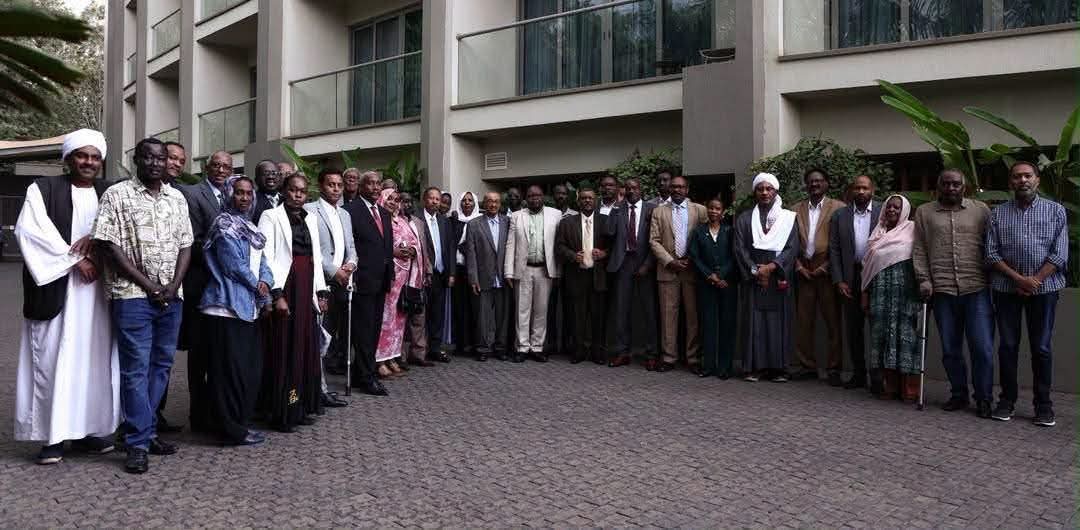
The anti-war forces that signed the memorandum include the Sudanese Declaration of Principles Forces, the Umma Party, the Popular Congress Party, a group of civil society organizations, women’s and youth networks, as well as prominent public figures, including intellectuals, academics, writers and cultural figures.
The memorandum stated that the AU Commission’s statement “went beyond the position of the African Union Peace and Security Council,” noting that it made no reference to a humanitarian truce or ceasefire, which the Council has identified as an urgent priority that must not be delayed. It added that welcoming an initiative controlled unilaterally by the same military leader who led the October 2021 coup contradicts the substance of the decision to suspend Sudan’s AU membership until the effective restoration of legitimate civilian rule, as well as the AU’s policy of zero tolerance for unconstitutional changes of government.
The forces also said the statement ignored the principles they had conveyed during direct consultations with the African Union and the Quintet mechanism, as well as in their joint position document signed in Addis Ababa on August 22 and 23, 2026. These principles include full Sudanese ownership of the decision-making process, prioritizing an end to the war and addressing the humanitarian catastrophe, and excluding forces affiliated with the National Congress Party, the Islamic Movement and their associated fronts from a political role because of their documented involvement in triggering and prolonging the war.
They warned that a partial dialogue conducted from territory controlled by one of the country’s warring parties, without the participation of the majority of Sudanese people and without any commitment to a cessation of hostilities, would entrench Sudan’s political division, adding to the de facto territorial fragmentation created by the continuation of the war.
The forces called on the African Union Peace and Security Council to require the Commission to provide an official explanation of the basis for its statement, maintain the requirement for a humanitarian truce and a comprehensive ceasefire, ensure that the African Union remains a neutral and credible actor, and unify mediation tracks—particularly the Quad and Quintet mechanisms—within a single, coordinated framework.
They affirmed their full readiness to cooperate and maintain consultations with the African Union and its various bodies, stressing their belief that a just and sustainable peace is the only way to save Sudan’s unity and preserve the dignity of its people.