The Chair of the UN Fact-Finding Mission for Sudan, Mohamed Osman Chande, said that “the situation in Sudan points to the features of an unprecedented catastrophe,” noting that weapons technology, particularly long-range drones, has reshaped the battlefields.
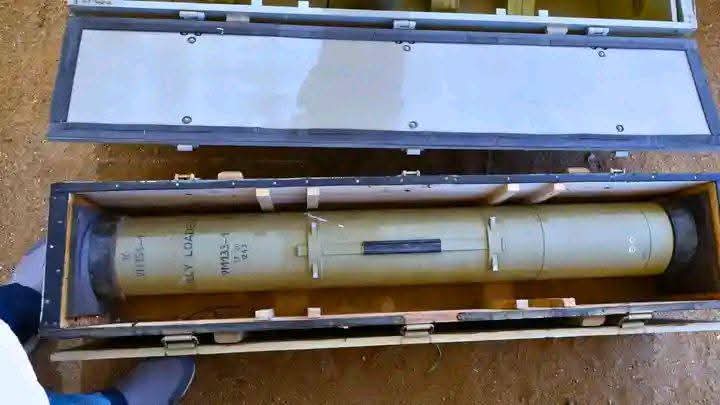
Speaking before the UN Human Rights Council, Chande said the mission’s report presented two closely interconnected key findings. First, weapons technology, particularly long-range drones, has transformed the battlefield. Second, these military capabilities are being sustained through external support involving weapons, technology, logistics, training, and personnel.
The Drone Threat
Both the Sudanese Armed Forces (SAF) and the Rapid Support Forces (RSF) are increasingly using long-range drones, resulting in attacks extending far beyond traditional front lines and having devastating consequences for civilians.
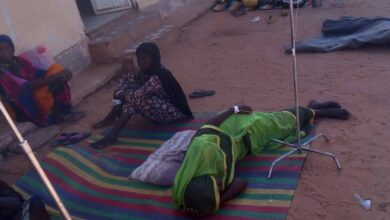
As Chande explained, civilians have been harmed in their homes, schools, hospitals, markets, displacement sites, and places of refuge, as well as while attending weddings, funerals, and community gatherings. This pattern of violence cannot be measured solely by counting casualties, but also by the loss of essential services, destruction of infrastructure, and the continuing disruption of daily life.
Documenting the Attacks
Last July, the UN Human Rights Council mandated the UN mission to conduct an urgent investigation into the city of El Obeid in North Kordofan State. Although the investigation is still ongoing, repeated RSF drone attacks have affected electricity, fuel, and other critical infrastructure on which civilians depend for access to water and healthcare, underscoring the continuing risks facing cities under partial siege.
The report documents a series of “devastating” strikes. In Talodi, South Kordofan State, successive attacks on a kindergarten and a hospital killed 114 people, including 60 children, and also harmed people who were present at the sites of the initial strikes and had attempted to assist the wounded.
In El Daein, East Darfur State, strikes put El Daein Teaching Hospital out of service, killing at least 70 people and depriving more than two million people of primary healthcare services.
In Yabus, Blue Nile State, drone attacks by the Sudanese Armed Forces targeted the main market and water infrastructure, damaging shops and market facilities and killing and injuring women and children.
Women and Children
The report also notes that women and children bear the greatest burden. In El Obeid, a maternity hospital suspended its operations after a nearby drone strike damaged the operating theatre and pharmacy.
For children, the destruction of schools and healthcare facilities not only threatens their safety today but also affects their development and well-being in the future.
Based on the evidence collected, the mission concluded that there are reasonable grounds to believe that both the Sudanese Armed Forces and the Rapid Support Forces committed serious violations of human rights and international humanitarian law that may amount to war crimes.
External Support
Regarding the parties involved in supporting the war, Chande pointed to a broad external support network fueling the conflict. The mission found reasonable grounds to believe that a transnational network facilitating military operations and connecting individuals and entities in Chad, southeastern Libya, and Puntland in Somalia supplied Nyala and other areas under RSF control with weapons, equipment, military materiel, and logistical assistance through air, land, and sea routes.
Similarly, evidence indicates that former Colombian military personnel were recruited, trained, and deployed to support the RSF. They played key roles in drone operations by operating and maintaining systems and training personnel before and during the capture of El Fasher, where conduct indicative of genocide was documented. Foreign fighters from South Sudan, Chad, and Ethiopia were also identified.
In contrast to the findings concerning external support to the RSF, the mission’s investigation into external support provided to the Sudanese Armed Forces remains at an early stage.
The mission emphasized that states have a responsibility not only to refrain from contributing to violations, but also to take reasonable measures to prevent them wherever there is a clear and foreseeable risk. Continued support in the face of established violations raises serious concerns, with responsibility potentially extending beyond the direct perpetrators to those who facilitate or enable such violations.
The mission’s recommendations include ending this “senseless war,” fully complying with international law, and taking all necessary precautions to protect civilians and civilian objects. It also calls on states to halt military support that could fuel violations and to effectively investigate individuals and entities providing unlawful support.
The recommendations further call for enforcement of the arms embargo imposed on Darfur and its extension to all of Sudan; preservation of evidence and making it available to independent investigative and judicial bodies; protection of victims and witnesses; and ensuring that survivors receive immediate assistance and effective remedies.
Most importantly, the recommendations stress that accountability efforts must extend across the entire chain of responsibility, including those who commit international crimes, order them, finance them, supply them, or facilitate them.
Chande also expressed deep concern over the deteriorating environment for documentation and accountability. Survivors and witnesses, journalists, lawyers, and human rights defenders continue to face intimidation and harassment by all parties to the conflict, including because of their cooperation with the mission.