“Two Certificates” for One Nation… War Draws New Borders for Sudan’s Education
Report – Ahmed Younis
Within 48 hours, Sudan announced two sets of results for examinations bearing the same name — the “Sudanese Certificate” — administered by two warring authorities. It was one of the clearest manifestations of the division that the war has extended from the battlefield and governing institutions into education and the future of students.
In Nyala, the capital of South Darfur, the authority affiliated with the “Tasis” alliance, which supports the Rapid Support Forces (RSF), announced on Tuesday the results of the secondary school certificate examinations it organized in areas under its control in Darfur and Kordofan.
Another Announcement
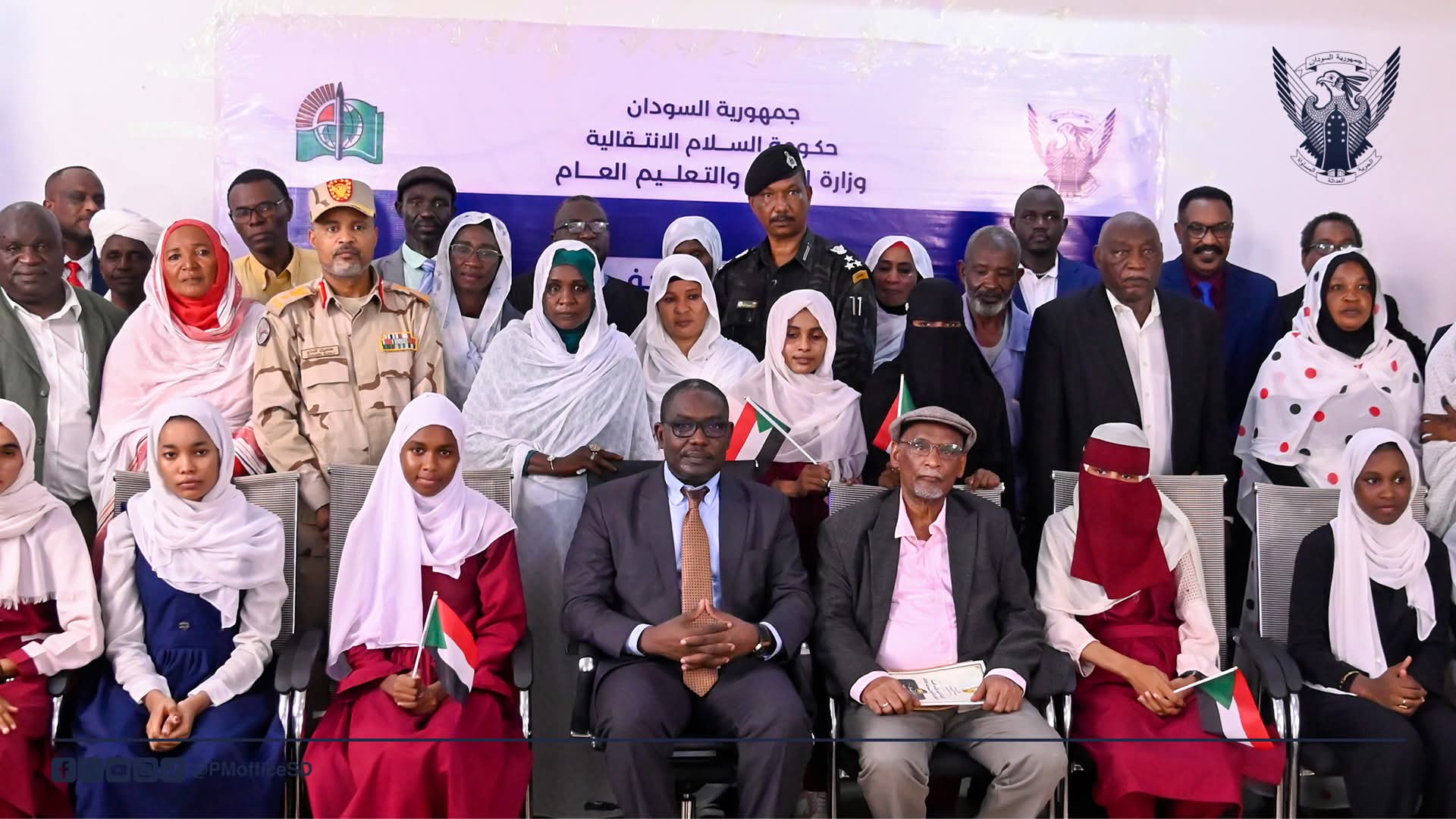
On Thursday, the Ministry of Education affiliated with the government in Khartoum is set to announce the results of the Sudanese Certificate examinations for the 2025–2026 academic year, after they were approved by Sovereignty Council Chairman and army commander Abdel Fattah al-Burhan on Tuesday.
The difference between the two examinations is substantial. A total of 559,000 male and female students sat for the government-administered examinations inside and outside Sudan, compared with 510,000 before the war. Meanwhile, 10,664 students registered for the “Tasis” examinations, of whom 9,314 actually sat the exams.
However, these figures do not include students who were unable to take either examination. According to the United Nations Children’s Fund (UNICEF), at least 8 million school-age children in Sudan remain out of school.
The fact that “Tasis” organized the examinations does not mean they reached all eligible students in areas under its control. The number who sat the exams — 9,314 students — remains limited compared with the vast geographical areas affected by the war and the scale of the education crisis in Darfur and Kordofan.
Out of School
UNICEF estimates that around 4 million school-age children live in Darfur alone, with more than 3 million of them out of school. Darfur and Kordofan are among the areas hardest hit by disruptions to education.
The lines of military control also do not correspond neatly with the geographical distribution of the two examinations. Tens of thousands of students from Darfur and Kordofan were able to travel outside their areas to sit the government examinations, while war, displacement and difficulties in movement prevented others from reaching either examination.
In June, UNICEF called for equal opportunities for all Sudanese students to sit a single, nationally recognized examination, warning that multiple examinations could create divisions that would limit students’ opportunities in the future.
Alongside the examinations in Khartoum and Nyala, thousands of students do not appear in the results of either examination after war, displacement and the disruption of schools prevented them from sitting the exams.
Emotional Division
A Sudanese education expert, who requested anonymity for security reasons, believes the danger goes beyond having two examinations and extends to what he described as an “emotional division” among students from the same country.
He said the Sudanese Certificate is supposed to be available to students across all 18 states, and that denying students in conflict-affected areas equal opportunities could generate feelings of injustice and marginalization.
He called for an “ethical agreement” between the two sides of the war to keep students and education separate from the conflict and allow examinations to be held in safe areas.
He pointed to the experience of the Darfur war, when students used to travel from areas controlled by armed movements to cities to sit their examinations and then return home. He stressed that a student’s right to education should not be determined by the military authority controlling his or her area.
He warned that school dropout in conflict zones is no longer simply a matter of absence from school. Some students have turned to work, gold mining and informal economic activities, while others have become involved in fighting. This makes it difficult to bring them back to classrooms and exposes some to what he described as “relapse into illiteracy” as a result of prolonged interruption of their education.
He believes the “Tasis” examination was an attempt to preserve the educational rights of students who were unable to reach the government examinations. However, institutionalizing two certificate systems could transform the political and geographical divide into a long-term educational division.
An Indicator of Recovery
The government presents the increase in the number of students sitting its examinations as an indicator of an education recovery.
Education Minister Al-Tihami Al-Zein Hajar said 559,000 students had taken the examinations, an increase of 49,000 compared with the pre-war period, describing this as evidence of stability and the regular resumption of the educational process.
According to the ministry, the examinations were held at 3,333 centers inside and outside Sudan, including 84 centers in 14 countries.
Upon approving the results, al-Burhan praised teachers for their resilience and their efforts to keep the educational process going, reaffirming the state’s commitment to supporting education.
However, the education expert argues that an increase in the number of examinees alone is not enough to demonstrate recovery. Recovery should also be measured through the quality of education, the school environment, stability of the academic year, declining dropout rates, teachers’ conditions, academic achievement and curricula.
UNICEF estimates, however, that at least 8 million children remain out of school, with the crisis particularly concentrated in Darfur and Kordofan.
Conflicting School Figures
The dispute extends to the number of functioning schools.
The minister says that 26,000 of the country’s 29,000 schools are operating regularly, with only 3,000 schools closed.
But the Sudanese Teachers’ Committee disputes these figures, saying the number of schools before the war was between 21,000 and 22,000. It questions how the figure could have risen to 29,000 during years of war, and whether counting middle schools separately accounts for part of the discrepancy.
According to the committee, the five states of Darfur had 4,901 schools, in addition to 740 in South Kordofan and 1,218 in West Kordofan. Against this backdrop, the claim that only 3,000 schools are closed, amid the war and military control over large areas, requires further explanation.
Government figures also differ from estimates by international organizations, which indicate that large numbers of schools remain closed while others have been disrupted by displacement and conflict.
Al-Sharq Al-Awsat sought clarification from the Ministry of Education regarding the discrepancies in the statistics, the criteria used to classify a school as “operational,” its position on the “Tasis” certificate, and teachers’ salaries and arrears. However, the ministry’s official spokesperson had not responded by the time this report was prepared.
A Salary Covering Just 3 Percent
According to a study issued by the social affairs office of the Teachers’ Committee in September, the monthly cost of basic needs for a family of five is approximately 4.18 million Sudanese pounds, equivalent to around $597 at an exchange rate of approximately 7,000 Sudanese pounds to the dollar.
The average teacher’s salary is 128,125 Sudanese pounds, equivalent to about $18 at that exchange rate — covering only around 3 percent of the estimated monthly cost of living.
Sami Al-Baqir, spokesperson for the Teachers’ Committee, told Al-Sharq Al-Awsat that the study was based on market prices in Khartoum State and included food, transportation, cooking gas, water, electricity and other essential expenses.
Even if the anticipated salary increases are implemented and the average teacher’s salary rises to around 395,000 pounds, the committee says it would cover only 9.4 percent of the cost of living.
The committee called for raising the minimum wage to 370,500 pounds, introducing a hardship allowance equivalent to 70 percent of the basic salary, paying salaries and arrears for 2023 and 2024, reviewing allowances in line with inflation, and addressing the situation of teachers in Darfur and Kordofan.
From the Classroom to Gold Mining
The story of teacher Mohamed Al-Majdoub Al-Haj Hamad illustrates one aspect of the consequences of the salary crisis. He was killed when a mining pit collapsed on him after he turned to informal gold mining in search of an alternative source of income.
Al-Baqir says low wages, delayed salaries and rising living costs have pushed teachers into other forms of work, while some have left the profession altogether or reduced their commitment to it.
He added that teachers appreciate al-Burhan’s praise for their resilience, but are waiting for decisions that will have a tangible impact on their lives. Opening schools and holding examinations do not amount to sustainable recovery if teachers are unable to support their families or are forced to leave classrooms in search of a livelihood.
The announcement of the “Tasis” results raises another issue concerning the future and recognition of the certificate. Thousands of students have completed an examination administered by an authority whose legitimacy the central government does not recognize, while the Ministry of Education has not clarified whether it will recognize the certificate or how it will deal with its holders.
The Teachers’ Committee believes students should not pay the price for the war or for whichever side controls their areas. However, it warns that the continuation of two examinations could lead to something far more consequential than two certificates: different curricula, different systems of academic recognition, and two education systems in one country.
The committee is calling for an urgent national solution through a unified committee comprising educational institutions and professional bodies, in coordination with international organizations, to establish a single examination and a framework that protects students’ rights in all areas.
This is consistent with UNICEF’s call for a single, nationally recognized examination that guarantees equal opportunities and protects the value of students’ qualifications and their future choices.
Within 48 hours, Sudan had two sets of results for one certificate, administered under two different authorities, while millions of children remained out of school and teachers faced a livelihood crisis that is forcing some of them to leave classrooms in search of income.
Between thousands of students who were unable to reach the examinations, others holding a certificate whose fate remains uncertain, and teachers whose living conditions are driving them away from classrooms, the crisis raises increasingly complex questions — the most important of which is:
What kind of education will remain for Sudanese people after the war?