As the humanitarian crisis, described as the largest in the world, continues to expand, international and regional calls for an immediate ceasefire in Sudan are growing. This comes as the United Nations and the African Union warn of the continued deterioration of humanitarian and security conditions.
UN Secretary-General’s envoy Pekka Haavisto said the war in Sudan represents the world’s largest humanitarian crisis, calling for an immediate ceasefire and an end to the fighting.
Calls for a Ceasefire
African Union Commissioner for Political Affairs, Peace and Security Bankole Adeoye called for an immediate ceasefire, stressing that the international community must not abandon Sudan. He also emphasized the need for the United Nations, the African Union, and the European Union to play a greater role in supporting efforts to end the conflict.
Meanwhile, UN Secretary-General’s Special Envoy to the Horn of Africa Guang Cong warned that the situation in the Horn of Africa and the Red Sea region poses a direct threat to international peace and security. He called for the growing challenges in the region to be addressed before their repercussions expand further.
Sudan Returns to IGAD
In a political development, Sudan participated in a meeting of foreign ministers of the Intergovernmental Authority on Development (IGAD), restoring its membership in the regional organization comprising countries from East Africa and the Horn of Africa.
The organization’s Secretary-General welcomed Sudan’s return, noting that Sudan is a founding member of IGAD and that its participation in the ministerial council represents an important step toward strengthening regional cooperation.
The development comes more than two years after Khartoum decided to freeze its membership in the organization in January 2024, in protest against what it considered a disregard for its official position and IGAD’s invitation to Rapid Support Forces (RSF) commander Mohamed Hamdan Dagalo, known as Hemedti, to participate in the organization’s summit at the time.
Sudan had accused IGAD of legitimizing the RSF and of bias and interference in the country’s internal affairs after the organization repeatedly called on both sides to agree to an immediate and unconditional ceasefire and end the fighting.
Drone Attacks
On the ground, Sudanese military sources said that army defenses intercepted a new drone attack on Monday evening targeting Damazin, the capital of Blue Nile State in southeastern Sudan. It was the second such attack in two days.
The sources said air defenses intercepted drones belonging to the RSF that were targeting the city, without providing details on casualties or the number of drones involved.
Activists circulated videos on social media that they said documented the sound of ground-based anti-aircraft defenses responding to the attack.
Earlier, the Blue Nile State government said that the relevant authorities were monitoring attempts to target the city with drones, stressing that the security situation remained under control and that the armed forces were prepared to respond to any threats.
Blue Nile Governor Ahmed Al-Omda also blamed the RSF for targeting civilian and service institutions with drones, accusing the group of destroying service facilities and putting civilians at risk.
The attack came a day after the Sudanese army announced that it had shot down a drone in the Balang area of Blue Nile State and claimed control of the strategic Kadam Mountain, while also repelling an attack carried out by the RSF and the Sudan People’s Liberation Movement-North, which is allied with it.
Sudan’s Sovereign Council Chairman and army commander, Abdel Fattah Al-Burhan, visited Damazin on September 2, where he inspected the Fourth Infantry Division and reviewed its combat readiness. The visit followed the arrival of joint forces from armed movements allied with the army, along with units from the intelligence service, to participate in military operations in the state.
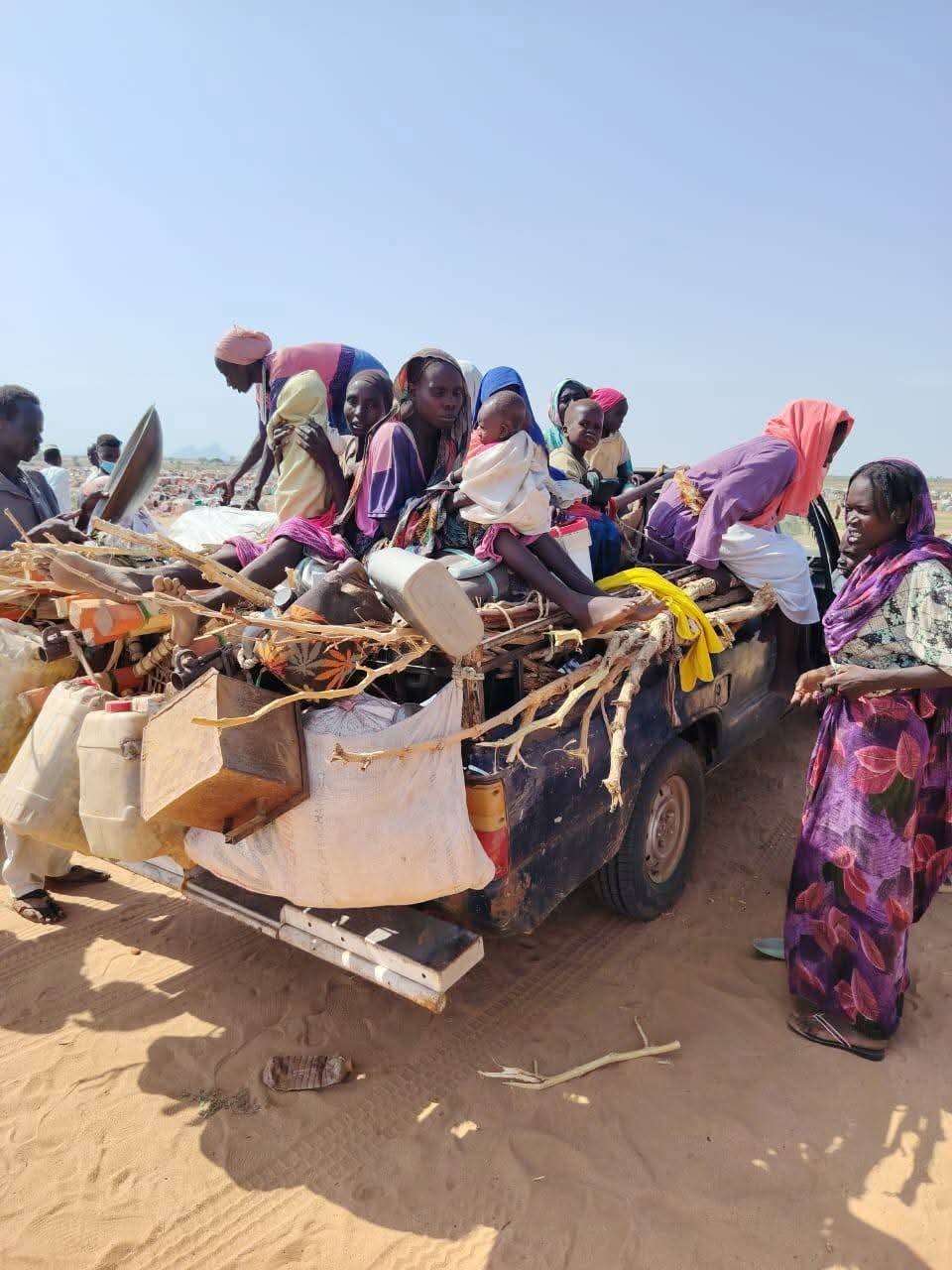
The states of Blue Nile, Darfur, and Kordofan have witnessed months of continued fighting between the army and the RSF as part of the war that began in April 2023. The conflict has killed tens of thousands of people and displaced around 13 million, according to UN and international estimates.
The World’s Largest Hunger and Displacement Crisis
Alongside the military developments, a senior UN official issued fresh warnings over the deteriorating humanitarian situation, saying that Sudan continues to face the world’s largest hunger and displacement crisis.
Carl Skau, Acting Executive Director of the World Food Programme (WFP), said at the conclusion of an eight-day visit to Sudan that around 20 million people are suffering from acute hunger, while approximately 14 million people have been displaced by the war.
He explained that around 5 million people are facing emergency levels of hunger under the Integrated Food Security Phase Classification (IPC), while nearly 200,000 people are experiencing conditions classified as famine.
The UN official said access to people in need has become increasingly difficult because of the fighting. He noted that the overland journey between El Obeid and El Fasher, which took around six hours before the war, now takes three days.
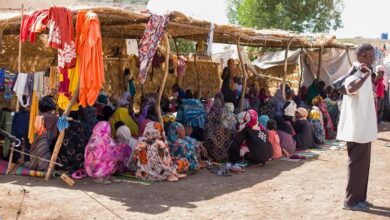
Skau described conditions in El Fasher as extremely harsh, saying the city endured an 18-month siege accompanied by famine and widespread destruction. Many families have been forced to seek shelter in abandoned buildings after their homes were burned.
He said the WFP has expanded its operations to reach around 950,000 people per month in El Fasher, but assistance remains insufficient, with families receiving only half of their food rations—quantities sufficient for approximately two weeks.
Skau warned that funding shortages have become the greatest threat to the continuation of humanitarian operations, noting that the WFP may be forced to significantly scale back its activities in the coming weeks if additional resources are not secured.
As the lean season reaches its peak, fears are growing that famine could spread further unless a ceasefire is reached and humanitarian assistance is allowed to flow. Aid organizations stress that the coming weeks will be critical in determining Sudan’s ability to avert further humanitarian deterioration.