Illegal Logging Expands Drought-Affected Areas in Darfur
Mashawir – Report – Ishraqa Ali Abdullah
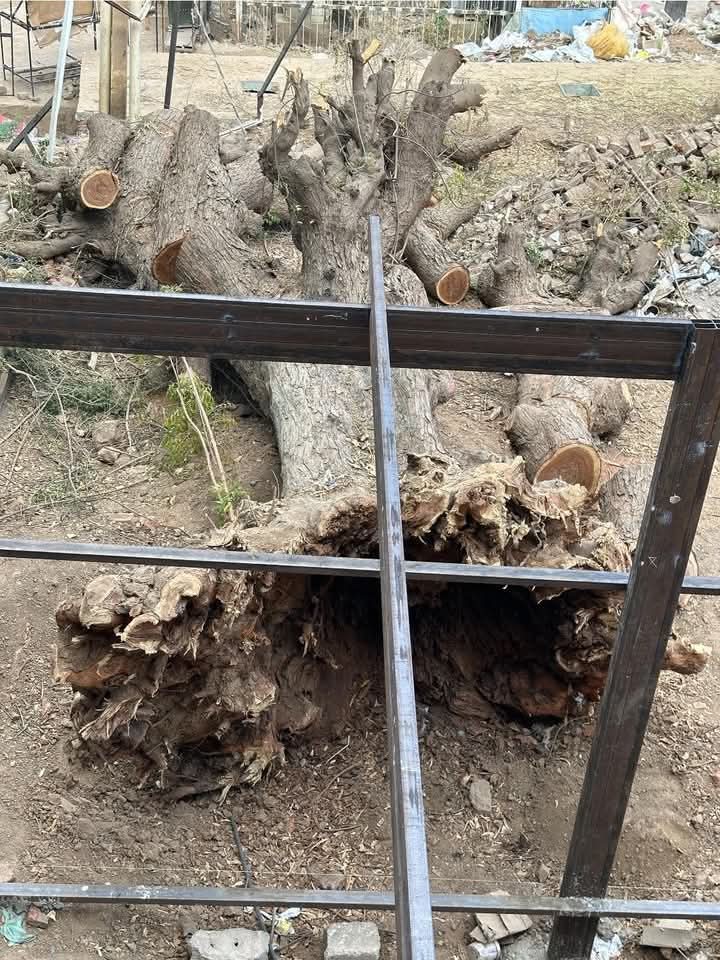
The scale of illegal logging and deforestation in Sudan has expanded significantly during the 41-month war between the Sudanese army and the Rapid Support Forces (RSF), extending into the Darfur region in western Sudan. This has contributed to environmental degradation, the loss of agricultural land fertility and natural grazing areas for livestock, as well as an expansion of drought-affected areas.
Amid shortages of cooking gas, many citizens have resorted to using firewood as a cooking fuel, while the charcoal trade has also become increasingly widespread. This has contributed to worsening drought conditions, desertification and soil erosion, with topsoil becoming fragmented and carried away by wind. It has also resulted in the loss of biodiversity and the disappearance of several rare animal species.
Shortages and Rising Demand
Adam Issa, a resident of El Daein in East Darfur, said, “The shortage of cooking gas in the Darfur region due to the continued armed conflict has left residents facing major difficulties in obtaining gas. This is largely because trade routes have been disrupted and suppliers have stopped operating in areas controlled by the RSF. Some smuggled supplies still reach Darfur through Chad and South Sudan, but they are extremely expensive and beyond people’s purchasing power.”
He added that “large parts of Darfur’s five states lack electricity supplies and fuel, making the collection of firewood an alternative source of cooking fuel. As a result, demand for charcoal has increased, turning tree cutting into a widespread and increasingly popular trade among charcoal dealers.”
Issa noted that “citizens have no alternative options for preparing meals, which has led to heavy reliance on charcoal and firewood. Although East Darfur has not witnessed much direct fighting between the warring parties, it has received thousands of displaced people fleeing the war in other parts of Darfur and Kordofan.”
Catastrophic Impacts
Agricultural engineer Marwa Bashir said that “the loss of tree cover has not been limited to illegal logging. Trees across large parts of Darfur have also been affected by complete or partial drying as a result of military operations, including bombardment and incendiary projectiles, particularly in the cities of Nyala and El Fasher. This has contributed to the burning of vegetation, in addition to emissions from munitions and explosions of landmines, which are among the major causes of tree mortality.”
Bashir explained that “Darfur is characterized by dense forests, including the Kandura Forest in the south. However, the forest has largely disappeared as a result of extensive tree cutting following the establishment of displacement camps. Displaced people resorted to cutting trees on a large scale, particularly because such activities have catastrophic environmental consequences, contributing to higher temperatures, reduced rainfall and desertification.”
She added that “green areas have also experienced severe deterioration in vegetation cover as the war has led to the loss of sources of income and means of production, the closure of factories and the absence of cooking gas, forcing people to return to charcoal and firewood for both cooking and trade.”
The agricultural engineer further said that “tree cutting has also affected Central Darfur, which has lost forests located north of Zalingei. These forests contained various species of mature trees, but the failure to enforce the law contributed significantly to their disappearance. Random logging has not been confined to Darfur; it has also spread to the states of Gedaref, Kassala, White Nile and Kordofan as displacement camps have expanded.”
She warned that the continuing war could trigger further displacement on a scale beyond anything Sudan has previously witnessed, and that this would inevitably lead to further depletion of vegetation cover, potentially resulting in its complete disappearance.
She also pointed out that “smuggling has played a significant role in the decline of tree cover, particularly gum arabic trees, because of their export to the Central African Republic, despite the fact that the country does not have its own gum arabic trees. Its exports depend on gum arabic coming from western Sudan, given its proximity to Central Darfur.”
The agricultural engineer stressed that “the solution lies in ending the war and responding to the worsening humanitarian conditions facing Sudanese people, after several parts of the country have reached the brink of famine, in order to prevent the complete destruction of vegetation cover and the catastrophic environmental consequences that would follow.”
The Foundation of Life
In the same context, environmental specialist Bushra Hamid explained that “tree cutting in Sudan now has direct impacts on people, animals and the environment, particularly because nature in Darfur constitutes the foundation of the region’s social and economic life. Darfur is known to be the country’s second-largest source of livestock, which depends heavily on the availability of water and a suitable environment.”
Bushra noted that “the gum arabic belt in Darfur covers a vast area, yet the government has made insufficient efforts to develop it and utilize it to support local producing communities and improve their incomes through gum arabic production, despite the fact that trees, forests and water constitute the equation of life for the people of the region.”
He explained that “security problems and tensions in the region have intensified factors affecting the environment, particularly desertification and drought.”
He added that “a gap has emerged that some people are exploiting, believing that tree cutting during wartime does not entail accountability because the law is not being enforced. The strategies developed to combat illegal logging have not been implemented as required, while internal displacement from one area to another has pushed some displaced people deeper into forest areas, where they cut trees to meet their families’ basic needs amid the absence of alternative sources of income.”
Bushra pointed out that “some people lost their money because of the war, but made even greater fortunes through tree cutting. Their excessive wealth has come at the expense of destroying the lives of millions of people, far from the oversight and accountability of the authorities.”
He warned that “rising temperatures are no longer a temporary issue but have become a persistent phenomenon unless vegetation cover is restored. Vegetation plays an important role in stabilizing soil, while tree cutting exposes it to erosion and wind, contributing to soil degradation and displacement.”
He further warned of the loss of biodiversity, which is a fundamental component of life, noting that indiscriminate tree cutting and deforestation threaten biodiversity and contribute to the disappearance of a number of animal species. Human presence in any environment, he stressed, must be based on balance and must not exceed the capacity of natural resources to regenerate.
The environmental specialist concluded by noting that “some communities have already begun to feel the effects of environmental degradation, as its consequences have become increasingly evident in their daily lives. The economic gains generated by cutting trees and turning them into a commercial trade cannot be compared with the losses inflicted on communities and the economic and social life of the region.”