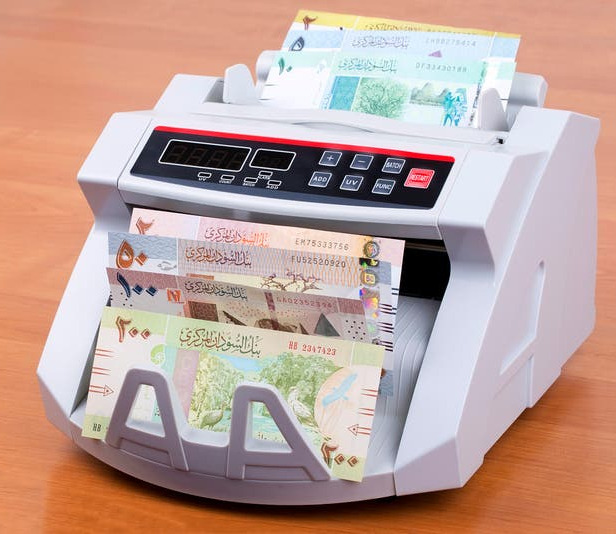
Although no official announcement has been made about removing three zeros from the Sudanese pound, the decision to change and replace the currency suggests, in practice, that redenomination and the removal of zeros may be part of the replacement process. This comes amid a sharp collapse in the currency’s value due to rising inflation and the pound’s record decline against the U.S. dollar on the parallel market, as the economy has been battered by war since April 2023.
The decision, announced by the Higher Committee for Currency Change and Replacement following a meeting chaired by Sovereignty Council Member Lt. Gen. Engineer Ibrahim Jaber Ibrahim, is reportedly part of the continuation of a process that began more than a year and a half ago in several “secure states,” under a plan aimed at protecting the national economy and regulating monetary circulation.
The decision linked the technical and financial arrangements to combating gold smuggling, promoting banking and digital transformation, ensuring successful agricultural seasons, and increasing livestock revenues. However, given the current circumstances, these objectives appear closer to theoretical justifications for removing zeros and redenominating the currency than conditions likely to be achieved in the near term.
Why Now? The Pound Under Pressure
The U.S. dollar reached around 7,500 Sudanese pounds on the parallel market in September, compared with approximately 4,100 pounds in May and around 600 pounds before the war.
Before the latest announcement, the Central Bank of Sudan had already replaced the old 1,000- and 500-pound banknotes in Khartoum, Al-Jazira, and some localities in White Nile State, while withdrawing smaller denominations.
This has taken place amid security and monetary conditions created by the war. The Central Bank said that the looting of its premises and Sudan’s currency-printing facilities in Khartoum resulted in large quantities of currency of unknown origin and non-compliant notes of the two denominations entering circulation, increasing liquidity and affecting price stability.
Currency Replacement in a Divided Economy
Currency replacement and the removal of zeros are two different processes. The first involves withdrawing existing banknotes and replacing them with new ones for reasons related to currency security or liquidity control. The second changes the unit of account itself.
If three zeros were removed, for example, every 1,000 old pounds would become one new pound, while prices, wages, debts, and account balances would be converted at the same ratio. A commodity priced at one million pounds would become 1,000 pounds without becoming cheaper or increasing the purchasing power of the currency.
Such a measure could simplify accounting and banking transactions, but it would not increase production, provide foreign currency, or address the budget deficit.
The proposed process comes as the economy has lost a significant portion of its productive capacity. According to the World Bank, real GDP contracted by 29.4% in 2023 and by around 13.5% in 2024, while estimates point to growth of 5% in 2025 and 9.3% in 2026. These growth rates do not necessarily mean that the economy has recovered what it lost during the two years of war; rather, they partly reflect the lower base created by the sharp contraction.
Rising Inflation
Inflation rose to 170% in 2024, with projections indicating a decline to 89.4% in 2025 and 33.1% in 2026. Meanwhile, government revenues fell from 10% of GDP in 2022 to 4.7% in 2024, with estimates projecting an increase to 5.6% in 2025 and 6.2% in 2026.
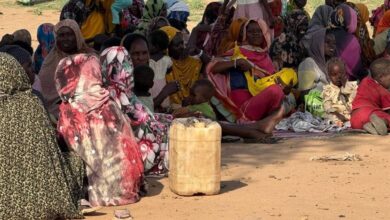
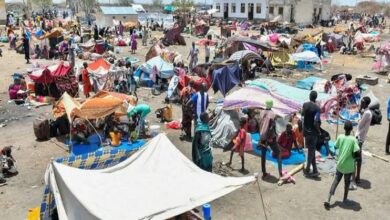
Amid the monetary division, old banknotes have ceased to be legal tender in states where the replacement process has been completed, while remaining valid in other states. In areas controlled by the RSF, different currencies and denominations have also emerged, alongside the use of neighboring countries’ currencies and the U.S. dollar in some border areas. This deepens the monetary divide and increases the cost of trade and the movement of funds.
The problem has been compounded by the economy’s heavy reliance on cash outside the banking system. Economic estimates have indicated that around 90% of the money supply was outside the banking system, a situation further worsened by the war, counterfeiting, and the disruption of institutions.
Consequently, the success of the replacement process will depend on the government’s ability to persuade citizens and businesses to deposit their money in banks, amid concerns over liquidity, withdrawal limits, and limited public confidence.
The cost of the operation is another factor. Media estimates put the cost of printing new currency at between $400 million and $500 million over approximately one year, in addition to transportation and insurance costs and the expense of updating banking and tax systems. There is also a risk that prices could be rounded upward during the change in the unit of account if adequate monitoring is not in place.
What Comes After Redenomination?
Redenomination can simplify accounting and electronic transactions, but it is more effective when implemented as part of broader monetary and fiscal reforms.
Sudan has previously undergone currency redenomination. The dinar was introduced at a rate of 10 old pounds per dinar, before the new pound replaced the dinar in 2007 at a rate of 100 dinars to one pound, effectively removing three zeros in nominal terms, without guaranteeing stability in the currency’s real value.
The current process is even more difficult because the war has geographically divided Sudan and weakened its production, revenues, and banking networks.
The success of redenomination therefore depends on controlling liquidity and the exchange rate, restoring foreign-currency availability, increasing production and exports, bringing gold revenues into the formal economy, restarting the banking system, reconnecting divided markets, protecting savings and wages, and monitoring markets during the repricing process.
The real test of currency replacement does not begin with how many zeros disappear, but with the economy’s ability to prevent them from returning.
The crisis predates the war, although the war has deepened its structural weaknesses by damaging production, fragmenting markets, weakening government revenues, and worsening foreign-currency shortages.
The dollar could theoretically fall from 7,500 pounds to 7.5 pounds simply because of redenomination. But the new figure would change nothing in people’s lives if the purchasing power of the pound remained unchanged.
Ultimately, what Sudan needs is not a change in the numbers printed on its currency, but a restoration of its value.