Attacks on Health Facilities Peak with Massacre at El-Fasher Hospital
Mashawir – Agencies
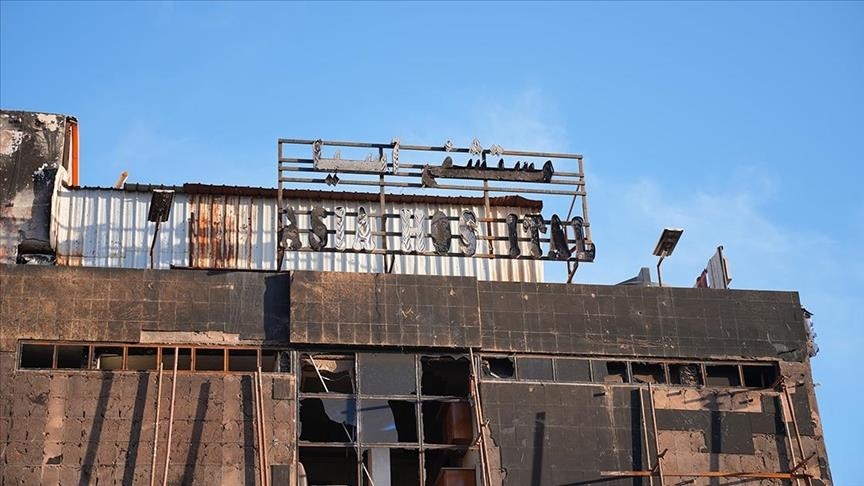
As fighters from Sudan’s Rapid Support Forces (RSF) advanced toward government-held positions in the besieged city of El-Fasher last October, a minimally staffed medical team worked inside the city’s last functioning hospital, treating waves of wounded arriving at a makeshift emergency room.
A Day of Judgment
Shells rained down around the Saudi Hospital, injuring civilians and combatants alike. A nurse — her uniform soaked with the blood of victims — said the scene felt like “the Day of Judgment.” The medical team resorted to using mosquito-net fabric to dress wounds and splint broken limbs after running out of gauze and bandages.
“We had to jump over bodies to reach the patients,” the nurse added. “We couldn’t bury them because drones were flying over us.”
A witness said that on the following day, October 26, the shelling continued and RSF fighters entered the hospital. On October 27, RSF gunmen abducted Abdallah Yousif, a trader they seized on the road. Yousif said he saw bodies scattered throughout the hospital compound — including women, children, the elderly, and patients who were unable to flee due to their medical conditions.
He added that RSF fighters were taking people from inside the hospital, holding some for ransom, and killing others. “They took the young men and killed them along the way,” he said.
According to the World Health Organization, shelling of the Saudi Hospital on October 26 killed one nurse and injured three other health-care workers. The organization also reported that in a separate attack on October 28, more than 460 patients and companions were shot dead.
Mass Killings
Satellite images taken on October 28 revealed signs of mass killings at the Saudi Hospital.
A forensic analysis by Yale University’s Humanitarian Research Lab showed clusters of human-sized bodies. Later images appeared to show bodies being burned — in clear violation of Islamic burial customs — with elongated white shapes “clearly charred, emitting black smoke,” according to the researchers.
Doctors say the October attacks on the Saudi Hospital represent a stark example of what they view as a systematic RSF campaign to dismantle the health-care system in besieged El-Fasher, as part of broader attempts to drive out civilians and seize control of the capital of North Darfur State.
The RSF did not respond to requests for comment.
Military Use of Hospitals?
The RSF had claimed in an October statement — before taking control of El-Fasher — that its enemies were using the city’s hospitals as military barracks and launching sites. Medics in El-Fasher rejected the accusation, insisting that the facilities were used solely for medical purposes, treating civilians and wounded soldiers.
In response to Reuters, a senior Sudanese army official denied reports that the military had attacked medical facilities. “The army was defending the citizens of El-Fasher before the RSF entered the city, and this is the army’s duty anywhere in Sudan,” the official said.
The city has since lost its hospitals one after another.
International Humanitarian Law
Under international humanitarian law, fighters who are incapacitated by illness or injury are protected from attack, as are hospitals treating them.
The laws of war categorically prohibit attacks on civilians or civilian infrastructure and provide strong legal protections for hospitals and medical units.