In light of the raging war in Sudan between the Sudan Armed Forces (SAF) and the Rapid Support Forces (RSF) since mid-April 2023, the issue of detainees and the forcibly disappeared has become more complex. This is due to the refusal of both parties to the conflict to reveal the fate of those missing in informal prisons belonging to them, at a time when secret detention sites have multiplied.
Social media is buzzing with initiatives and campaigns launched by activists, human rights defenders, and members of emergency rooms, accompanied by photos and videos in an attempt to uncover the fate of these detainees and secure their release, whether they are civilians or military personnel. Meanwhile, confrontations and clashes are expanding, and with them, the number of missing persons in illegal prisons is rising, with no indication of their detention locations, especially in areas under RSF control in the Darfur region and large parts of Kordofan.
In early February, the Popular Resistance in North Darfur State said that the RSF is holding 9,000 citizens in Shala prison, located in the vicinity of El Fasher. 300 of them died as a result of medical negligence. Similar reports revealed the allocation of sites in South and Central Darfur as detention centers for citizens arrested from Darfur and Kordofan, as well as those deported from Al-Jazirah and Khartoum states before the army recently reclaimed them from the RSF.
The Detention Trap
Ruqayya Mahjoub, a displaced person from El Fasher in North Darfur, says: I lost my three brothers the moment the RSF overran El Fasher at the end of October 2025. They fell into the trap of arrest and enforced disappearance. Since then, we have lived the tragedy of loss amid human rights reports circulating the RSF’s arrest of thousands of civilians under harsh conditions in the region. Until now, we have found nothing to guide us to their detention sites since we fled El Fasher to live as displaced persons in shelter camps in the Tawila area.
She continued: My brothers’ story reflects the reality of families who lost their sons during the severe siege by the RSF on El Fasher for more than 18 months. They did not stop at killing and displacement, but arrested thousands of citizens and demanded ransoms from their families, which doubled the pain due to the lack of money.
She added: Now we live in psychological and economic suffering. We spent difficult times between the terror of violations and financial hardship, but the hardest thing we face is not finding them due to the secret detention centers and their multiple locations.
The displaced woman noted that detention did not stop at men only, but also affected women, with their phones confiscated to be used for psychological blackmail. Families are cutting food from their own mouths to ransom their sons, only to be surprised later by the disappearance of both the kidnappers and the detainees together.
The Adventure of Searching
Zahra Adam, who lives in Omdurman, has not lost hope in finding her husband and brother. This prompted her to risk traveling to cities under the control of the RSF to search for them without obtaining any information or tangible evidence to guide her. Her fear and anxiety increased because the kidnappers did not demand a ransom, leaving their fate unknown.
Adam said: What led me to travel and take the risk is what is being circulated on social media that the RSF forces detainees to bury the dead or work in the service of their wounded and sick members. Unfortunately, I did not find any evidence to lead me to my husband and brother.
She added: This news was a glimmer of hope, but some advised me not to continue searching in RSF-controlled areas for fear that I would disappear like them in the shadow of the chaos of arbitrary arrests and gang warfare.
Mohammed Osman, who lives in Nyala, South Darfur, says that gunmen wearing RSF uniforms arrested his only son in Nyala last October, and he has not heard any news since. He added: We have not left any known RSF prison without searching for him. Sadly, we hear horrific stories about the disappeared and detainees, their detention conditions, the harsh treatment, and the deprivation of food and water. Therefore, we risk ourselves to investigate, in addition to communicating with influential parties, but these are false promises with no official bodies to tell us his whereabouts.
Osman bitterly appealed to human rights organizations and international bodies to pressure the RSF to release and reveal the fate of detainees who have nothing to do with the ongoing fighting.
Secret Sites
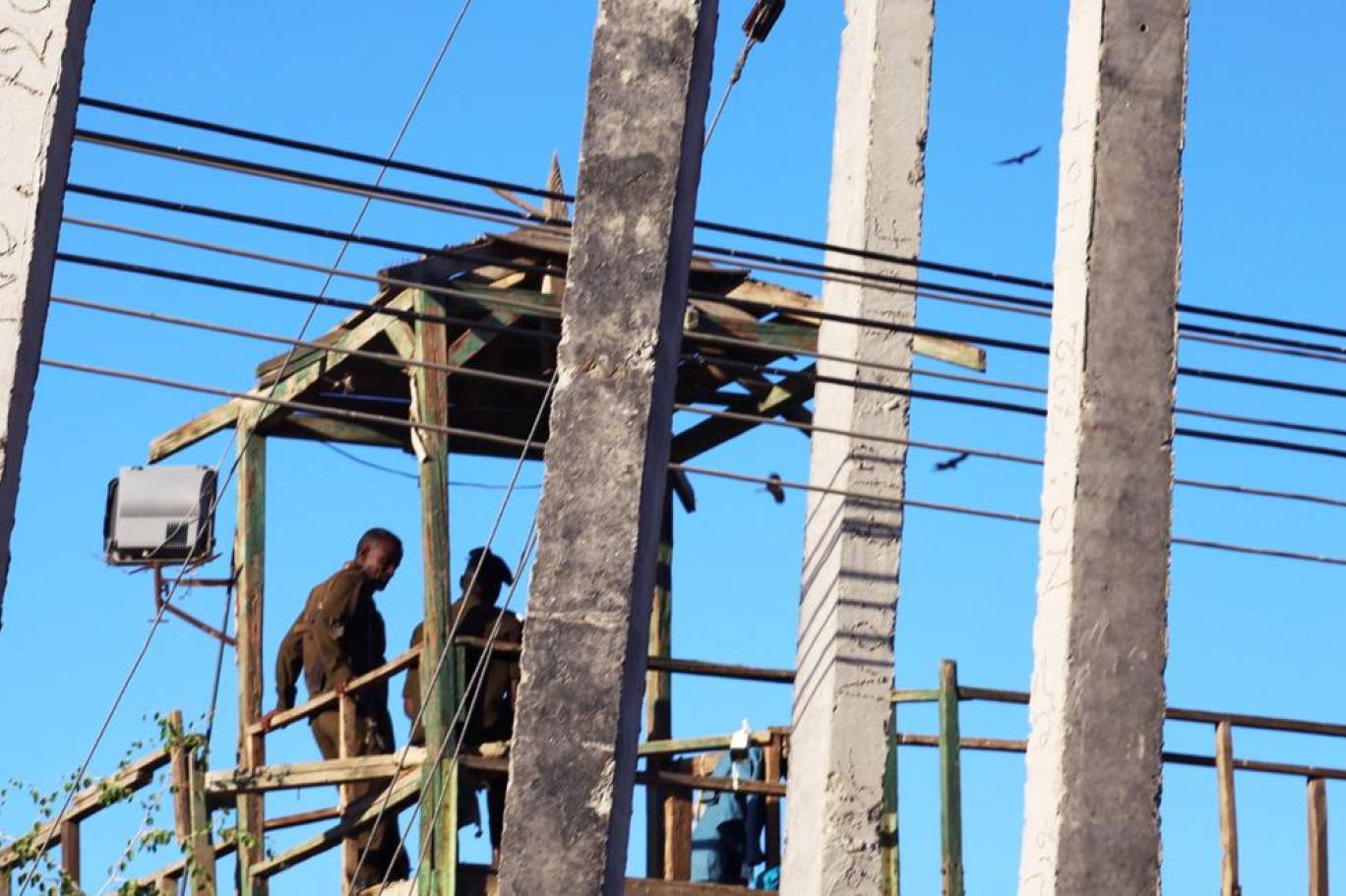
Issa Dafallah, a community activist in the Darfur region, explains: There is indeed a wave of arrests and enforced disappearances that has affected large numbers of citizens. Secret detention sites have appeared alongside the well-known Shala prison in El Fasher and Daqris prison in Nyala, which the RSF allocated for civilian detainees.
Dafallah noted that detainees are first gathered in Kabo or Daqris prisons in Nyala, which have become the largest RSF cells. Most of these detainees were arrested in Khartoum and Al-Jazirah states under inhumane conditions.
He pointed out that these detention centers practice torture and beating during investigations, in addition to starvation, lack of health care, financial bargaining, or the separation of civilians and military personnel. Detainees are treated on racial grounds and as enemies, which blocks the protection avenues stipulated by international laws. The reality confirms that the file of the missing and detainees has turned into a crisis due to the multiplicity of arrest and disappearance sites, most of which are outside the law and not subject to judicial oversight.
Continuous Campaigns
Under the slogan “I am hidden, I am a detainee, I am not a collaborator,” lawyers and humanitarian activists, along with members of emergency rooms, launched campaigns and initiatives on social media to search for and release detainees and reveal their fate in the detention centers of both the army and the RSF.
According to humanitarian activist Al-Waleed Kamal El-Din: The campaigns and initiatives launched by a group of activists, human rights defenders, emergency room members, and resistance committees are still continuing their activity, especially after the growth of kidnapping, disappearance, and arrest phenomena during the ongoing war that targeted civilians on racial grounds.
Kamal El-Din explained that the number of detainees is estimated in the thousands. They are subjected to electric shock torture to force confessions, and their places of detention are catastrophic, suffering from humidity, lack of ventilation, and decay due to the absence of toilets. They are also deprived of first aid and treatment, especially those with chronic diseases.
He warned that these campaigns succeeded in drawing the attention of the local and international community to this complex issue to pressure the two parties to release the detainees and the forcibly disappeared. He noted that human rights reports indicate an increase in the number of prisons, especially with the RSF, as the conflict expands and the volume of arrests increases after seizing the five states of the Darfur region and parts of the three Kordofan states.
The humanitarian activist concluded by saying that the initiatives currently active in this regard are a glimmer of hope for families who lost their members, and they represent a firm stand against the violations recorded and documented against civilians.
International Rules
In a related context, lawyer Yasser Zein El-Abidine said that the ongoing war in Sudan does not respect the provisions of international humanitarian law, which calls for the protection of civilians who have become the primary target in the conflict amid a policy of impunity.
Zein El-Abidine added: What is happening in El Fasher specifically is a mixture of arbitrary detention and enforced disappearance of citizens outside legal frameworks, due to the failure to follow legal procedures in arresting a person and the failure to acknowledge the place of detention.
He continued: International law clauses regarding detention centers require the provision of health care, food, judicial guarantees, and family visits, while the result is zero in the prisons of both parties to the conflict. Arrest is practiced in conditions that lead to death and physical liquidation as a form of revenge.
The lawyer pointed out that what deepens the crisis is the cutting of communications and the confiscation of phones, which creates strong obstacles for international courts and local human rights defenders, as well as hindering families’ ability to report their missing members.