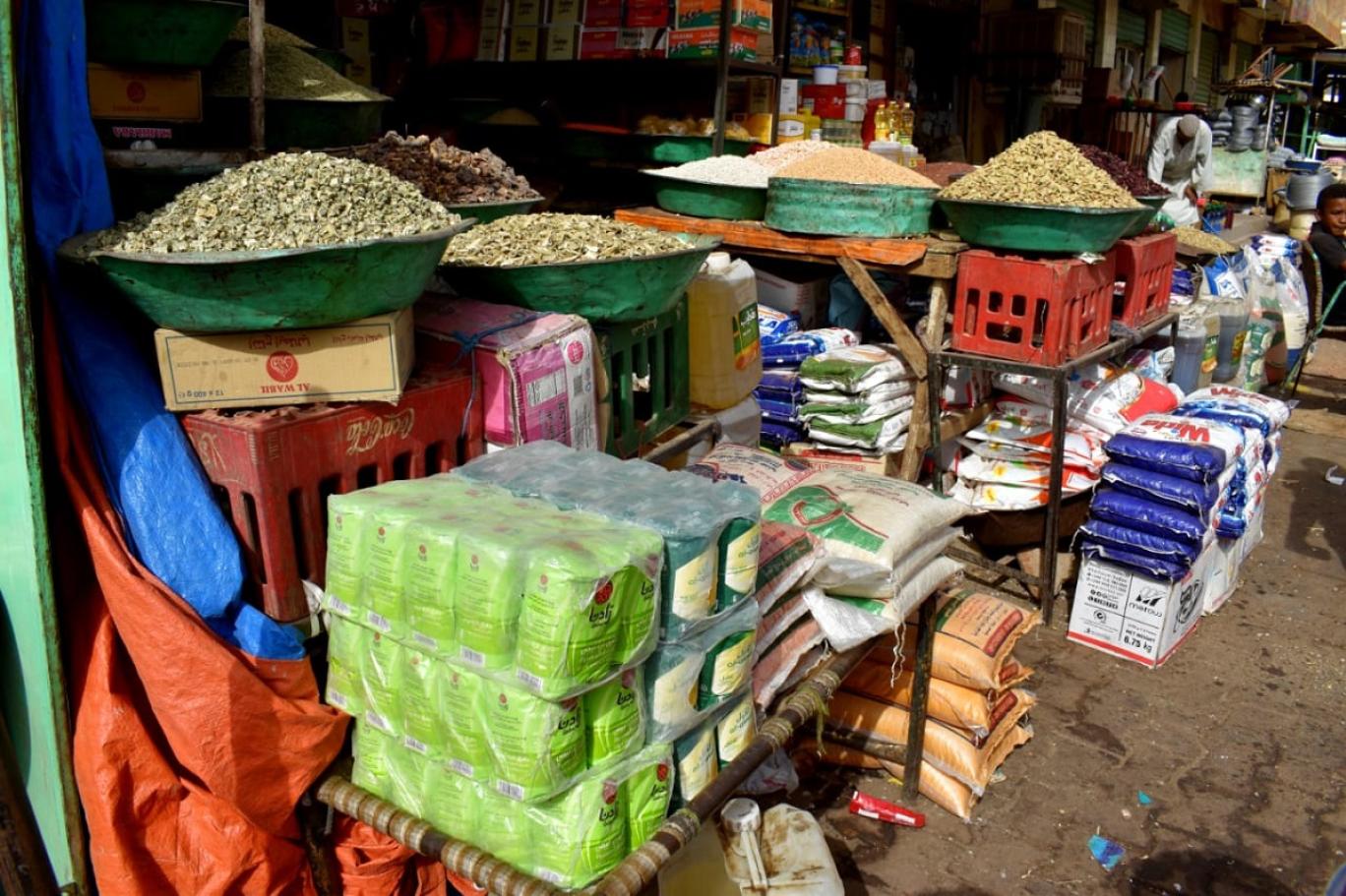
At a time when many Sudanese expressed fears that the war that broke out within the Arab region between Israel and the United States against Iran would increase their economic suffering—especially after the closure of the Strait of Hormuz, a vital artery for the transport of oil and gas—prices for goods and services, led by energy, have already begun to rise by more than 40 percent.
The Sudanese government, headed by Prime Minister Kamel Idris, held a meeting of the Higher Economic Committee, in which it stressed the importance of continued petroleum import flows and ensuring their availability in light of regional developments. It directed the Ministry of Energy to continue its efforts in providing generators to ensure the stability of the electrical current within the capital, Khartoum.
While the Ministry of Energy reported that the available quantities of petroleum derivatives are sufficient for the country’s needs until next April, supplies are flowing normally with distribution continuing to fuel stations in various states without interruption. It explained that if importing becomes impossible, there will be alternative solutions regarding fuel to avoid any potential supply shortages.
It is well known that the ongoing war between the army and the Rapid Support Forces (RSF) for nearly three years contributed to the shutdown of the Khartoum refinery, which used to provide about 32 percent of local fuel production. This forced the country to import to fill the need for this vital commodity at a cost of 200 million dollars per month.
Living Pressures
Omar Al-Sadiq, an owner of a gas agency office, said: “Indeed, markets in the three cities of the capital—Khartoum, Bahri, and Omdurman—have begun to sink into a new crisis, especially regarding gas. The price of a gas cylinder has reached 80,000 Sudanese pounds (23 dollars), alongside fluctuations in the prices of other goods, particularly consumer products.”
Al-Sadiq added: “There is no doubt that the Iran war will worsen conditions inside the country, especially in the energy sector. Most citizens have resorted to wood-cutting and felling trees aggressively to use as alternative energy for cooking, in addition to selling it to bakery owners or burning it to produce charcoal as its prices have risen and it has become a popular trade. This crisis has produced increasing living pressures on families suffering from escalating economic problems.”
The gas agency owner pointed out that: “It is expected that both fuel and gas will become scarce, with citizens lining up and crowding at fuel stations and gas shops. If the government does not find alternatives to bridge the deficit, the black market will play a prominent role in deepening the problem and doubling their prices.”
Intersecting Crises
In this context, Alaeddine Abdelrahman, who lives in Wad Madani, the capital of Al-Jazirah State, explained that: “The fuel shortage problem appeared significantly in Al-Jazirah State. It originally existed and is worsening day by day due to the continued conflict in Sudan, in addition to the lack of gas and its high prices since the beginning of the month of Ramadan. Naturally, the prolonged duration of the war within the Middle East will disrupt ports and thus external supplies, contributing to a shortage in the country’s strategic stock.”
Ibrahim noted that: “Citizens are in a state of constant anxiety due to the increasing crises, from a destructive internal war to escalating regional tensions. All Sudanese states are suffering the consequences of war, especially in light of inflation, rising prices, the collapse of the Sudanese pound, and the decline of economic activity.”
He indicated that: “The government, in light of normalizing life, is required to protect citizens from price volatility in various markets and provide the foundations of stability, especially for those who responded to calls to return to the country. Furthermore, the regional escalation is not limited to economic conditions only, but extends to the humanitarian field. At a time when millions of Sudanese depend on aid provided by international organizations for survival, the cessation of their work due to the war in Iran exacerbates the food shortage process.”
Sharp Increase
Similarly, markets in the states of Darfur and Kordofan in western Sudan, which are under the control of the Rapid Support Forces, witnessed a sharp rise in prices following the outbreak of war in the Arab region.
According to Somali Othman, a fuel truck driver, fuel prices in the Darfur and Kordofan regions rose by about 40 percent as a result of the repercussions of the regional war and its direct effects on fuel and gas.
Othman added: “The unprecedented increase is due to the fact that the Al-Naam border market connecting Sudan and South Sudan—which is the main source for supplying the Darfur region and large parts of Kordofan with fuel—is suffering from a major shortage of this vital commodity. This is because it relies on supplies coming from Gulf countries, passing through the Port of Mombasa in Kenya via South Sudan, which stopped completely with the outbreak of the war on Iran.”
Market Fluctuations
On the same level, Saleh Mahmoud, a fuel trader in the city of Al Daein in eastern Darfur, revealed that: “Fuel prices are witnessing a continuous rise, which is expected given that markets are affected by the economic repercussions resulting from regional events in the area, leaving the market out of control.”
Mahmoud continued: “These increases also included retail prices. The price of a gallon of gasoline reached about 40,000 pounds (11.50 dollars) instead of 25,000 (six dollars), and the price of a gallon of diesel reached 45,000 pounds (13 dollars) compared to the previous price of 25,000 pounds. It is certain that these increases will not stop at this point due to the continued conflict and its repercussions, which will impose additional burdens on citizens in light of the collapsed economic situation in the country.”
The fuel trader noted that: “Since the outbreak of the conflict in Sudan, trade movement has stopped between the states of the center, north, and east of the country under the control of the army, and the western states controlled by the Rapid Support Forces. This has prompted those regions to rely on importing all goods from the state of South Sudan.”
Economic Impacts
For his part, economic analyst Ibrahim Fathi expected that: “Developments in the Middle East will have complex effects on Sudan, especially on the economic side, represented by high inflation rates and a noticeable increase in the prices of goods and services due to the restrictions imposed by the war on foreign trade, especially fuel, as the Gulf states and Iran export one-fifth of the world’s oil production.”
He added: “There are fears of a shortage in gas imports due to the halt of Qatari supplies because of maritime navigation disturbances in the Gulf. It is known that Qatar is the largest producer of gas in the world, so Sudan becomes vulnerable to the repercussions of the war due to its heavy reliance on fuel imported from the region.”
Fathi continued: “The outcomes of this conflict cannot be predicted categorically, which requires the Sudanese government to anticipate various possible scenarios and put in place precautionary measures for any developments.”
He explained that: “The economic impact will be reflected in the prices of goods and services, but it will not appear in the near term, especially since products are still available in Sudanese markets.”
The economic analyst went on to say: “In the event that the war in the Arab region continues or its repercussions extend to disrupting ports and supply chains and increasing shipping costs, imports will witness significant impacts, as any pressures are linked to the duration of the crisis.”