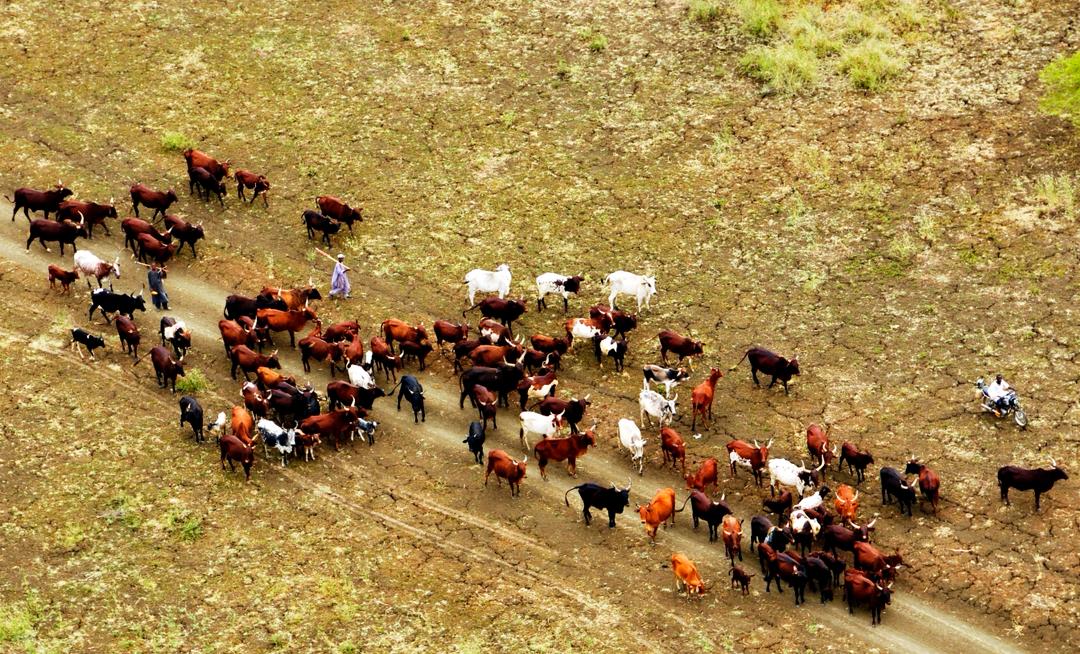
Sudan’s livestock sector, estimated at 110 million head, has suffered extensive damage since the outbreak of war in April 2023, particularly in Kordofan and Darfur. The expansion and prolongation of fighting in these regions have deepened the scale of losses, as they account for nearly 60% of the country’s livestock. The sector has been hit by looting, the burning and contamination of grazing lands, and the destruction of veterinary infrastructure.
International reports indicate that Sudan lost more than $1 billion in livestock export revenues during the first half of 2025 due to the closure of routes to ports, a 300% increase in fuel costs, and displacement affecting around seven million people in pastoral areas—especially women, who play a vital role in herding activities.
Reports from the Environmental Conflict Center also confirm that West Kordofan State has witnessed a 40% decline in herd numbers due to both drought and war.
Despite these heavy losses, the sector has shown some resilience. Last September, Sudan managed to export four million head of livestock—an increase of 10% compared to 2024—driven by growing demand from Saudi Arabia and Egypt.
Government Interventions
In this context, Undersecretary of Sudan’s Ministry of Animal Resources, Ammar Al-Sheikh, stated that despite the ongoing war in Darfur and Kordofan, joint efforts are underway to prevent the sector’s collapse. These include supporting local associations in production areas—especially in Kordofan—to revive the sector. Herdsmen are sharing feed and grazing resources to preserve what remains of their livestock, significantly reducing losses.
He added that vaccination campaigns have covered 70% of herds in safer areas, in cooperation with the Food and Agriculture Organization of the United Nations (FAO).
Al-Sheikh affirmed that the ministry is moving forward with a five-year recovery strategy, which includes establishing feed cities, localizing vaccine production, and improving the pastoral environment.
Experts believe that the sector’s resilience depends on halting looting and rehabilitating transport routes. Initial steps such as the five-year strategy and partnerships with international companies offer hope that Sudan can regain its position as one of the largest livestock exporters in the Arab and African regions, ranking first regionally and sixth globally. The sector contributes more than 20% of the country’s GDP.
Meanwhile, Hisham Saleh, a member of the Livestock Exporters Division, stated that the sector has paid a heavy price for the war, losing slaughterhouses, quarantine facilities, and research centers, in addition to the death of large numbers of animals. Nevertheless, both herders and the government have demonstrated notable resilience.
According to Sudan’s Ministry of Finance, pre-war exports included 4.72 million head of live animals, 5.89 million tons of meat, and 1.75 million tons of hides valued at $552.46 million. However, the war has reduced these figures to less than half.
Damage and Resilience
Mohamed Abdelrazag, a herder from Al-Mujlad in West Kordofan, said:
“The war has robbed us of our ancestral heritage in livestock breeding. Before the war, I owned more than 900 head; now I have only 300 left after losses due to disease, thirst, and hunger caused by the lack of feed consumed by the fires of war, as well as widespread looting by Rapid Support Forces militias while we searched for safe refuge.”
He added that livestock markets have been destroyed, making feed extremely difficult to obtain, often requiring days of searching under dangerous conditions and at high cost. “Sometimes we are forced to sell one animal just to feed the rest of the herd.”
He noted that his situation reflects that of thousands of herders in Kordofan and Darfur, who are caught in the crossfire while struggling for survival, yet remain attached to livestock as their primary source of livelihood and identity.
He also explained that herders in West Kordofan now share feed through organized pastoral associations due to the destruction of fertile grazing lands, in addition to benefiting from vaccination campaigns by international organizations and government support for feed.
Hostile Acts
Sayed Abdel Qayyum, a livestock owner in Al-Dilling, South Kordofan, said that since the war began, Rapid Support Forces have routinely looted hundreds of camels, cattle, goats, and sheep. Their actions have extended to destroying feed storage facilities and burning entire villages engaged in livestock production, which forms the backbone of the local economy.
He added that the situation has escalated to killings, representing a dangerous escalation in violations targeting livelihoods and food security, especially as Al-Dilling has become one of the famine-affected areas.
He continued:
“The ongoing war in Kordofan has exhausted us. We are trying not to surrender and to withstand the storm to preserve our livestock, but we do not know when conditions will improve amid escalating military operations.”
Loss of Historic Breeds
Salah Al-Amin, a researcher in international organizations, noted that the livestock sector is among the most affected by the war due to the collapse of infrastructure in production areas concentrated in Kordofan and Darfur.
He explained that these regions produce globally sought-after breeds that depend on natural grazing, and that the workforce involved in livestock production is traditionally skilled. However, many have now joined armed groups, leaving the production cycle.
He also highlighted the lack of accurate data on livestock deaths during the war, including those killed directly by shelling, thirst, and contaminated grazing lands, or lost through unregulated cross-border trade. This has contributed to the loss of historic livestock breeds.
International Intervention
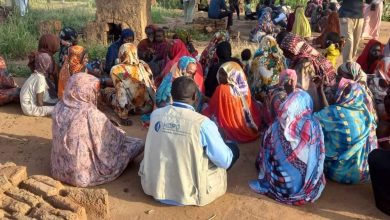
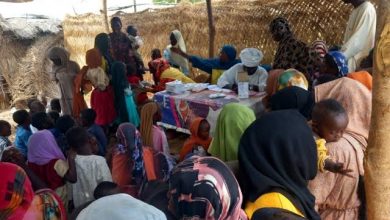
The Food and Agriculture Organization of the United Nations (FAO), in cooperation with the Sudanese government, launched a national livestock vaccination campaign to protect the livelihoods of more than three million farmers and herders facing severe food insecurity.
The initiative, which ran until January 2026, aims to protect 9.4 million animals from transboundary and highly infectious diseases. Livestock remains a cornerstone of the rural economy, providing food security, nutrition, and income. Healthy herds are essential for maintaining Sudan’s position as a major livestock exporter, while also ensuring indirect benefits for local and regional consumers of animal protein amid a worsening food crisis.
For the first time, FAO is piloting cross-border vaccine delivery through Chad into Darfur and West Kordofan, in coordination with the United Nations Office for the Coordination of Humanitarian Affairs (OCHA) and FAO in Chad, to overcome access constraints and reach vulnerable communities in high-conflict areas.