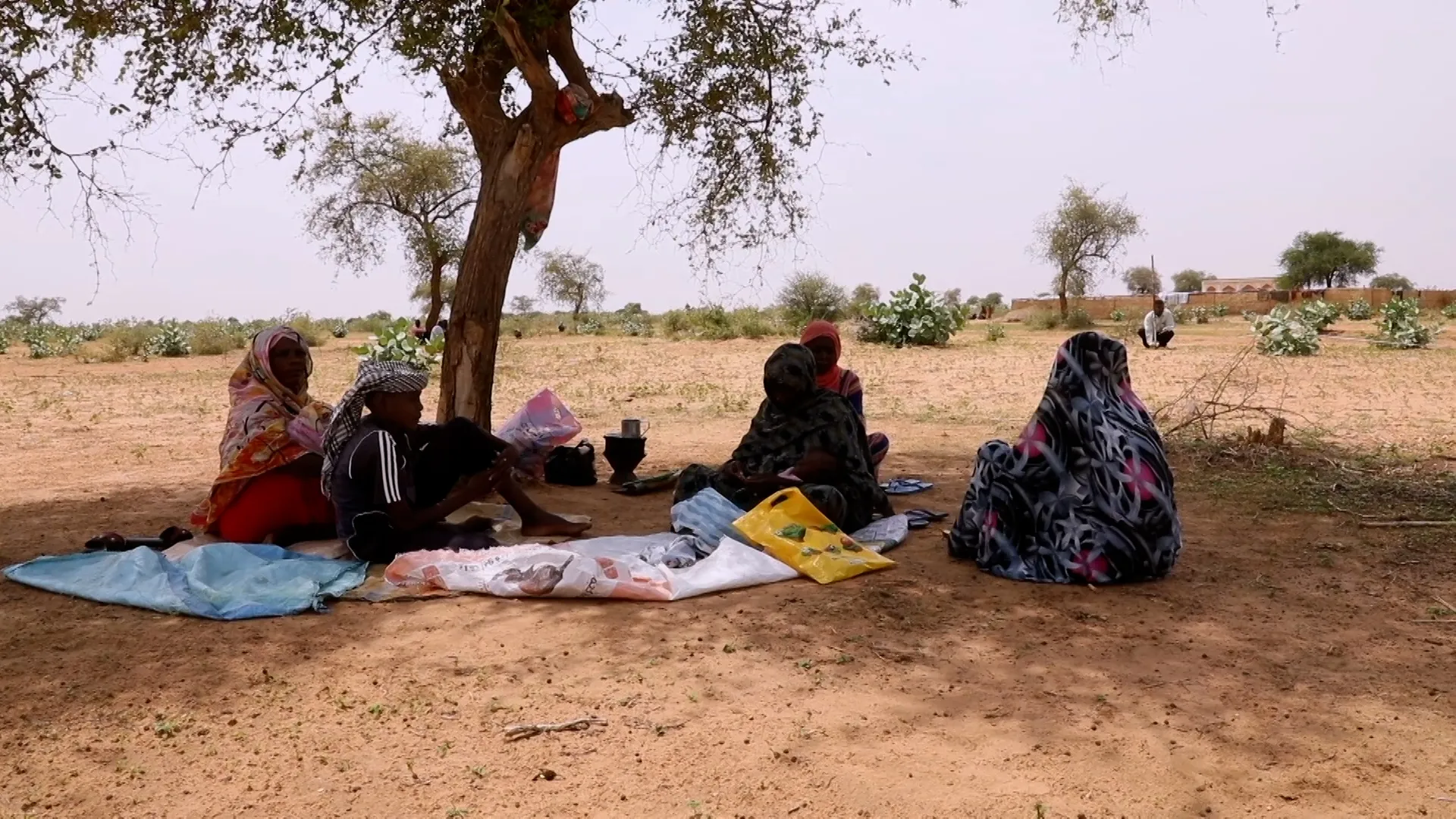
Between the loss of food supplies and the death of loved ones along the way, testimonies from displaced women from South Kordofan capture a journey of suffering to Al-Muwahad Camp in the city of El-Obeid, North Kordofan State. Today, they live alongside thousands of families who have lost their homes and livelihoods, struggling daily to secure the bare minimum for survival.
Al-Muwahad camp shelters around 6,500 families who fled the fighting amid a severe shortage of basic necessities such as water, food, and shelter. Humanitarian organizations, including the United Nations Population Fund, are attempting to fill some of the gaps, particularly in health and protection services.
Killing and Burning
Alia, 27, arrived at the camp ten months ago from the Al-Dabibat area in South Kordofan after a harsh displacement journey.
She says she was subjected to beatings and humiliation at checkpoints, and everything she had to feed her eight children was confiscated.
“Every time we passed a checkpoint, there would be another one, and they would beat and humiliate us again,” she said.
“I had flour to mix with water to feed my eight children, but they took it from me. They took everything we had, even our clothes, and burned them in front of our eyes. Then some people came carrying charcoal on donkeys and took the children on the donkeys, while I followed on foot until I reached El-Obeid.”
She added, “They killed my husband and my son. My husband was carrying our child on a donkey when they shot and killed them both.”
Severe Food Crisis
Fatima, 40, says she was forced to flee on foot for two days with her family of seven without being able to carry any belongings.
She noted that she arrived at the camp wearing the same clothes she had left home in.
“We left everything behind. We have nothing. Sometimes we eat, and sometimes we don’t. We have been in the camp for ten months. At first, food was distributed here, but it is no longer available. We have no food; we cannot even light a fire to cook.”
She added, “We pray for this war to end so we can return to our homes. Under these conditions, we will go back once the conflict is over.”
Grave Violations
Salma Mohammed Bashara, 50, spoke about a seven-day journey from Dilling to El-Obeid, during which she lost her father after failing to find medical care for him.
“We are a family of nine. We fled from Dilling and arrived here after seven days. I have been in the camp for eight months. My father was ill and needed a doctor. We were searching for a hospital, but he died on the way,” she explained.
She added, “Inside the camp, some people cannot cook due to lack of tools. We hope for peace because we are displaced, living among tents and temporary shelters.”
Salma said she wants to return home, noting that women are exhausted by the war. “Many crimes have been committed against women, including rape.”
She also pointed out that many women have lost their husbands, adding: “In this camp, the number of women who are still with their husbands can be counted on one hand.”