Despite the war in Sudan entering its fourth year on April 15, and causing what the United Nations describes as the world’s worst humanitarian crisis, it has been overshadowed by other regional and global upheavals.
The war is being fought between the Sudanese army, led by General Abdel Fattah al-Burhan, and the paramilitary Rapid Support Forces, led by General Mohamed Hamdan Dagalo.
The two men had allied in 2019 to overthrow President Omar al-Bashir, after which al-Burhan became head of Sudan’s Sovereign Council. However, following a coup that disrupted the already fragile transition to civilian rule, tensions grew between them over plans to launch a new transition process and integrate their forces.
Soon after the war broke out on April 15, 2023, it drew in numerous local militias, some aligning with one side or the other, in addition to the involvement of foreign actors.
Researchers at the United Nations, U.S. lawmakers, and the Sudanese army say that United Arab Emirates has provided crucial support to the Rapid Support Forces through several of Sudan’s neighbors—an accusation denied by Abu Dhabi.
The Sudanese army considers other regional powers, including Egypt, Turkey, and Qatar, to be supporting it to varying degrees.
What is the current situation?
Over the past year, the Rapid Support Forces have consolidated their control over the vast Darfur region—their traditional stronghold in the far west of the country—and have begun forming a parallel government. The army retains control over the eastern half of Sudan.
Fighting is now concentrated in the Kordofan region between the two sides, along with a new front opened by the Rapid Support Forces along Sudan’s border with Ethiopia in the southeast.
Drone warfare has largely replaced ground offensives as the primary method of combat, allowing the Rapid Support Forces to counter the army’s previous air superiority. As with earlier artillery and aerial bombardments, drone warfare has increased civilian casualties, killing at least 700 civilians this year, according to the United Nations.
How have civilians been affected?
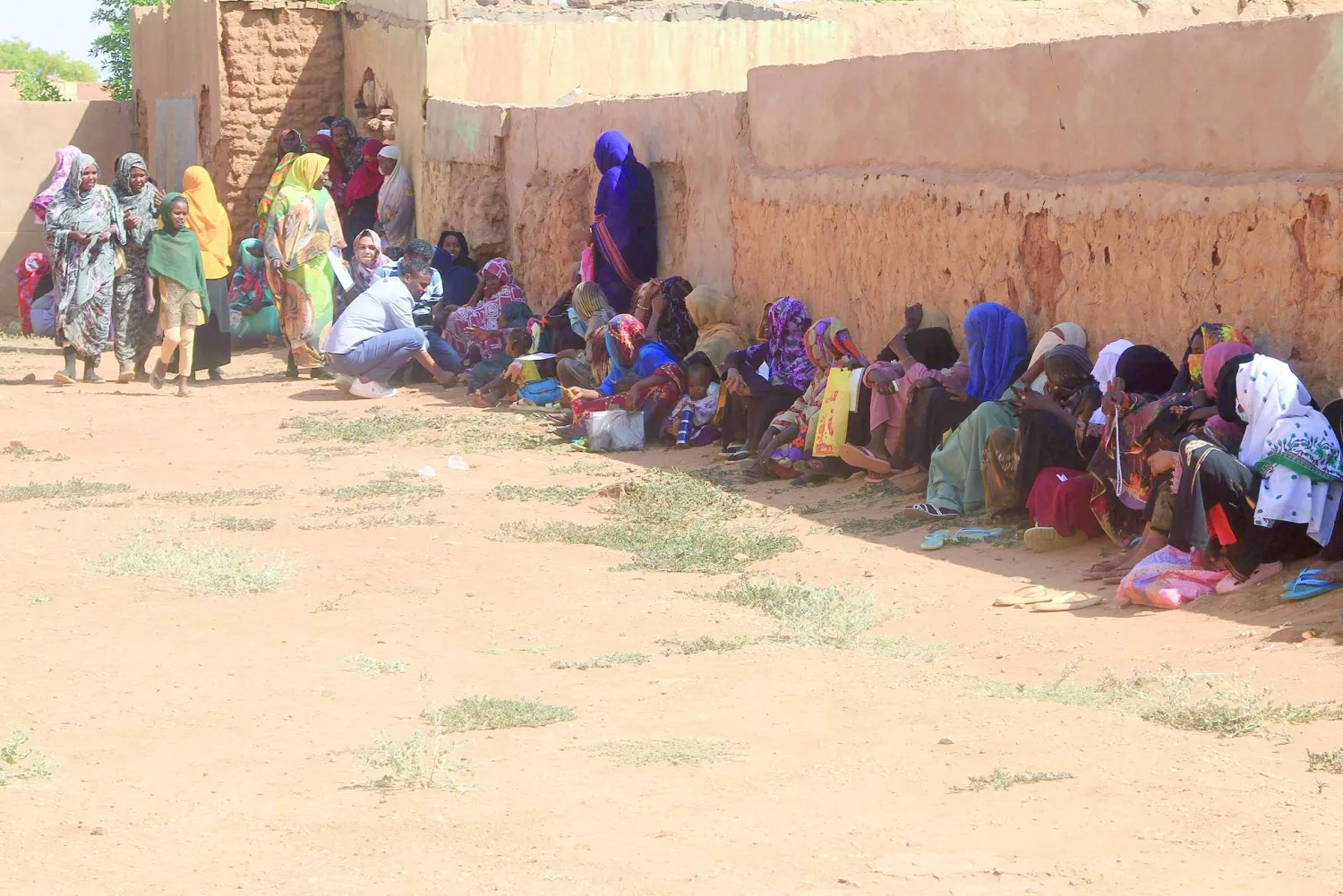
The war has had a devastating impact on the Sudanese population, with the United Nations estimating that nearly three-quarters of the population require humanitarian assistance.
Famine or the risk of famine has been declared in conflict hotspots across the country, often worsened by sieges and bureaucratic obstacles imposed by both warring sides.
Diseases, including dengue fever, have spread amid the collapse of the healthcare system in many areas.
Throughout the conflict, the Rapid Support Forces have carried out waves of ethnically motivated killings, which UN researchers have described as bearing the hallmarks of genocide, most recently in El Fasher.
Ongoing violence and reduced funding have made it difficult to determine the total death toll. Sudan’s Ministry of Health told Reuters it documented 11,209 deaths across most states, but experts estimate excess deaths since the start of the war could reach hundreds of thousands.
Impact of global dynamics
Despite urgent needs, only 17% of the funding requested by the United Nations for Sudan in 2026 has been met. This comes as the United States has reduced foreign aid, European donor countries have cut contributions, and Gulf states have focused more on bilateral donations.
Aid agencies have scaled back services, while Sudanese mutual aid groups—such as Emergency Response Rooms, nominated for the Nobel Peace Prize—have tried to fill the gap.
However, a study by Islamic Relief this week found that more than 40% of community kitchens run by these groups have been forced to shut down due to lack of support.
What efforts are being made to end the war?
Although the war has drawn attention from world leaders, including U.S. President Donald Trump, efforts to end the conflict have shown only limited progress. Competing regional interests have further hindered these initiatives.
The United States leads a “quad mechanism” involving Egypt, Saudi Arabia, and the United Arab Emirates, which presented an initial ceasefire proposal to both sides last year.
However, as realities on the ground have shifted, both the army and the Rapid Support Forces have alternated between welcoming and rejecting mediation efforts, with no clear end to the fighting in sight.