Economic and humanitarian conditions in Sudan have deteriorated to unprecedented levels, taking a severe toll on citizens amid the ongoing war between the Sudanese Armed Forces and the Rapid Support Forces (RSF), which has continued for more than three years. The decline in living standards is no longer a temporary crisis but has evolved into a suffocating economic emergency that has crippled production chains and placed the country before a test of economic survival, while extreme poverty rates continue to rise alarmingly.
A large number of factories in Khartoum and Al Jazirah states have been completely destroyed, leading to mass layoffs and unpaid open-ended leave for workers. This has significantly worsened their living conditions. As the conflict expanded into Sennar State and the Darfur and Kordofan regions, Sudan lost vast agricultural areas that had previously contributed more than 40 percent of the country’s Gross Domestic Product (GDP). Consequently, thousands of farmers and agricultural workers have been left without jobs, further compounding the country’s economic crisis.
Shocking Figures
In this context, Minister of Human Resources Moatasim Ahmed Saleh revealed that the poverty rate among Sudanese citizens has risen to 73 percent, describing the figure as shocking and reflective of the scale of economic deterioration caused by the war since its outbreak in April 2023, particularly following the loss of income sources in productive sectors.
Saleh stated that his ministry’s plan for the current year focuses on establishing partnerships to implement 500,000 projects targeting young people, in addition to agricultural initiatives aimed at providing seeds and fertilizers. He noted that a five-year strategy covering the period from 2026 to 2030 seeks to support more than three million projects to improve livelihoods.
The minister further indicated that approximately 10,000 projects are ready for beneficiaries and encouraged Sudanese returning from abroad to take advantage of these opportunities. He also emphasized that the government is working to create a suitable environment for citizens’ return and to provide employment opportunities through financing channels offered by banks, the Zakat Chamber, and the Poverty Reduction Commission.
Meanwhile, the United Nations has noted that Sudan had previously achieved significant progress in reducing poverty, with rates declining from 38.1 percent in 1990 to 15.6 percent in 2011. However, poverty gradually increased again, reaching 45 percent in 2023 before surging to 71 percent in November 2025 and then rising further to the current level of 73 percent. Approximately 25 million people now live below the poverty line, defined as less than three dollars per person per day.
Informal Work for Survival
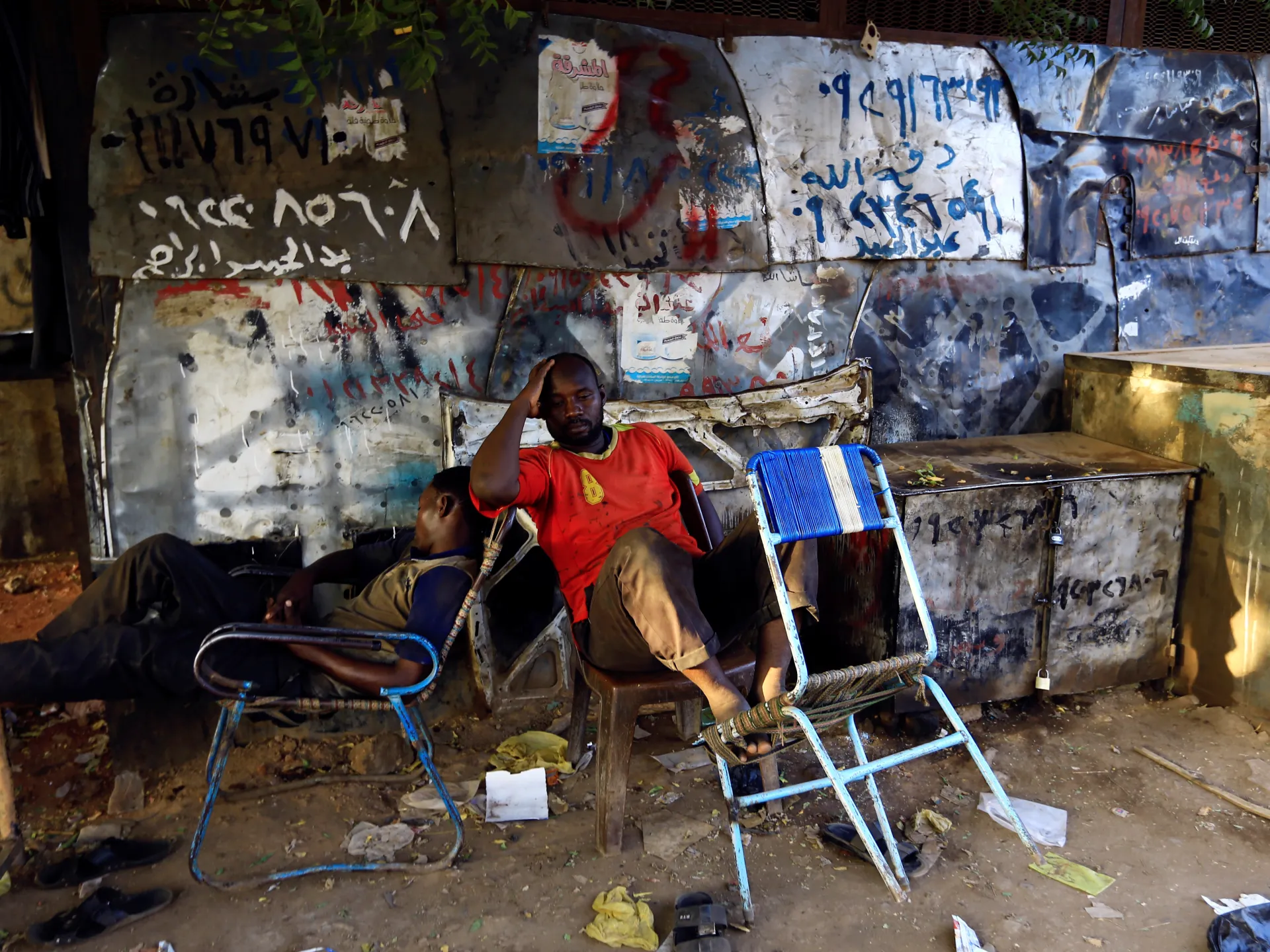
For his part, Saif Al-Din Habib, a former factory worker in Omdurman, said that the war cost him his job. He had been employed at one of the city’s major factories, which had provided stability for his family and enabled him to meet daily living expenses.
However, his circumstances deteriorated after he was forced to leave Omdurman for Northern State, where employment opportunities are scarce. He eventually resorted to working as a street vendor.
Habib explained that his living conditions remain extremely difficult due to widespread unemployment and the growing number of displaced people who have also lost their jobs.
“After losing my job, I endured very harsh conditions for a long time. I tried to find any work that would help me earn a living and began selling vegetables in neighborhood markets. But local authorities continually pursued us under the pretext of regulating the market,” he said.
He added that many people displaced from Khartoum to Northern State have been forced into informal occupations after losing their formal economic activities.
“Despite my continuous struggle to find stability, I have failed to secure even the minimum requirements for a decent life,” Habib said.
Expanding Poverty
Economic researcher Abdelwahab Gomaa explained that the worsening living conditions and expanding poverty in Sudan are a natural consequence of the war, which has brought productive activities to a near standstill and severely affected agricultural, livestock, industrial, and commercial sectors. The conflict has also disrupted geographical connections between production areas and markets for domestic consumption and export.
Gomaa pointed out that efforts to recover from the war’s impact in areas regained by the army face major challenges, particularly the inadequate provision of agricultural and industrial inputs needed by producers. These difficulties are compounded by logistical problems affecting production and mining sectors, highlighting the need for swift and proactive efforts to leverage external partnerships in support of comprehensive recovery.
He further argued that the country’s worsening electricity crisis remains one of the main obstacles to economic recovery. According to Gomaa, the power sector suffered extensive damage during the conflict as critical infrastructure was targeted.
While the government has prioritized supplying electricity to residential areas to facilitate the return of displaced residents, it has largely neglected electricity provision for factories and agricultural projects, which he described as essential lifelines for reviving trade, boosting production, and preventing poverty from spreading further.