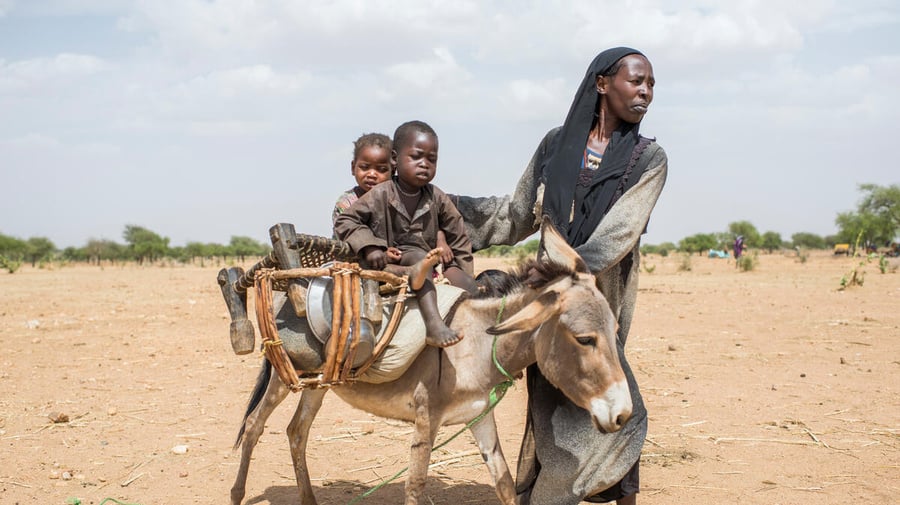
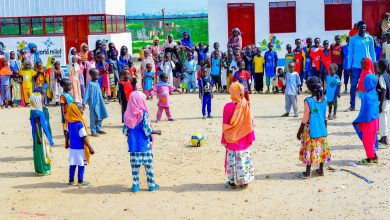
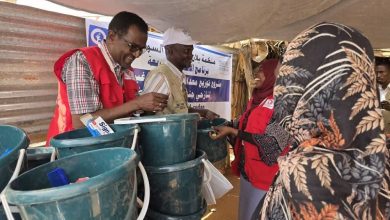
As the war in Sudan enters another year, the suffering of Sudanese children living in refugee camps across neighboring African countries continues to deepen, particularly in relation to education. For thousands of displaced children, the search for learning has become a daily struggle.
In makeshift classrooms made of tents or under the shade of trees, thousands of children are trying to hold on to their right to education despite the severe shortage of schools, teachers, textbooks, and learning materials.
Amid the hardships of displacement and the uncertainty of the future, these children continue to pursue their dreams with determination, believing that education remains the only path toward rebuilding their lives and securing a safer future.
According to United Nations estimates, millions of Sudanese children are now out of school because of the conflict, while schools in refugee-hosting areas face severe overcrowding and critical shortages of resources.
Harsh Educational Conditions
Twelve-year-old Adel Al-Sharif fled with his family from the Al-Shajara district of Khartoum after their home was damaged by shell fragments during the ongoing bombardment of the capital.
Speaking to Mashaweer, he said:
«”We have been living in Biyale Refugee Camp in Uganda for more than a year. There is still no hope that the war will end anytime soon. We face enormous difficulties in continuing our education, especially because there are no proper classrooms, textbooks, desks, or other essential learning materials.”»
He added:
«”My situation is the same as that of thousands of Sudanese children who have been forced by the war to remain in refugee camps while enduring one crisis after another.”»
Al-Sharif explained that schools in the camps lack even the most basic educational facilities, suffer from a shortage of qualified teachers, and expose students to health risks, particularly during the rainy season, when temporary classrooms cannot withstand the weather conditions.
He noted:
«”We believed that things would improve over time and that peace initiatives might succeed in ending the war. Instead, the situation has become worse, and today we are convinced that returning home has been postponed indefinitely.”»
Pain and Disappointment
Fourteen-year-old Maher Ahmed expressed deep sorrow over the time he has spent in refugee camps in Ethiopia without being able to continue his education, complete school assignments, take examinations, or progress with his classmates.
He told Mashaweer that conditions in the camps have deteriorated significantly, particularly following the reduction of international humanitarian support.
«”I had to stop studying and start working to help my family meet our daily needs.”»
Ahmed also pointed out that schools in the camps suffer from severe shortages of teachers, desks, textbooks, and educational supplies. In addition, many school structures are unable to withstand harsh weather conditions and are frequently damaged during the rainy season.
The Challenge of Integration
According to Sudanese refugee Alaa Al-Din Al-Tayeb, who lives in Kiryandongo Refugee Settlement in Uganda, refugee families have little choice but to enroll their children in the schools currently available in the camps despite the many challenges they face.
He told Mashaweer:
«”We fear that our children may be negatively affected during their formative years. Families therefore have an important responsibility to preserve Sudanese culture and identity, ensure that our history is not forgotten, and raise children according to Islamic values.”»
Al-Tayeb added that Sudanese children often struggle to integrate both culturally and academically into their new environments. Differences in school curricula, combined with the fact that most children are not fluent in English—the primary language of instruction—make learning even more difficult.
Rising School Dropout Rates
Education expert Mamoun Al-Zaki told Mashaweer that thousands of Sudanese children who fled to refugee camps in Uganda, Ethiopia, Chad, and Kenya have been unable to access education because of the severe financial hardships facing their families, the depletion of their savings, and the decline in humanitarian assistance.
He explained that prolonged displacement and the absence of any clear prospects for peace have forced many children to work in order to support their families, resulting in rising school dropout rates.
At the same time, he noted that thousands of other children continue to pursue their education despite extremely limited resources. Schools in the camps continue to face shortages of teachers, desks, textbooks, and other essential learning materials.
Al-Zaki concluded that most camp schools consist of temporary tents or classrooms built from locally available materials, making them unable to withstand strong winds, heavy rainfall, or flooding, thereby placing millions of children at risk.