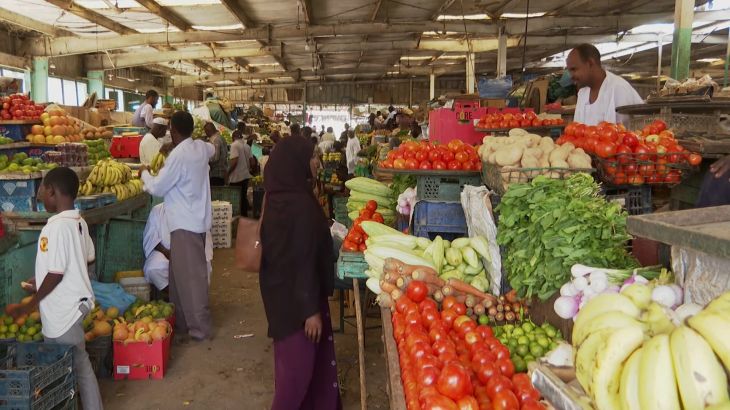
As Sudan’s war enters its fourth year, poverty has reached unprecedented levels, with the rate rising to more than 70 percent, according to United Nations estimates. This means that nearly 23 million people are now living below the poverty line as a result of soaring inflation, economic collapse, the depreciation of the Sudanese pound, and the widespread looting of property and personal savings.
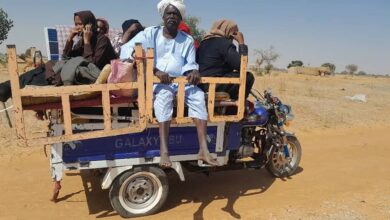
Since April 2023, hundreds of thousands of Sudanese have fallen into unemployment and poverty after losing their jobs and sources of income due to the extensive destruction, looting, and vandalism that affected markets, factories, workshops, industrial zones, public and private companies, and banking institutions. Hundreds of thousands of jobs, including many held by workers and laborers, have been lost.
Harsh Living Conditions
Sudan’s first official Multidimensional Poverty Survey revealed that 82.8 percent of the population was already experiencing severe deprivation even before the outbreak of the war, highlighting the country’s deep structural challenges prior to what has become the worst humanitarian crisis in its modern history.
The survey, published by the Central Bureau of Statistics, found that the Multidimensional Poverty Index (MPI) stood at 0.441, while the intensity of poverty reached 53.3 percent, indicating that poor households were deprived, on average, of more than half of the indicators measured by the index.
For the first time, the survey adopted the multidimensional poverty methodology, which measures deprivation across health, education, living standards, and employment through 14 indicators, rather than relying solely on income levels.
The findings showed that inadequate access to healthcare represented the largest contributor to poverty, with 97.3 percent of the population lacking sufficient access to health services. This was followed by inadequate sanitation services (86.9 percent) and lack of access to clean cooking fuel (64.9 percent), making the health sector the single largest contributor to Sudan’s multidimensional poverty.
Darfur and Kordofan recorded the country’s highest poverty rates. Central Darfur ranked first, followed by East Darfur, South Kordofan, West Kordofan, and South Darfur. In contrast, Khartoum and the Northern State recorded the lowest poverty levels, although the report warned that both remain highly vulnerable and could see significant increases in poverty following further shocks.
The survey also revealed widespread severe multidimensional poverty. More than three-quarters of the population in East Darfur and Central Darfur live in acute multidimensional poverty, while poverty rates exceed 70 percent in South Darfur, South Kordofan, and West Kordofan, reflecting widening development disparities across the country.
The Central Bureau of Statistics stated that the survey, conducted in partnership with the United Nations Development Programme (UNDP) and the Oxford Poverty and Human Development Initiative (OPHI), provides the final baseline assessment before the war and will serve as a key reference for measuring the conflict’s impact on poverty and development in the coming years.
A Complex Reality
Mohammed Al-Bashri, a government employee, told Mashaweer that poverty has worsened dramatically as the conflict has expanded across the country.
«”With no political solution in sight to end the armed conflict, millions of Sudanese have become victims of an increasingly complex reality and an uncertain future. Their hopes have been shattered, their families pushed deeper into poverty, and frustration has become widespread.”»
He added that months continue to pass without meaningful economic improvement due to the lack of employment opportunities, the severe economic downturn, soaring inflation, and limited government spending that is incapable of generating new jobs.
According to Al-Bashri, employees and workers depend entirely on their jobs for survival, yet the war has displaced millions of skilled workers and laborers, while many factories and companies suspended operations during the early months of the conflict without meeting their obligations toward employees. As a result, unemployment has risen to more than 50 percent nationwide.
Systemic Poverty
Economist Omar Al-Dukhri believes the continuation of the war has halted business activity and investment across Sudan, including small and medium-sized factories, local businesses, and commercial enterprises.
He explained that millions have lost their jobs and daily incomes as traditional markets have collapsed, agricultural and industrial supply chains have been disrupted, prices have surged, and households have become increasingly unable to meet their basic needs.
He noted that in urban areas, the proportion of households without stable employment or income has risen to more than 18 percent, compared with 1.6 percent before the conflict, adding that unemployment could exceed 60 percent by the end of 2026.
Al-Dukhri further stated that three years of war have severely disrupted agricultural and industrial production chains, reducing productivity by nearly 50 percent while driving prices sharply higher. At the same time, approximately 24.6 million people are facing acute food insecurity, with more than 600,000 people experiencing catastrophic levels of hunger.
«”Poverty is no longer simply about the loss of income,” he said. “It has evolved into a systemic condition characterized by the collapse of livelihoods, deteriorating public services, and a growing dependence on humanitarian assistance, posing a direct threat to the stability of families and communities.”»
Urgent Solutions
Professor of Political Economy Taha Abdelrahman described the impact of the war as a large-scale collapse of household resilience, with many families losing the savings of a lifetime within a short period.
He said that the closure of thousands of public and private institutions across Khartoum, Gezira, Darfur, and Kordofan, combined with interrupted salaries and soaring inflation, has devastated household purchasing power.
Abdelrahman noted that wars weaken productive sectors, forcing previously self-sufficient families to rely on humanitarian assistance. Meanwhile, an expanding informal economy, accelerating inflation, declining purchasing power, and rising prices of food, housing, and essential goods have drawn millions of people into poverty.
To mitigate the crisis, he called for a package of urgent economic measures, including support for small and medium-sized enterprises through concessional loans and tax incentives, rapid vocational training programs for displaced workers to facilitate access to sustainable employment, improvements to food supply chains to reduce shortages and ease price pressures, and stronger investment in domestic agricultural and industrial production to restore market stability and secure the basic needs of Sudanese families.