Inside a beauty salon in Ed Damer, northern Sudan, Najwa Mubarak carefully draws delicate crimson flowers on the hands of a woman sitting opposite her, dressed in an intricately patterned traditional garment. She is following Sudanese rituals that date back centuries and are now at risk of disappearing.
With water becoming increasingly scarce, climate change intensifying, and war continuing for more than three years, the cultivation of henna plants used to produce the dye traditionally applied to Sudanese brides has declined. Henna remains a prominent feature of family gatherings, religious celebrations, and important social occasions.
Mubarak’s salon in River Nile State, northern Sudan, is filled with the aroma of incense as Najwa dips a fine brush into a container of bright red henna paste, using it to create intricate designs and patterns.
“Henna is both a hobby and a heritage,” Mubarak says, explaining that she enjoys applying henna to women preparing for marriage “because it is part of the bride’s celebration.”
Thirsty Shrubs
Not far from the beauty salon, the challenges facing henna cultivation and production are clearly visible. Abdullah Mohamed, 57, who grows henna shrubs on his farm, says, “Water comes at widely spaced intervals and stops completely just when we need it most.”
Passing his hand among the shrubs that have begun to wilt under the sun, he adds, “Thirst is one of the biggest obstacles contributing to declining production.”
Like many farmers in the area, Mohamed relies on irrigation canals fed by the Nile. However, irregular water supplies and neglected waterways have caused fields to dry out and reduced both the quantity and quality of the crop.
The conflict that has continued for three years in Sudan between the army and the Rapid Support Forces (RSF) has brought agricultural activity across the country to a standstill.
The war, which erupted in April 2023, has damaged irrigation networks, blocked canals, halted water pumps, and disrupted water-management systems.
At the same time, the El Niño climate phenomenon has altered weather patterns around the world, contributing to delayed seasonal rains and a sharp decline in Nile water levels.
Rainfall in major agricultural areas fell by as much as 30 percent below the average during the rainy season that recently ended, according to the Food and Agriculture Organization of the United Nations (FAO), further exacerbating drought conditions.
Export Challenges
In the city of Ed Damer, henna fields appear like emerald-green islands amid the brown desert. Farmers make their way between the shrubs under the scorching sun, cutting the leaves with small, claw-like tools that have been passed down through generations.
The distinctive aroma of henna rises from the harvest as branches are gathered into bundles in preparation for drying and grinding.
Environmental activist Al-Rashid Ali Mahdi describes henna as “more than just a plant,” saying it is “deeply connected to Sudanese heritage and is an economically important crop.”
Sudan is one of Africa’s largest producers of henna, which is among the key sources of cash income for River Nile State in northern Sudan. The crop provides livelihoods for farmers, processors, traders, and beauty workers.
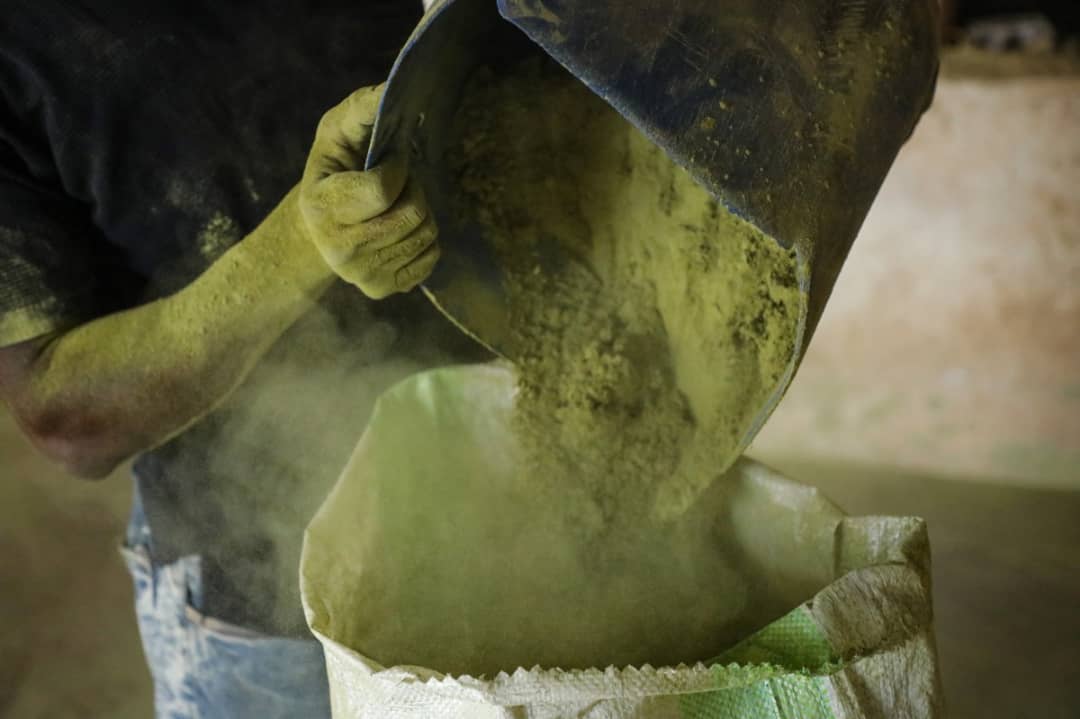
At a factory in Ed Damer, workers spread freshly harvested henna leaves out to dry before feeding them into grinding machines. Others package the ground henna into colorful bags, some for domestic consumption and others for export.
Factory owner Mohamed Ramadan says, “Before the war broke out, we used to export our products from Omdurman in Khartoum to destinations around the world.”
However, he explains that since the outbreak of the war, many farmers have been forced to reroute their shipments through Egypt and, to a lesser extent, Chad, to avoid the difficulties affecting traditional shipping and export routes due to the spread of violence and fighting.