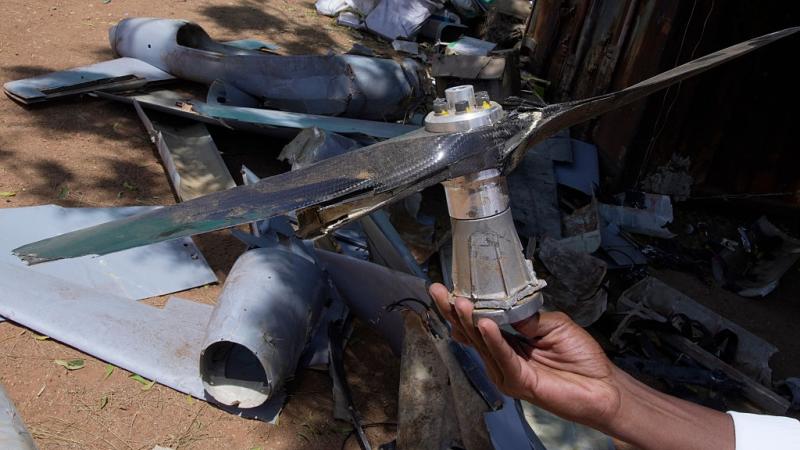
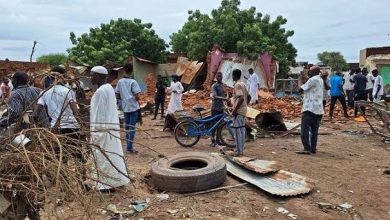
Several areas across Sudan’s West Kordofan State are experiencing severe humanitarian and living conditions as a result of aerial bombardments by the Sudanese Armed Forces (SAF) using drones, which have reportedly caused dozens of deaths in the Abu Qalb area. Meanwhile, the Rapid Support Forces (RSF) have been accused of committing widespread violations against civilians in the towns of Al-Fula and Abu Zabad. These developments have contributed to increasing waves of displacement towards El Obeid, the capital of North Kordofan State.
Civilians trapped in various parts of the region are facing a severe livelihood crisis due to food shortages and soaring commodity prices, alongside shortages of drinking water, the suspension of grain mills, a lack of healthcare services, and shortages of essential and life-saving medicines.
Warnings and Humanitarian Crises
Meanwhile, residents of the Abu Qalb area in Abu Zabad locality, West Kordofan State, have warned of deteriorating humanitarian conditions following four consecutive days of aerial bombardment. The attacks reportedly killed 15 civilians, including four children, when a drone operated by the Sudanese Armed Forces targeted locations and homes in the area.
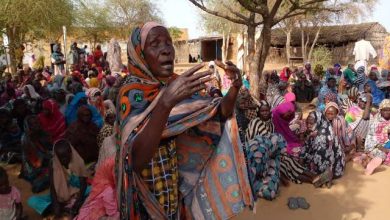
Yousef Hammad, a resident of Al-Masha village, told Mashawir that approximately 7,000 people remain in the Abu Qalb area amid severe shortages of food, medicine and fuel. He called for a three-day humanitarian truce to facilitate the evacuation of civilians and the delivery of humanitarian assistance.
He added that the area comprises 49 villages with an estimated population of 10,000. Some residents have fled following the escalation of attacks, while approximately 7,000 people remain trapped, facing food shortages and dwindling fuel supplies used to operate water stations and grain mills. He warned that these essential services could come to a complete halt within two days.
Hammad also reported that medicines had run out, particularly those used to treat chronic illnesses and childhood anaemia. He further highlighted the deteriorating health conditions of pregnant women and older people, as well as the difficulties in evacuating those injured in the bombardments, amid the absence of medical care and necessary supplies.
He called on the United Nations, the African Union, the Intergovernmental Authority on Development (IGAD), and the Office of the United Nations High Commissioner for Human Rights (OHCHR) to exert pressure to halt the aerial bombardments and establish safe humanitarian corridors to evacuate the wounded, pregnant women and children, deliver food, medicine and fuel, and protect civilians and displaced people.
Mass Displacement
For its part, the International Organization for Migration (IOM) reported that an additional 400 people had been displaced from the town of Abu Zabad over two days due to insecurity, bringing the total number of people displaced from the town to 1,150 within three days.
According to the organisation, the displaced people moved to the localities of Keilak, Al-Sunut, Al-Salam and Lagawa in West Kordofan State.
Meanwhile, activists have warned of deteriorating humanitarian and living conditions for thousands of residents in villages across Abu Zabad locality, West Kordofan State, as a result of market closures and insecurity. This is taking place alongside intensified aerial bombardments by the Sudanese Armed Forces in various parts of the locality and continuing waves of displacement.
Food Shortages
In the same context, Murtada Ahmed, spokesperson for the Kordofan Human Rights Observatory, told Mashawir that population movements were taking place from areas around Abu Zabad towards the south, amid increasingly severe livelihood conditions.
He noted that the closure of markets had disrupted the supply of essential commodities.
He explained that essential goods had previously reached the area through smuggling routes due to the security situation. However, recent military developments had brought these activities to a halt, raising fears of acute shortages of food and other essential commodities, with what he described as potentially catastrophic consequences for people’s lives.
Ahmed said residents were living in a state of fear due to the military escalation and continued aerial bombardments in the area, amid the complete closure of markets and commercial shops, which had brought daily life to a standstill.
Ongoing Hardship
For her part, Sumaya Saadabi, a resident of Abu Zabad, told Mashawir that living conditions had reached an extremely critical level due to severe shortages of drinking water. She added that the threat of hunger was increasingly looming over residents, who could barely secure a single meal a day.
She further explained that fuel shortages in several towns and areas across the region for more than two weeks had brought grain mills to a standstill throughout the area. As a result, most residents had been forced to resort to traditional stone hand mills, known locally as Al-Marhaka, to grind sorghum grains into flour for preparing their daily meals.
Saadabi noted that grinding grain using the traditional hand mill was far from an easy task, requiring considerable physical effort and concentration. Sorghum, in particular, requires more than one grinding cycle, with the process taking approximately two hours before the grains are turned into fine flour suitable for cooking.