Residents of South Kordofan Under the Grip of Hunger and Epidemics Amid Escalating Fighting
Mashawir – Report – Manhaj Hamdi
The continued escalation of fighting between the Sudanese Armed Forces and the Rapid Support Forces (RSF), along with their ally the Sudan People’s Liberation Movement–North led by Abdelaziz al-Hilu, in South Kordofan State has contributed to a rapid deterioration of the humanitarian situation—particularly in Kadugli, Dilling, Kalogi, and Al-Abbasiyya. These areas are witnessing the collapse of health systems, the depletion of food supplies, and the spread of deadly diseases and epidemics.
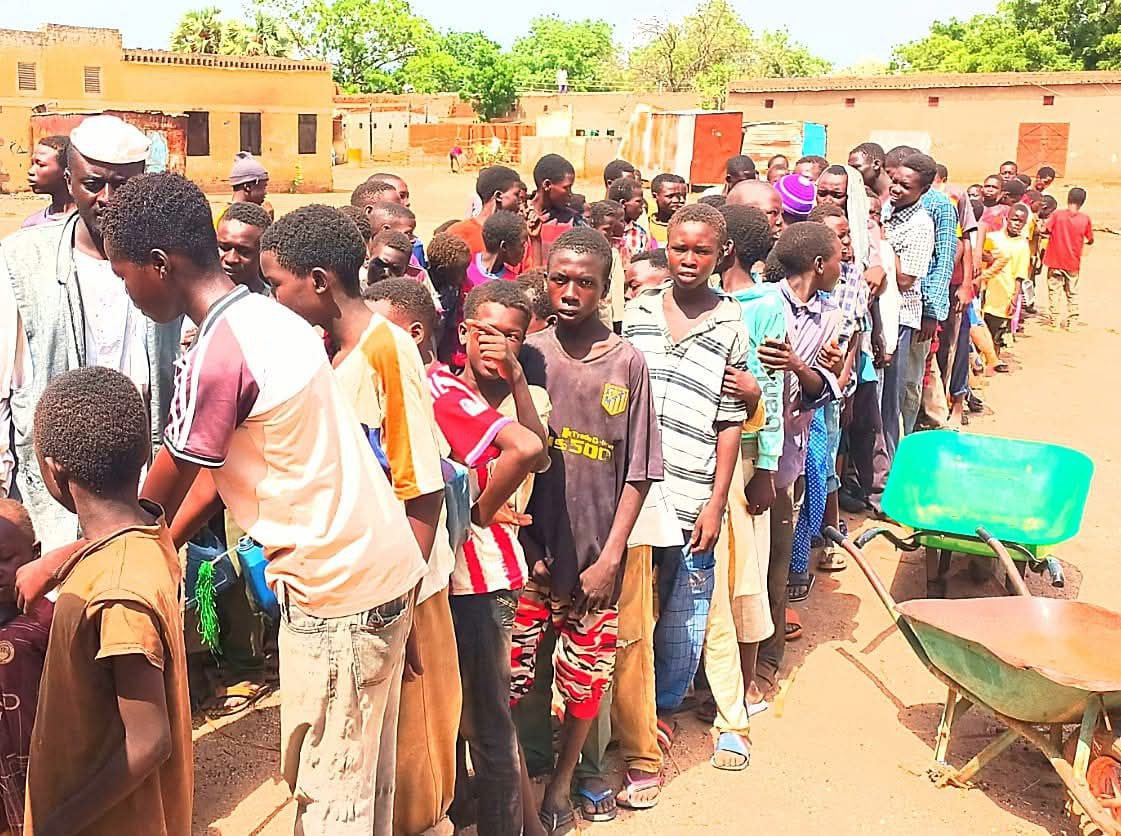
Amid these fast-moving developments, cities across South Kordofan State have experienced large-scale displacement over the past few days due to worsening security conditions in several localities. Meanwhile, civilians who have been unable to flee their towns and villages are enduring tragic conditions as a result of severe shortages of food and medicine. This has led to the deaths of hundreds from starvation, alongside the widespread outbreak of hunger-related diseases, especially among children, the elderly, and pregnant and breastfeeding women.
Diseases and Famine
Hussein Koko, a resident of Dilling, told the Mashawir platform that “the tragedy and suffering of the population are worsening due to the siege and shelling. Hunger, disease, and the lack of food, water, and medicine have reached unbearable levels—especially for children and women, who are now living through horrific chapters of hunger.” He added that “as the RSF and its ally, the SPLM-North, target residential neighborhoods with artillery shelling and drone strikes, civilians have found no option but to flee to the mountains and highlands to save their lives.”
Koko further noted that “hunger has engulfed the area, and it has become extremely difficult to obtain even one meal a day. Many residents have been forced to eat tree leaves just to survive.”
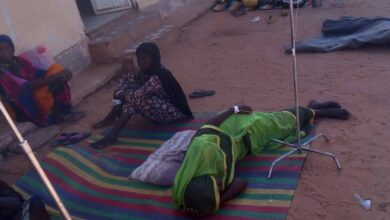
He warned that “deaths from starvation are expected to increase in the coming period unless humanitarian aid is allowed to reach tens of thousands of people trapped in Dilling, the second-largest city in South Kordofan—especially in light of the complete collapse of the health situation, the total absence of medicines and intravenous fluids, and the spread of cholera, diarrhea, malaria, and deadly respiratory infections.”
Ongoing Suffering
For his part, Amer Ishaq, a resident of Kadugli, explained that “the situation has exceeded all limits of endurance, particularly with the continued indiscriminate shelling of residential areas by the SPLM-North, the rising number of victims and wounded, and the food crisis caused by road closures and the halt of supplies of goods, commodities, and medicines.”
In his remarks to Mashawir, Ishaq added that “repeated shelling has forced hundreds of families to flee to the areas of Al-Kargil and Abu Jibeiha in search of safety and life, amid extremely difficult humanitarian conditions—especially after financial savings were exhausted and work came to a standstill.”
He pointed out that “residents remaining in the capital of South Kordofan State are facing severe economic hardship, as many essential goods such as flour, cooking oil, rice, lentils, and onions have run out.”
Concern and Call to Evacuate
Meanwhile, the Nuba Mountains General Council expressed deep concern over the rapidly evolving military operations in South Kordofan State, particularly in areas with a heavy presence of army forces, most notably the cities of Kadugli and Dilling, as well as the regions of Abu Jibeiha and Abu Karshola.
In a statement, the council stressed that “the safety of civilians and the protection of their lives represent a top priority, especially as all indications point to the outbreak of large-scale military confrontations in these areas in the coming days.”
The statement urged Nuba Mountains residents of all age groups—women, children, and the elderly—to leave areas of tension and armed conflict and move toward safer locations, including areas outside the zones of military confrontation. It also warned against the dangers of using the presence of civilians inside cities for military purposes, affirming that the people of the Nuba Mountains will not be fuel for war nor tools in any military or political conflict.