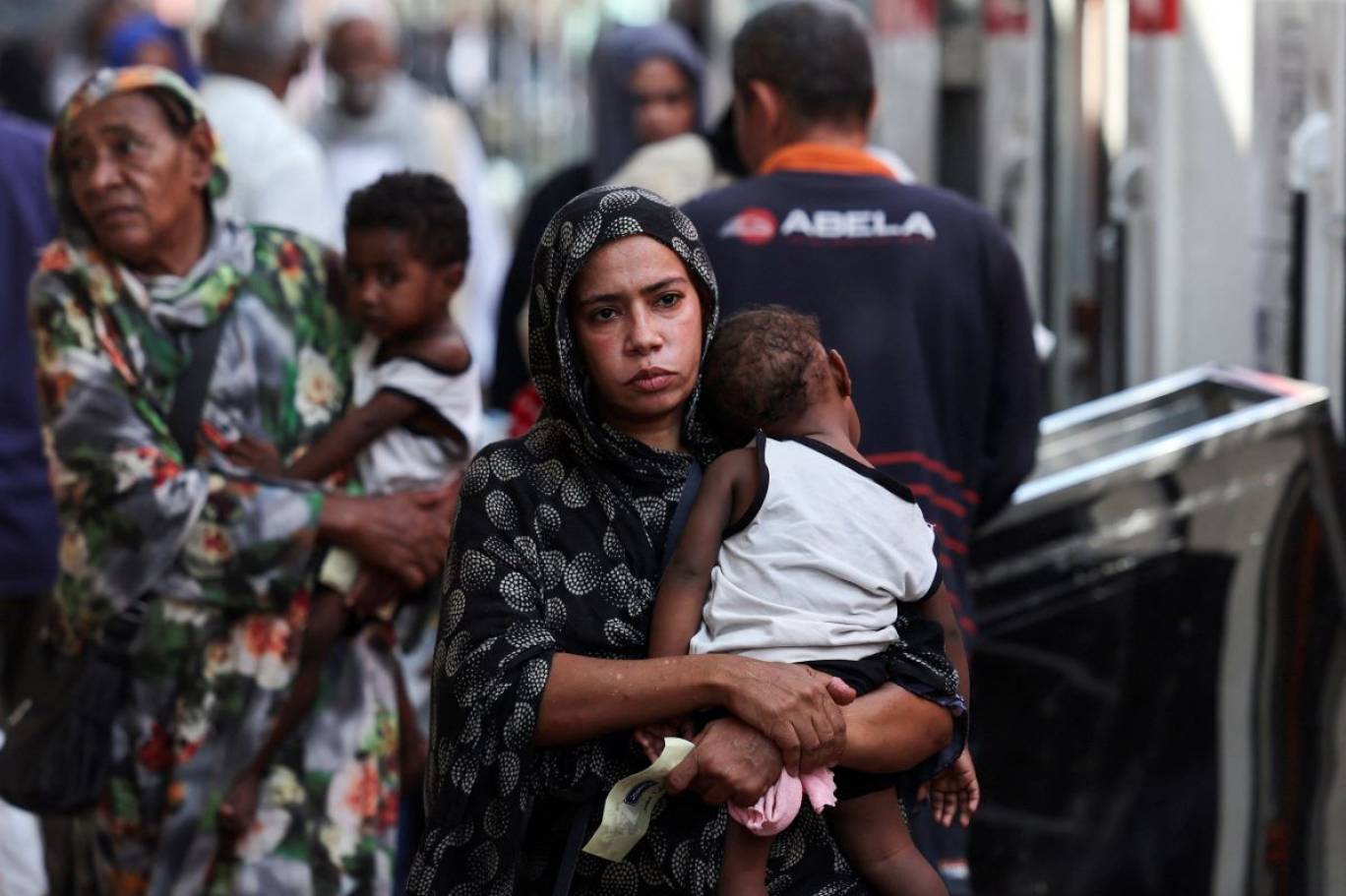
Over recent weeks, forty-year-old Sudanese woman Ghada Hassan has bid farewell to many Sudanese acquaintances she met in Egypt during the past few years, as they returned home in successive waves of voluntary repatriation. But for Ghada, the decision to return is still not easy, especially because of her son’s medical treatment after he was injured during the war, and the difficulty of obtaining services in Khartoum compared to Cairo.
More than 538,000 people returned to Sudan from Egypt between January 2024 and February 2026, according to an April report by the International Organization for Migration. This figure represents around 87 percent of all returnees to Sudan from neighboring countries.
Returning Is Not Easy
Ghada, who works as a teacher at one of the Sudanese international schools in Cairo, says she does not know anyone who came to Egypt after the war intending to settle permanently.
“Everyone will return eventually, but deciding to go back now is difficult for many people, especially with the absence of services in Sudan. Electricity only comes for two hours a day, and as a result water is constantly cut off,” she said.
Sudanese researcher on African affairs Mohamed Torchin added that security concerns are also among the reasons preventing many Sudanese families from returning at present.
He said that the use of drones by the Rapid Support Forces has weakened the sense of security inside Sudan, in addition to the Sudanese government’s inability so far to restore essential services such as education and healthcare, whose availability would encourage many people to return.
Torchin added that the absence of such services leads many Sudanese with ties to Egypt — whether through education, investment, marriage, or medical treatment — to prefer staying in Egypt, given the quality of services there and the strong brotherly ties between the two peoples.
The Early Days
Ghada clearly remembers how she left Khartoum, where she lived in an upscale neighborhood near the international airport, nine months after the outbreak of war, following her eldest son being shot three times in the leg.
“I hold a diplomatic passport because I was the director of a British department at the Ministry of Foreign Affairs, and my husband is also a diplomat. We fled to Cairo after the doctor told us my son urgently needed surgery to avoid amputation,” she said.
Ghada and her children settled in Faisal. Later, her brother, his children, and her mother joined her, while one sister moved to Qatar and another relocated to a relatively safer Sudanese city, leaving the family scattered until now.
She said she constantly asks returnees about conditions in Sudan and hears about the spread of diseases and the absence of hospitals and services, which pushes her to remain in Egypt — especially since the residency permits for her and her children, obtained through the UNHCR yellow card, are valid for another year.
“But after that, I do not know what I will do amid deportation campaigns,” she added.
She noted that those returning to Sudan now are mainly families whose savings have run out, who lack residency permits, or who wish to reunite with relatives still in Sudan.
Staying Despite Deportation Campaigns
Since last December, Egypt has witnessed intensified security campaigns targeting residency violators, resulting in the deportation of thousands according to observers, while also prompting others to opt for voluntary return.
Like Ghada, thirty-year-old Sudanese engineer Nabil Abbas is not considering returning to Sudan anytime soon due to deteriorating services there compared to Cairo, in addition to his stable employment and legal residency status in Egypt, he told Asharq Al-Awsat.
Abbas arrived in Egypt with his family two years ago after suffering a gunshot wound to his hand. Following treatment, he found work at a company and settled in New Cairo’s Fifth Settlement district.
Official estimates indicate that around one million Sudanese arrived in Egypt following the outbreak of war.
Familiarity and Safety
Sudanese woman Noon Abdel Majeed, 28, arrived in Egypt with her family before the war that erupted in April 2023. She said the move was motivated by insecurity, unstable conditions, poor services, and repeated interruptions to education in Sudan.
“We had visited Egypt before settling there temporarily and felt a sense of familiarity, safety, and access to services, so we thought it could be suitable for living if we ever decided to leave Sudan,” she explained.
Noon enrolled to study media in Egypt after struggling to continue her education in Sudan, and she is now in her final year.
She and her mother and sister, who also studies in Egypt, do not face residency problems, while the rest of the family hold renewable tourist visas.
Noon does not believe she will find a suitable job opportunity in Egypt after graduation, so she is considering moving to one of the Gulf countries, while her family plans to remain in Egypt and has no intention of returning to Sudan soon, hoping their tourist residencies can continue to be renewed.