As War Continues, Freelance Work Becomes Sudanese People’s Main Option
Mashawir – Report by Ishraqa Ali Abdullah
Contradictions are emerging among a wide segment of employees in Sudan’s public and private sectors. While some resumed work in service institutions from inside Khartoum within the official 45-day deadline, others chose self-employment to confront the worsening cost-of-living crisis amid weak salaries and the unprecedented collapse of the Sudanese pound in the foreign exchange market.
According to specialists in economics and sociology, Sudan’s deteriorating economic and living conditions have made returning to formal employment unrealistic for many workers at the present time.
Reluctance to Return to Jobs
Mohamed Ibrahim, who lives in the Al-Kalakla suburb south of Khartoum, said:
“Before the war, we lived with the concept of job security. I spent many years working continuously as a driver in a government institution and never imagined myself doing anything else.”
He added:
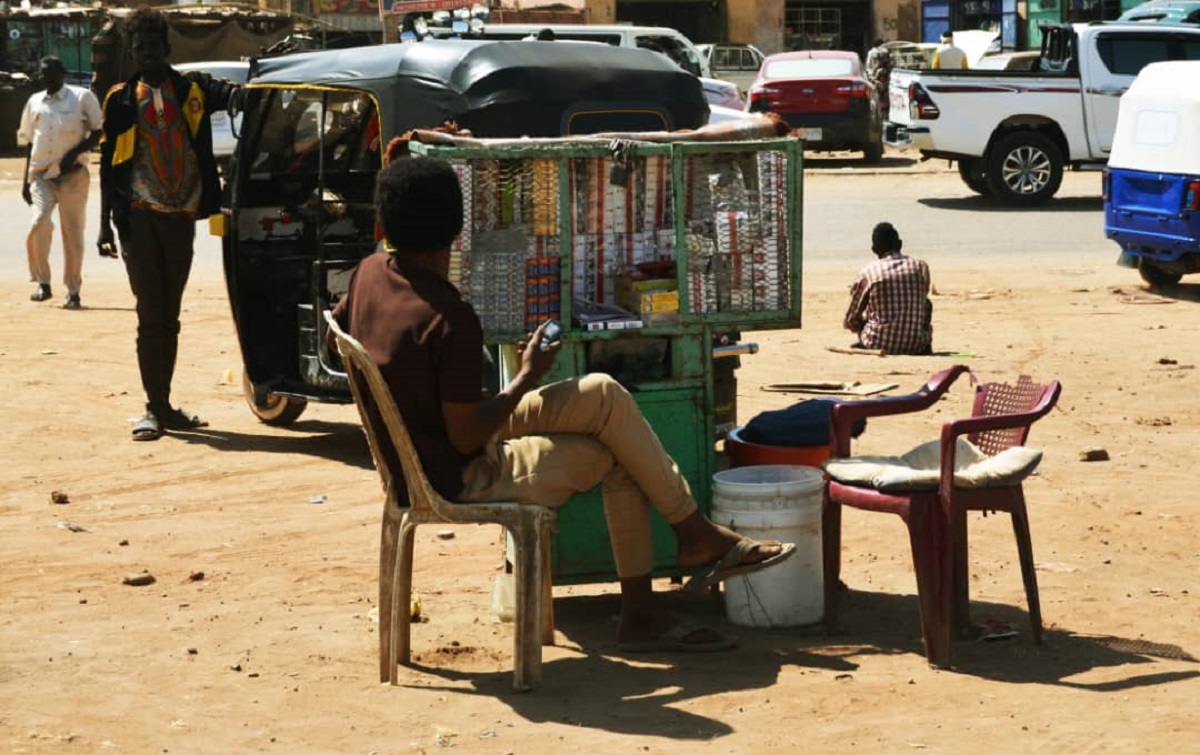
“After the war broke out, I suddenly found myself facing a collapsed reality after work and salaries stopped amid displacement and widespread unemployment. This frightening reality forced me to think about starting a small business — a kiosk selling basic household goods. The beginning was difficult because I lacked market experience, but after large groups of citizens gradually returned to Khartoum, the situation improved considerably.”
The Sudanese citizen continued:
“The deteriorating economic situation was the reason I did not return to my job. I began searching for an alternative source of income that would allow me and my family to live securely. Now I have no intention of returning to formal employment regardless of the incentives or threats of dismissal because I found stability in self-employment.”
He noted that many workers will likely move toward alternative professions because salaries no longer cover the high cost of living, leading to widespread reluctance to return to traditional jobs.
Chasing Opportunities
Meanwhile, Salwa Abdelrahman, a former employee at a private company who currently lives in a neighboring country, explained that she lost all the belongings in her home in the Al-Fetihab area of Omdurman and also lost her job after her salary stopped when the war erupted.
She said:
“The changes in living conditions make it impossible for me to return to work even if the company resumes operations, especially in an environment lacking basic necessities such as electricity, water, education, safety, and housing rights. At the moment, I am not considering returning to the capital unless those dangers disappear.”
Abdelrahman added:
“Because of these changes, I turned to self-employment. I now run a women’s tailoring and Sudanese traditional dress embroidery workshop. Although my situation is not what it used to be, it is still better than returning to a regular job because it at least provides my family with safety and comfort.”
She explained that the workshop succeeded after receiving support from an organization that funds small businesses, helping her family become more self-reliant and enabling her children to continue their education in stability and security.
The former employee stressed that safety is no longer found in a job or regular salary, but rather in securing independent work and a stable future during a time when sources of income have become more limited than ever before.
Escape and Adaptation
Social specialist Ahlam Yousif said the war has reshaped Sudanese social awareness by forcing people to rethink priorities and decision-making amid prolonged crises.
She explained that long-term strategic thinking has been replaced by a survival mentality focused only on getting through each day, leading people to adopt quick alternatives driven by fear and crisis management.
Yousif added that this psychological transformation aligns with findings from a 2025 psychological study on displaced persons, which revealed that individuals experienced stages ranging from emotional numbness to functional paralysis in work and education due to trauma and forced displacement.
She continued:
“Many employees now see freelance work as empowerment in all aspects of life after security shifted from being something stable to something temporary and uncertain. Sometimes self-employment becomes both an escape and a way to adapt after losing the sense of control following the collapse of the formal market.”
However, she warned that unstable work conditions increase chronic anxiety and weaken people’s ability to build psychological and social capital necessary for planning the future, noting that the psychological costs of forced adaptation may only appear after the conflict ends.
She emphasized that wars do not truly end with the silence of gunfire, but when ways of thinking are rebuilt again.
Daily Labor
Economic analyst Ahmed Obeid believes that what is happening in the labor market is not just a temporary crisis but a forced structural transformation that has reshaped employment patterns.
He stated that the war completely dismantled the formal sector, causing GDP to shrink by about 38 percent within a single year.
Obeid explained that the collapse of employment coincided with the devaluation of the national currency, which exceeded 400 pounds against the US dollar, stripping salaries of their value and transforming the economy from a productive system into a fragile survival economy dependent on petty trade and informal activities.
He noted that Sudan’s middle class has been almost entirely swept away by the war, as employees, professionals, and educated workers who once formed the backbone of the state have been forced to become day laborers or street vendors just to survive.
The analyst concluded that Sudan is not experiencing economic growth, but rather “economic survival,” where self-employment has become merely a mechanism for endurance in a suffocating environment lacking protection. He warned that if this pattern continues without intelligently integrating the informal economy into the formal sector, Sudan could become a highly active but low-value economy in which people survive day by day without the ability to build a sustainable future.