Cash Shortage Worsens Living Conditions for Sudanese Citizens
Mashawir Report – Ishraqa Ali Abdullah
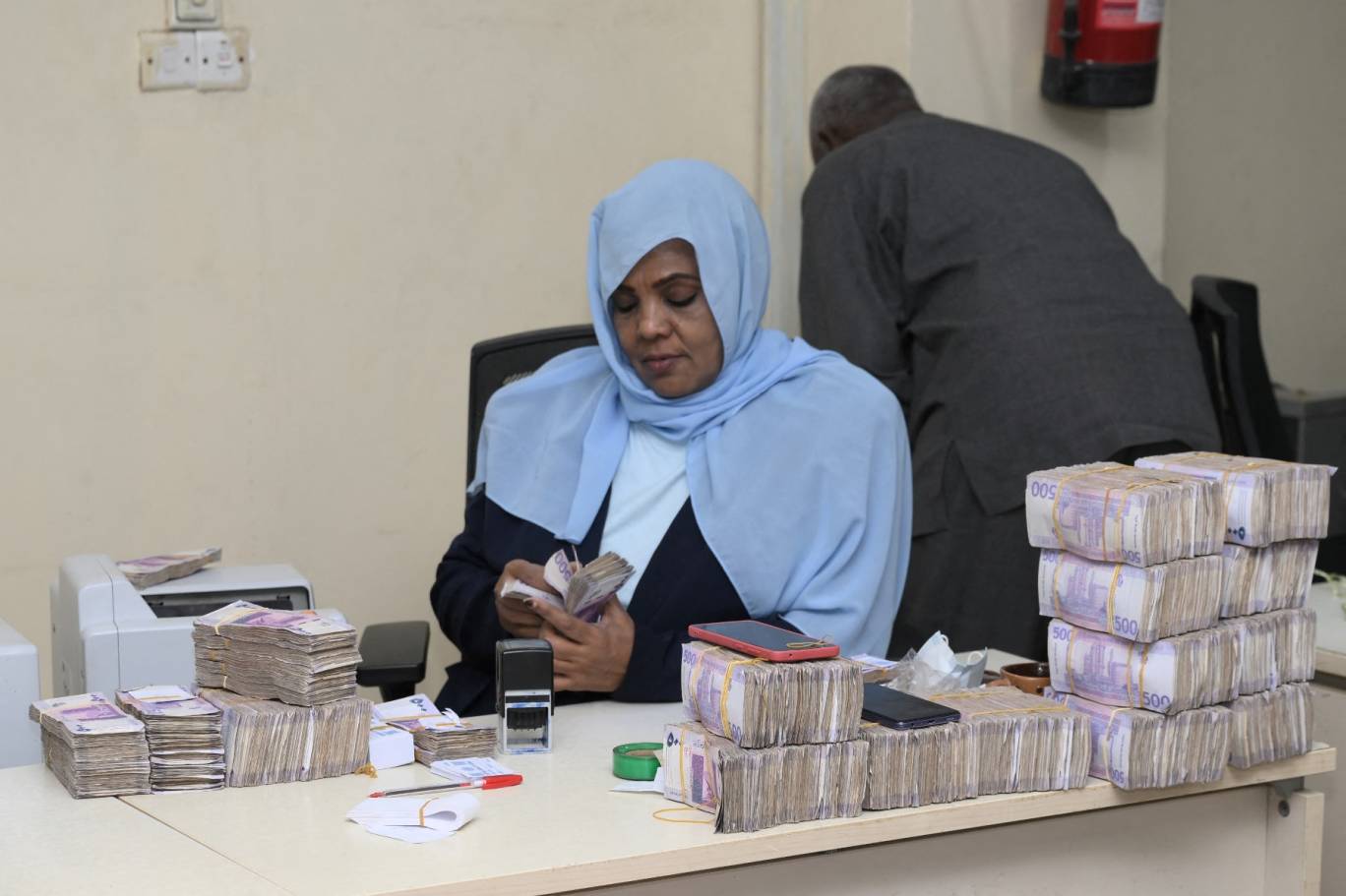
Markets across Sudan’s three capital cities—Khartoum, Bahri, and Omdurman—as well as several states including Al Jazirah, White Nile, and River Nile, are experiencing a near paralysis in financial transactions used for daily purchases and essential needs. The disruption is attributed to the failure of several banking applications and electronic payment services, which has triggered a severe liquidity crisis and an increasing shortage of cash in circulation. This comes alongside the replacement of the 1,000 and 500 Sudanese pound banknotes under a policy implemented by the Central Bank of Sudan during May.
The crisis unfolds as millions of Sudanese inside and outside the country rely heavily on banking applications to send and receive money, particularly after cash availability in banks declined due to the economic consequences of the ongoing war between the Sudanese Armed Forces and the Rapid Support Forces (RSF), which began in mid-April 2023.
Since the liquidity crisis emerged, social media platforms have been flooded with urgent appeals to repair recurring technical failures in electronic banking services and ensure uninterrupted access to financial transactions. Citizens have also called on the Central Bank of Sudan to modernize and strengthen digital payment systems.
Negative Consequences
Saif Mohammed Ali, an employee in a government institution, said that the disruption of banking applications has become a major concern for citizens.
“Many Sudanese expatriates depend on these applications to transfer money to their families and acquaintances, while government employees rely on them to receive their monthly salaries. They are also essential for financial transactions in markets and shops,” he explained.
He added that technical failures have become increasingly frequent, especially during seasons of high demand for electronic services, raising concerns about banks’ ability to manage these technologies as the number of users continues to grow amid expanding digital financial transactions during the war.
“The problem has also created a worrying liquidity crisis that intensified after the Central Bank’s decision to replace certain banknote denominations. Ordinary citizens are paying the price, as many can no longer purchase Eid necessities because they depend on banking applications,” he said.
Ali stressed the need to address the crisis either by increasing the availability of cash or by improving the technical infrastructure of banking applications to provide citizens with greater stability.
Increased Hardship
In some states, merchants have begun demanding cash payments instead of electronic transfers, arguing that banking transactions take too long and often fail due to technical issues.
Aida Mahjoub, a housewife living in Kosti, White Nile State, said she returned home frustrated after failing to obtain cash, while traders refused to complete transactions through bank transfers until the applications resumed functioning.
“The worsening liquidity crisis has led to negative practices,” she said. “When my brother, who works in a Gulf country, transferred money to me through a banking app to buy Eid al-Adha necessities, the applications stopped working. I was forced to seek cash from a trader, who demanded a commission of up to 10 percent of the amount exchanged. Citizens are compelled to accept such conditions because of restrictions on cash withdrawals imposed by banks.”
She noted that the situation highlights the extent of exploitation during the crisis and how some traders have taken advantage of people’s urgent needs.
Market Slowdown
Taher Abdelkarim, a trader in Omdurman Market, believes that the liquidity crisis has severely disrupted commercial activity during the Eid al-Adha season.
“The replacement of the 1,000 and 500-pound notes in several states effectively halted the movement of goods between regions,” he said.
According to Abdelkarim, the instability of banking applications has further worsened the situation despite their importance as an effective means of meeting daily needs and reducing congestion in banks.
“In the current circumstances, it is understandable that traders prefer cash transactions. There is fear that money transferred electronically may remain frozen for long periods because of ongoing technical failures. We know this affects citizens, but wholesalers supplying goods to us also insist on cash payments,” he explained.
A Lifeline for Citizens
Banking analyst Walid Dalil described banking applications as a “lifeline” for Sudanese citizens, particularly during more than three years of conflict.
“These applications have become a substitute for paper currency under the current economic conditions,” he said.
Dalil noted that banking service disruptions have paralyzed many aspects of daily life due to damaged infrastructure, attacks on data centers, the looting and destruction of major bank headquarters in Khartoum, and persistent electricity outages.
“The severe liquidity shortage and the difficulty of circulating cash have placed enormous pressure on electronic systems, often beyond their operational capacity. At the same time, international restrictions have limited access to advanced cybersecurity technologies,” he explained.
He added that the crisis has fueled parallel cash markets and disrupted money transfers, trade, supply chains, and broader economic activity, contributing to inflation and declining public revenues.
“One unfortunate consequence has been the emergence of cash-for-transfer businesses that charge high commissions. Many citizens have also lost confidence in the banking system and have begun converting their savings into gold or foreign currencies out of fear that their funds could become inaccessible during service disruptions,” he said.
Challenges and Solutions
Economic researcher Mohammed Al-Nair stated that the repeated failures of banking applications reveal the scale of challenges facing Sudan’s digital infrastructure, which has become concentrated in areas under government control, particularly in the north, east, center, and south of the country.
Large parts of Darfur and Kordofan remain largely disconnected from banking operations, cash transfers, and financial services.
According to Al-Nair, banks must adapt to the reality that most citizens have become accustomed to using banking applications for daily transactions. He described this shift as positive, noting that before the war, more than 90 percent of the country’s cash circulation was outside the formal banking system.
“Banking applications have achieved remarkable success in attracting users despite poor network quality,” he said.
He emphasized the need for banks to prepare adequately for periods of increased demand, such as Eid al-Adha, by upgrading their systems to handle higher transaction volumes efficiently.
Al-Nair concluded that solutions should begin with fully activating banking systems across major banks to provide multiple service options, ensure continuity, reduce future disruptions, and strengthen coordination between banks and telecommunications companies to improve the stability of digital financial services.