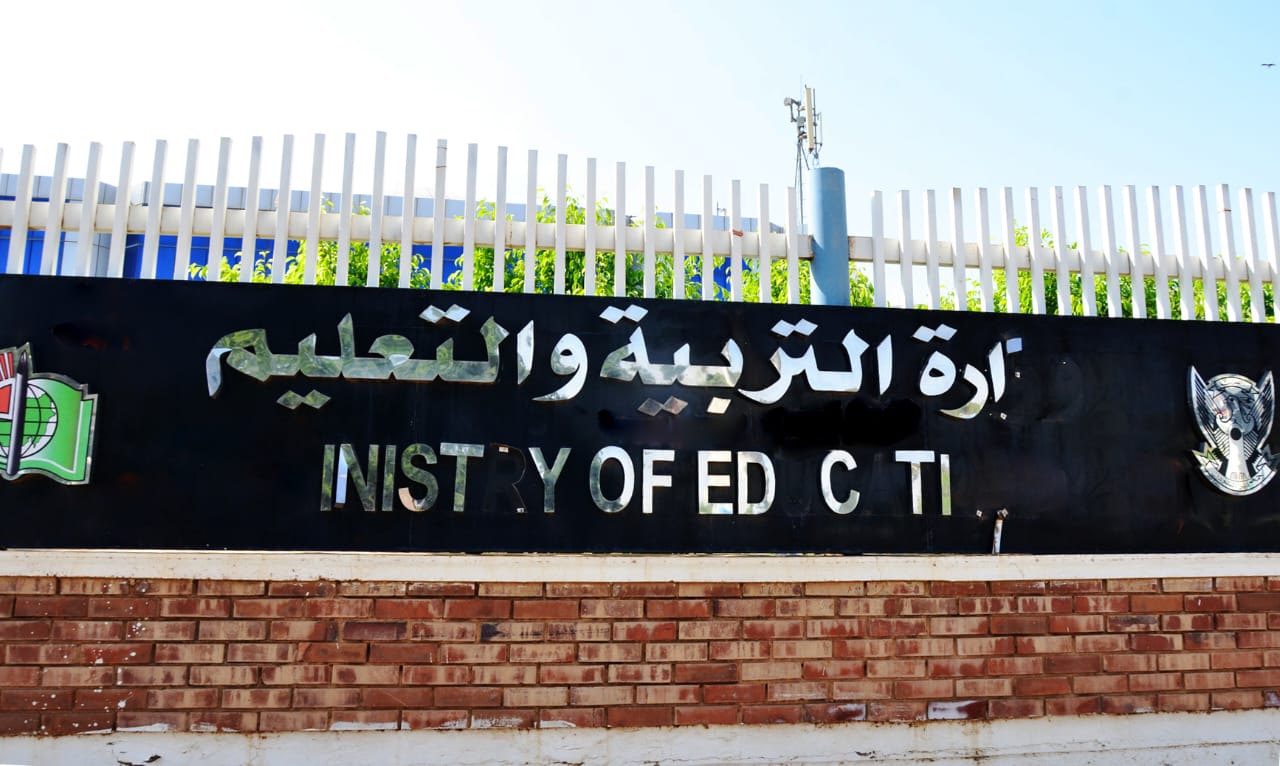
More than three months after the start of the academic year in Sudan’s capital, schools across the three cities of Khartoum, Omdurman, and Bahri have remained closed for a fourth consecutive day due to a teachers’ strike protesting unpaid salaries, outstanding financial entitlements, low wages, and deteriorating living conditions. Teachers in Kassala State have joined their colleagues in Khartoum State, with expectations that ten other states may take similar action in the coming days.
The financial hardships facing education sector workers have become as significant a challenge as the academic year itself, particularly amid the ongoing war and the accumulated economic crises affecting Sudanese society.
These developments have heightened concerns that the academic year could be suspended if the strike continues, especially after dozens of teachers in several Sudanese states announced an open-ended strike across all educational levels until their demands are met.
Mobilization and Escalation
Sami Al-Baqir, spokesperson for the Sudanese Teachers’ Committee, said that hundreds of male and female teachers staged a strike in approximately 100 schools in Jebel Awliya, East Nile, and Greater Omdurman in protest against unpaid salaries, delayed financial entitlements, and worsening living conditions for education sector employees.
He added that the strike forms part of an ongoing campaign by teachers seeking improvements in their economic and professional conditions.
In a statement, the Sudanese Teachers’ Committee noted that the strike reflects growing dissatisfaction among educators over the authorities’ continued disregard for their professional and livelihood-related demands and their failure to settle accumulated financial dues, including salaries, allowances, grants, and benefits.
The committee affirmed its commitment to continuing and escalating its advocacy efforts until its demands are addressed, stressing that the stability of the education system depends on improving the economic and professional conditions of those working in the sector.
Full Demands
Retired teacher Al-Tijani Abdelrahman from Khartoum State held Sudan’s central government responsible for failing to adequately fulfill its obligations, noting that it has been unable to resolve teachers’ salary issues for more than two years despite repeated promises and commitments made to joint education-sector committees.
He said that teachers had exhausted their patience with ongoing delays and had no alternative but to resort to strike action, which he described as a legitimate means of pressuring the government to meet their lawful demands and improve their economic and professional conditions.
Abdelrahman explained that monthly salaries are extremely low, not exceeding 156,000 Sudanese pounds (approximately US$35) for the highest employment grade. As a result, most teachers are no longer able to meet their basic daily living needs, especially after salaries lost more than 80 percent of their purchasing power.
He emphasized that teachers’ committees across all states should remain committed to achieving their full demands and avoid accepting partial solutions, arguing that past experiences have demonstrated the ineffectiveness of such measures in addressing teachers’ problems.
Government Responses
Meanwhile, Sudan’s Council of Ministers announced the formation of a national committee to address education-related issues and discussed the crisis surrounding teachers’ salaries and outstanding payments in an effort to contain the situation and ensure the continuation of the academic year.
Minister of Culture and Information Khalid Al-Aiser stated that the Council had discussed the issue of delayed salary payments and ways to resolve it fundamentally. He added that the government is establishing a new approach centered on rebuilding Sudan through short-, medium-, and long-term plans, with education occupying a significant place among the Council’s priorities.
He also announced the government’s readiness to provide educational needs across all regions, particularly in states affected by armed conflict, and to localize the production of school furniture to address classroom seating shortages nationwide.
According to Al-Aiser, Cabinet directives also include restoring printing and publishing institutions to full efficiency in order to solve textbook shortages and ensuring a fair distribution of teachers to maintain the quality of the education system.
He further noted that the Council reviewed a report on educational challenges and development requirements presented by Minister of Education Al-Tahami Al-Zein Hajar. The report included plans for a national conference on advancing education in Sudan and proposals to address sector-wide challenges, including shortages of classroom furniture and other essential resources.
Dismissals and Restrictions
Education specialist Shaker Al-Jazouli said that security authorities have resorted to arbitrary detentions and intimidation instead of seeking solutions to the crisis. He noted that several teachers in East Nile locality, Khartoum, were summoned for questioning because of their participation in the strike, while a number of school principals were dismissed from their positions.
Al-Jazouli described these measures as restrictions on teachers’ right to organize peaceful advocacy activities and a clear violation of workers’ rights that lacks any legal basis. He called for the cancellation of dismissal decisions, the reinstatement of school principals, an end to the summoning and interrogation of teachers over strike participation, and the initiation of dialogue to address salary and financial entitlement issues.
He added that teachers are living under extremely difficult conditions, as many belong to a low-income group whose salaries are insufficient to support a family of five for even one week. As a result, many have been forced to sell personal belongings at minimal prices to meet urgent needs such as food and other essentials.
Al-Jazouli predicted that more schools in several states could suspend operations in the coming period, particularly as teachers’ committees continue to call for an open-ended strike until their demands are fully met. He expressed hope that these developments would encourage greater efforts toward rebuilding the nation through education.