“We Drank Water Filled with Worms” – Testimonies from Sudanese Displaced Persons in Blue Nile
Damazin – Mashawir
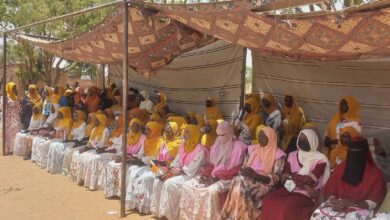
Surrounded by her six children, Amina Hussein sits inside her overcrowded tent. In a weak voice, she tries to reassure her children, pretending to be stronger than the exhaustion consuming her body during pregnancy. Yet her weary eyes reveal the hardship she is enduring.
Amina recalls how her hometown of Dandro turned into a nightmare following violent drone attacks.
> “My children experienced moments they will never forget. They watched flames devour homes, smoke cover the sky, and explosions force people to flee in every direction.”
A Grueling Journey
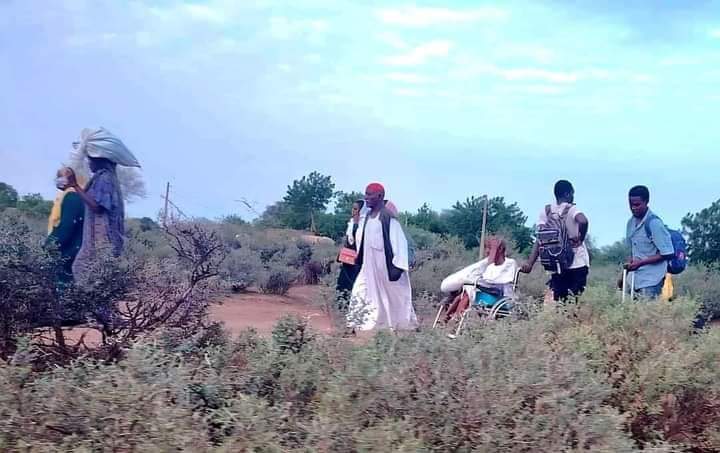
With no other option, Amina walked for two full days through open terrain toward Damazin. Reflecting on the ordeal, she summarizes the tragedy:
> “We walked for two days. I was pregnant, and my children were very young. Some of them would collapse from exhaustion and hunger, then get back up and continue walking.”
Even after reaching safety, her suffering did not end. The tent she now lives in barely protects the family from the heat of the day or the cold of the night. Food is scarce, assistance is limited, and she constantly worries about her unborn child, who faces the threat of severe malnutrition.
A few tents away, the story of Mashaer Ahmed, displaced from Kurmuk, is even more tragic. The night armed men entered the city left an enduring wound in her memory. Her husband was killed in front of their eight children, and her eldest son was abducted.
Her escape led the family into the mountains, where they spent three nights sheltering in rocky caves without food or medicine.
Catastrophic Conditions
Speaking with deep sorrow, Mashaer said:
> “We drank water that had worms in it and smelled bad. It came from rocky pits, but we had no choice.”
Those harsh days left the children suffering from fever and exhaustion, but the psychological scars ran even deeper. Today, her eight children wake up terrified by any loud sound, as though the war has followed them into the camp. Many have lost the ability to play or concentrate like other children their age.
These stories are not isolated cases. They reflect the daily reality of thousands of displaced families living in camps across the Blue Nile region.
The humanitarian crisis in the camps around Damazin is evident in severe malnutrition affecting pregnant women and unborn children, overcrowded tents that provide little protection from the elements, and acute shortages of food, medicine, and basic humanitarian assistance.
Serious Psychological Consequences
Dr. Hiyam Abdel Ghani, a psychologist working in the Bau locality displacement camp, warned of the continuing and severe psychological effects on children and women.
She described a troubling phenomenon inside the camps:
> “Many children now express their trauma through drawings. Instead of drawing scenes from a normal childhood, their notebooks are filled with airplanes, weapons, battles, and blood.”
Dr. Hiyam explained that children are experiencing social withdrawal and serious sleep disorders, while pregnant women face additional stress due to the loss of safety and stability.
She warned that the continued absence of urgent psychological and humanitarian intervention could result in an entire generation carrying deep psychological and behavioral scars for many years to come.