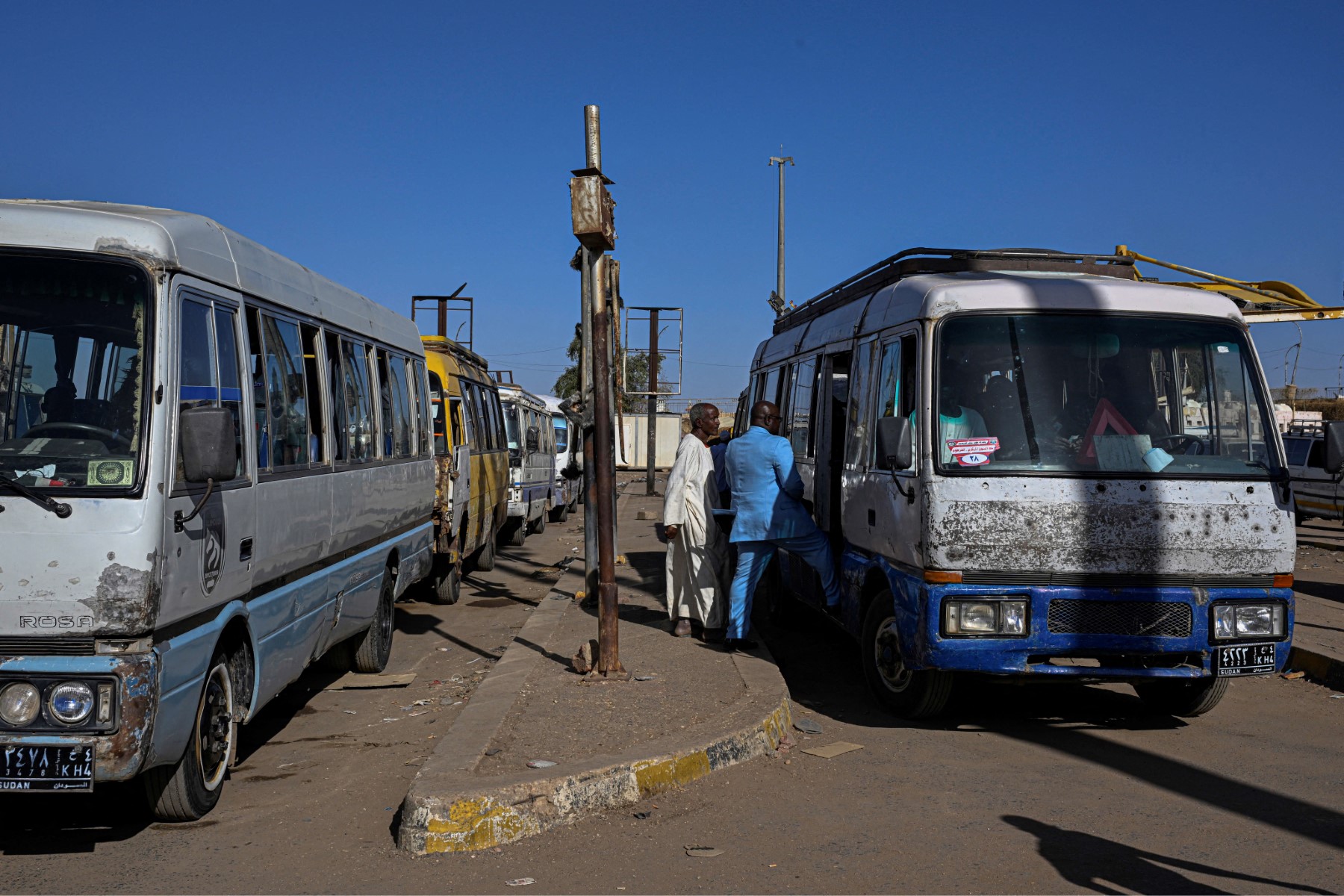
Since the outbreak of the armed conflict between the Sudanese Armed Forces and the Rapid Support Forces (RSF), which has now entered its fourth year, Sudan’s road transport sector has experienced severe deterioration. The crisis has been driven by soaring customs duties required for vehicle clearance procedures, preventing major transport companies from importing new fleets on an annual basis. At the same time, operating costs have surged due to fuel shortages exacerbated by instability in the Middle East, the closure of the Strait of Hormuz, and rising global oil prices.
Total losses in Sudan’s transport sector during the war are estimated at approximately $2 billion. The sector includes around 150 inter-state transport companies and no fewer than 15,000 buses operating across the capital, Khartoum. It now faces unprecedented challenges, including the permanent closure of 12 companies and the suspension of operations by another 10. Nearly 50 additional companies remain at risk of closure and workforce reductions, although about half of them regained some stability last year as safe areas expanded across central, northern, eastern, and southern Sudan.
Protests and Justifications
Muawiya Ibrahim, a trader in White Nile State, says the war has created significant difficulties for his business travel between Kosti and Port Sudan to collect imported goods.
“The price of a travel ticket suddenly rose to 400,000 Sudanese pounds (about $100), whereas it previously cost around 180,000 pounds ($45). Freight costs have increased more than fourfold compared to pre-war levels,” he said.
According to Ibrahim, many travelers—particularly traders—have repeatedly complained about the continuous increases in passenger fares and cargo charges amid a lack of effective oversight.
“Transport companies justify the fare hikes by pointing to fuel shortages caused by Sudan’s internal crisis, compounded by the Iran conflict and its impact on global oil markets. The collapse of the Sudanese pound against foreign currencies has also contributed significantly. Any escalation in the war ultimately places additional burdens on ordinary citizens struggling to maintain their livelihoods,” he added.
He called for government intervention through the Ministry of Transport to improve conditions in this vital sector, enabling companies to manage their fleets more effectively and ease the burden on citizens.
Severe Decline
Mohamed Awad, an investor in the transport sector, explained that spare parts prices have increased dramatically.
“Three years ago, I could buy a small oil pump component for around 20,000 pounds ($5). Today, the same item costs about 60,000 pounds ($15), indicating that the price of the vehicle itself has tripled,” he said.
Awad noted that the sector is suffering from exorbitant customs fees, discouraging many private companies that traditionally imported modern transport fleets each year.
“Companies are now effectively forced to pay for the bus twice over because of customs charges imposed by Sudanese authorities in Port Sudan,” he said.
According to Awad, a bus costs approximately $80,000 by the time it reaches Port Sudan, while authorities collect around $40,000 in customs duties and taxes.
“In my view, the greatest challenge is fuel prices, particularly diesel, which is the primary fuel for long-distance buses. The price of a single gallon reached 50,000 pounds (about $12) last year. This extraordinary increase is ultimately borne by citizens, while many companies have suspended routes to various cities because of the high operating costs,” he added.
Continuing Hardship
Ahmed Abdelrazig, an employee at a travel agency in Omdurman, said rising operating costs have forced some companies to reduce their fleets from ten buses to only three.
“This has created a gap between supply and demand in the road transport market. The sector previously transported around 15 million passengers annually, whereas it now serves approximately 18 million. The increase is largely driven by waves of displacement and forced movement between states due to the ongoing armed conflict,” he explained.
He added that government taxes have risen dramatically, contributing significantly to the sector’s paralysis.
“Taxes have increased by roughly 500 percent compared with two years ago, and they continue to rise whenever the Sudanese pound loses value,” he said.
Abdelrazig noted that the transport sector’s difficulties are longstanding, with around 45 investors exiting the local market over the past five years because of operating expenses, government fees on vehicles, and declining competitiveness.
Economic Impacts
Economic analyst Omar Abshar stated that Sudan’s economic crisis has directly affected transportation services within cities because of difficulties securing fuel supplies.
“Drivers in three major cities—Port Sudan, Atbara, and Khartoum—face serious challenges obtaining fuel due to rising prices,” he said.
Abshar estimated that approximately eight million people have been affected by steadily increasing transportation fares over the past two months. The crisis has also disrupted access to markets for around seven million residents of rural communities across eastern, central, and southern Sudan.
“In Kassala, citizens rely heavily on major markets and often travel from distant rural areas at a daily transportation cost of no less than 7,000 pounds (about $1.80). These high costs prevent millions from accessing markets and essential services such as hospitals, schools, and universities,” he said.
The analyst argued that the government has left the transport sector vulnerable to fluctuations in the parallel market, which directly influences fuel prices.
“As a result, the burden falls entirely on citizens who depend on public transportation. They absorb the additional costs instead of benefiting from government intervention or support for essential commodities such as diesel under the current circumstances,” he explained.
Abshar noted that Sudan imported diesel fuel worth approximately $1.2 billion last year, with the figure expected to rise to $1.9 billion this year because of higher global oil prices, instability in the Middle East, and the closure of the Strait of Hormuz.
“This means that the transport sector serves as the first line of impact, while ordinary citizens ultimately bear the greatest burden,” he said.
He concluded that long-term solutions require the revival of railway services connecting Sudan’s states with Khartoum.
“The Sudan Railways Corporation could restore up to three train services if it receives the necessary funding,” he said.