Lost, Thirsty, and Dead: Poor Road Conditions Claim More Lives in Sudan
Northern State – Mashawir
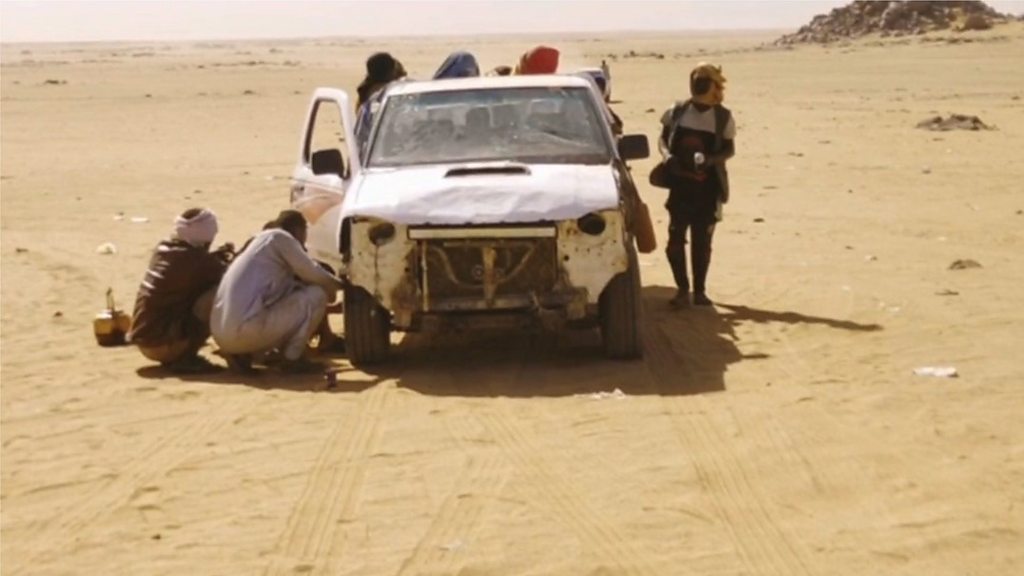
In a new tragedy in Sudan’s Northern State, eight members of the same family died of thirst after becoming lost in the area between the city of Dongola and Wadi Al-Qaab.
The sole survivor, a tuk-tuk driver who was traveling with the family, recounted the incident, explaining that they lost their way after Friday prayers while heading toward their destination.
Difficulty Finding the Route
Neighbors of the family said that adverse weather conditions and strong winds contributed to the difficulty of navigating the route, causing the group to veer off the main road.
Abdul Qadir Salim, one of the neighbors, said that the victims’ relatives realized they were missing on Friday afternoon, prompting a large-scale search operation involving dozens of local residents.
Humanitarian Tragedy
Participants in the search efforts explained that finding the sole survivor—the tuk-tuk driver—was the first indication of the disaster. He was discovered in critical condition and rescued.
As the search continued, the bodies of the eight victims were found on Sunday morning, while efforts went on to locate a ninth person who had been traveling with them, reopening deep wounds among residents of the area.
A Deadly Trap
Abdel Karim Al-Sadiq, a cousin of the deceased head of the family, highlighted the absence of even the most basic safety measures along the route, particularly the lack of drinking water sources midway through the journey.
The report showed that the road is completely devoid of directional signs, turning it into a deadly trap for travelers unfamiliar with the terrain and lacking the minimum required safety standards.
In stark contrast to the most basic public services, Abdul Qadir Masoud, another neighbor, noted that the area suffers from an almost complete absence of telecommunications networks, making it nearly impossible to call for help during emergencies.
Although there is broad agreement on the need to improve the road, disagreement remains over the speed of the authorities’ response. Residents are demanding urgent action, while official commitments remain entirely absent.
Local residents concluded that the recurrence of such incidents has become an alarming phenomenon, placing local authorities under real scrutiny regarding their ability to provide the most basic rights of travelers: water, communication services, and proper road signage.