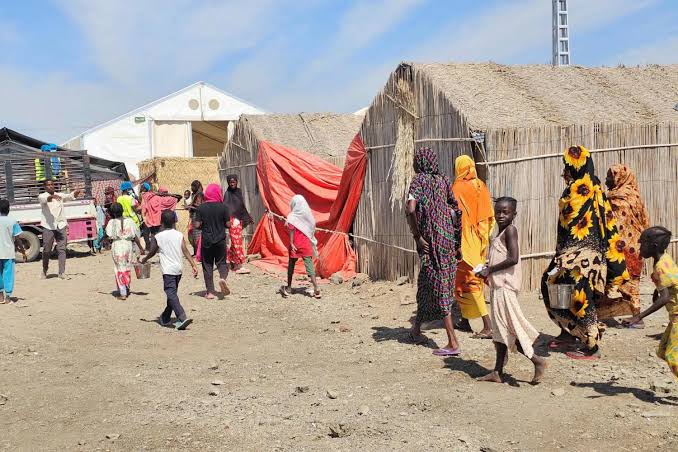
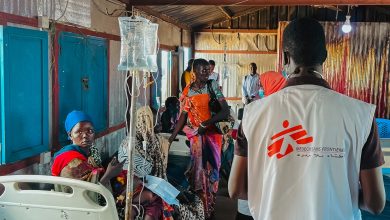
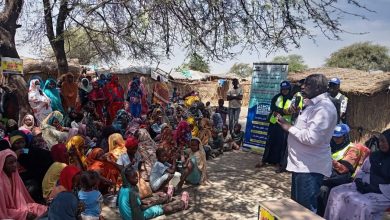
Thousands of displaced people in Sudan’s Blue Nile State are entering the rainy season under extremely difficult and harsh conditions. Families are living in informal gathering sites, open areas, and temporary shelters such as tents that are unable to withstand changing weather conditions and are frequently damaged during the rainy season. At the same time, they face daily shortages of food, medicine, and other essential supplies.
As fighting intensifies between the Sudanese Armed Forces and the Rapid Support Forces (RSF), along with their ally, the Sudan People’s Liberation Movement-North (SPLM-N), displacement continues on a large scale from the localities of Kurmuk, Bao, and Geisan toward Damazin. According to the International Organization for Migration (IOM), Damazin alone is hosting approximately 31,035 displaced people.
Catastrophic Conditions
Siraj Al-Tayeb, a displaced resident in Al-Roseires, said that although people had managed to cope with ordinary hardships despite worsening crises, the onset of rains and the expected increase in rainfall place everything at risk.
“Hundreds of families are living under trees, while others remain completely exposed because shelter materials are unavailable,” he said.
Al-Tayeb explained that most shelters are built from temporary materials such as thatched huts, tents, burlap structures, and tree branches. These shelters cannot withstand severe weather conditions for long and often collapse during the first heavy rainstorms.
He stressed the urgent need for humanitarian assistance, including food supplies, medicines, plastic sheeting, and mosquito nets, noting that many women and men suffer from chronic illnesses and malnutrition, while displacement sites lack permanent medical clinics to care for critical cases.
Multiple Crises
Ibrahim Hamid, another displaced resident in Al-Tadamon area, said that thousands urgently require shelter, food, and medical supplies, especially after dozens of people experienced severe exhaustion and had to be transferred to health facilities for emergency treatment.
He noted that hundreds remain without tents and continue living in the open due to the lack of shelter materials, making them particularly vulnerable to disease outbreaks during the rainy season.
“With the continued arrival of people fleeing the horrors of war, the situation demands urgent solutions and international efforts. It cannot tolerate further delays,” he said.
Hamid added that interventions by national organizations have been insufficient to meet the needs of newly displaced people, who lack even the most basic necessities, including food, medicine, cooking utensils, clothing, soap, sanitation supplies, and psychosocial support.
Harsh Living Conditions
Ali Hajo, a member of the Blue Nile Civil Society Initiative, stated that more than 150,000 people have been displaced from southern areas of the region to the cities of Damazin, Al-Roseires, Quneis East, Wad Al-Mahi, and other locations due to ongoing fighting.
He pointed out that thousands of displaced people from Geisan locality and villages near the Ethiopian border face extremely harsh humanitarian conditions, including shortages of food, medicine, clean drinking water, and the additional challenges brought by the rainy season.
According to Hajo, displaced people are sleeping in the open, while women and children face particularly severe hardships amid the absence of adequate humanitarian assistance and shortages of food, water, and healthcare services.
He urged the international and regional communities to exert serious pressure on the parties to the conflict in order to achieve an immediate ceasefire or establish a comprehensive humanitarian truce that would allow aid to reach affected populations and alleviate civilian suffering.
Urgent Needs
Blue Nile State Health Minister Jamal Nasser said that the situation requires immediate intervention to provide assistance to displaced people, particularly healthcare services, and that the shelter and humanitarian needs exceed the capacity of the regional government.
He called on international, regional, and national organizations to urgently provide comprehensive shelter assistance as the rainy season begins.
Nasser explained that attacks and clashes, particularly in the strategically important Kurmuk area, forced residents to flee their homes and villages out of fear of violations by armed groups.
He added that the region already hosts ten displacement camps around Damazin that existed before the recent Kurmuk fighting, as well as people previously displaced from Khartoum, Al Jazirah, and Sennar states, long-term displaced persons from earlier conflicts in western Sudan, and returnees from Ethiopia and South Sudan under voluntary repatriation programs.
Lack of Protection
The International Organization for Migration reported that 72 percent of newly displaced people in Blue Nile State are living in informal gathering sites and open areas.
The organization noted that people residing in such locations lack adequate protection and access to water sources and healthcare facilities, exposing women and girls to heightened risks of gender-based violence and exploitation. Women and girls account for 53 percent of the displaced population.
The organization further reported that 24 percent of displaced persons are between the ages of 6 and 17, 53 percent are between 18 and 59 years old, and 12 percent are children under six years of age.
Hunger and Deaths
Hassan Aboud, a volunteer working in displacement camps in Blue Nile State, warned that hunger is increasingly threatening camp residents, who already face severe hardship due to food shortages and soaring prices.
He expressed concern that deadly disease outbreaks could spread further during the rainy season.
“Most families now survive on only one meal a day,” he said, adding that malnutrition has reached unprecedented levels and that deaths have occurred among children, breastfeeding mothers, pregnant women, elderly people, and the sick.
Aboud also noted that some displaced families have been forced to leave schools and buildings suffering from dangerous structural cracks and damage for fear of collapse. Heavy rains in the coming days may leave them with no option but to remain outdoors, further worsening their suffering.
Rising Displacement
As fighting expands, the number of displaced people in Blue Nile State has increased by 21 percent compared to May.
According to the International Organization for Migration, approximately 59,742 people were displaced between January 11 and May 21. Half of them are children under the age of 18. Women account for 53 percent of the displaced population, compared to 47 percent men.
The organization reported that 30,025 people fled from areas in Kurmuk locality, 19,507 from Bao locality, and 10,210 from Geisan locality. They have dispersed across seven localities within the state, while Damazin locality alone has received 31,035 displaced persons.