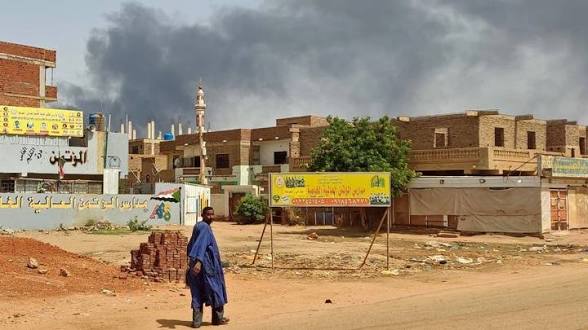
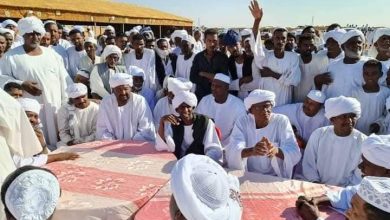
Amid immense hardship and suffering, displaced Sudanese in North Kordofan State are struggling to meet their daily needs under continued drone attacks, while facing a worsening food crisis and severe shortages of essential services such as electricity and clean water.
As a result, living conditions have deteriorated dramatically, tightening their grip on the lives of displaced people across the Kordofan region.
Speaking to Mashawir, displaced residents in El Obeid said that their options have become increasingly limited as voices from the stricken city grow louder in demanding urgent intervention to alleviate their suffering, particularly for families living under siege-like conditions.
Suleiman Fadl, a resident of the Al-Shaymaa Center for Displaced Persons, told Mashawir that displaced people are experiencing one of the worst humanitarian crises imaginable.
“Those who survive the drone attacks are still not spared the consequences of hunger, the lack of medicine, and the severe shortage of safe drinking water,” he said, stressing the need for urgent intervention and greater efforts to ensure the delivery of food supplies.
Fadl explained that he and his family were displaced from the city of Dilling in South Kordofan State and eventually settled in a camp housing thousands of displaced families, most of whom fled conflict-affected areas.
“In reality, displaced people in these camps face complex challenges due to the escalation of drone attacks,” he added. “Many are now on the brink of death as their living conditions worsen because they lack access to food, drinking water, and healthcare.”
For his part, Moataz Issa, a displaced resident from West Kordofan State, told Mashawir: “After our money ran out, I was forced to work as a vegetable vendor. Unfortunately, the earnings are very low and are not enough to secure even one meal a day. My situation reflects that of all displaced people in the camp.”
He added that many displaced women have been compelled to work as domestic workers or tea sellers in local markets in order to provide for their children, who face the growing threat of malnutrition.
Issa further noted that conditions continue to deteriorate day after day as drone strikes intensify, increasing feelings of fear, anxiety, and despair among displaced communities.
“Endurance has become extremely difficult,” he said. “As a result, many people who fled the horrors of armed conflict are now considering searching for a safer refuge elsewhere.”