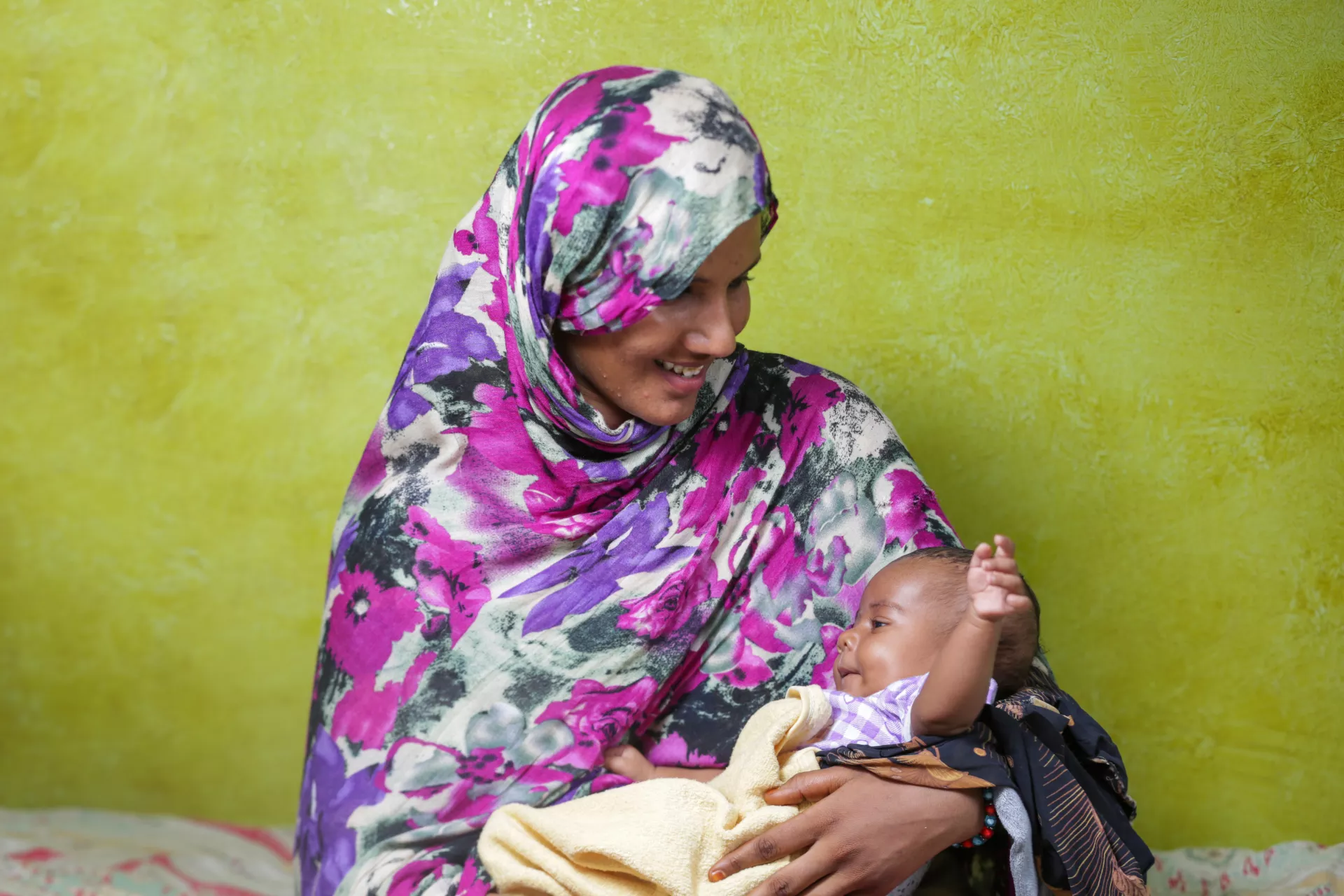
Near a mosque in the Al-Azhari district of Khartoum, a passerby was drawn by the loud cries of a baby at dawn. Approaching cautiously, he discovered an infant girl abandoned inside a plastic bag, left alone to endure the scorching heat and an uncertain fate. Too young to tell her story or explain why she had been left there, her desperate cries from hunger were enough to raise troubling questions about the growing phenomenon of newborn abandonment in Sudan. Many of these infants are born outside marriage and left on roadsides or in deserted places, becoming victims of the war’s far-reaching social and economic consequences.
The scale of the problem is reflected in the rising number of reported cases across the three cities of the capital—Khartoum, Khartoum North (Bahri), and Omdurman—as well as in other Sudanese towns and displacement camps. According to doctors and human rights advocates, more than 100 abandoned newborns were found in the capital within just 45 days, while approximately 230 cases were recorded in other cities over a three-month period.
Several volunteer medical organizations and associations have warned of the grave risks facing children of unknown parentage under wartime conditions. They have documented deaths among these infants due to hunger and the absence of maternal care, while hundreds of others have suffered from illness.
Poverty and Family Breakdown
Wijdan Al-Sanousi, a member of the Al-Amal Organization for Social Care, said that although births outside marriage are not a new phenomenon, the number of such cases has increased dramatically during the war due to rising poverty and the breakdown of family structures.
She explained that the number of children of unknown parentage has risen sharply in Khartoum and several other Sudanese states. These infants are often abandoned near mosques, in public streets, hospitals, or deserted buildings.
Al-Sanousi added that the war has forced many local organizations providing healthcare, psychological support, and social services to suspend their operations. She also noted that the Maygoma Orphanage in Khartoum, which cared for children of unknown parentage, was severely damaged and looted during the conflict.
Children Born of Rape
Sudan’s Minister of Human Resources and Social Development, Moatasim Ahmed Saleh, said that many children have been born to girls who were raped in areas previously controlled by the Rapid Support Forces (RSF), particularly in Khartoum State, central Sudan, and among refugees in neighboring countries.
He said these children are currently receiving care in specialized units within several hospitals while authorities work to determine appropriate long-term arrangements.
Saleh also revealed that hundreds of children have lost parental support, including 350 children in the Al-Affad displacement camp for people displaced from El Fasher, the capital of North Darfur, where thousands of civilians were reportedly killed during attacks.
He said the Ministry plans to establish shelters for these children and provide them with vocational training or educational opportunities. The Ministry is proceeding cautiously with foster care placements to avoid causing psychological trauma should one or both biological parents later be identified.
The Displacement Crisis
Abubakar Al-Hadi, a member of the Protection Network in displacement camps in the town of Tawila, about 64 kilometers from El Fasher, said volunteers have recently found increasing numbers of abandoned newborns in streets and around public facilities within displacement sites.
He noted that between March and May, around 12 babies born outside marriage were found, while other cases likely went unreported or undocumented.
Al-Hadi described the issue as a complex humanitarian and social crisis extending beyond displacement camps to other war-affected communities across Sudan.
He warned that worsening humanitarian conditions, deepening poverty, severe economic hardship, and fear of social stigma are driving some mothers to abandon their newborns.
Sexual Violence and the Need for Protection
Social and psychological researcher Tamadur Khidr said the war has contributed to a growing number of children being born outside marriage as a result of widespread conflict-related sexual violence against women and girls, particularly in areas affected by armed conflict.
She stressed the urgent need to raise public awareness about the plight of children without parental care, especially as the number of pregnancies resulting from serious sexual violence continues to increase while state institutions remain preoccupied with the ongoing war.
Khidr called for comprehensive social programs aimed at strengthening family cohesion and addressing the underlying causes of children being born outside stable family structures. She warned that ignoring unwanted pregnancies until childbirth contributes to the increasing number of abandoned infants.
She also emphasized that the closure of the Maygoma Orphanage, which previously received dozens of abandoned children each day in Khartoum, has created a serious protection gap. She called for effective alternatives, including placing children with capable foster families, to ensure they receive proper care from infancy and to reduce the risk of abandonment, neglect, and preventable deaths among newborns left on the streets.