Initiatives Under the Spotlight: Field Study Reveals Strong Desire for Peace Among Sudanese
Nairobi – Report by Siddig Al-Dakhri
Amid the sound of gunfire and the relentless violence that has come to dominate daily life in Sudan, other voices continue to call for an end to the war and the opening of a path toward peace. Civil society initiatives, mediation efforts, and diplomatic engagements remain active in the search for a political solution capable of ending the conflict and easing the suffering of millions of Sudanese affected by the war.
Despite the complexity of Sudan’s political and humanitarian landscape, hopes remain that these efforts will evolve into practical steps that bring an end to the fighting, pave the way for comprehensive peace, restore security and stability, and offer the country an opportunity for recovery and reconstruction.
Among these efforts are civic initiatives seeking to bring the voices of ordinary Sudanese to the peace table, based on the belief that no settlement can succeed unless it reflects the will of the people.
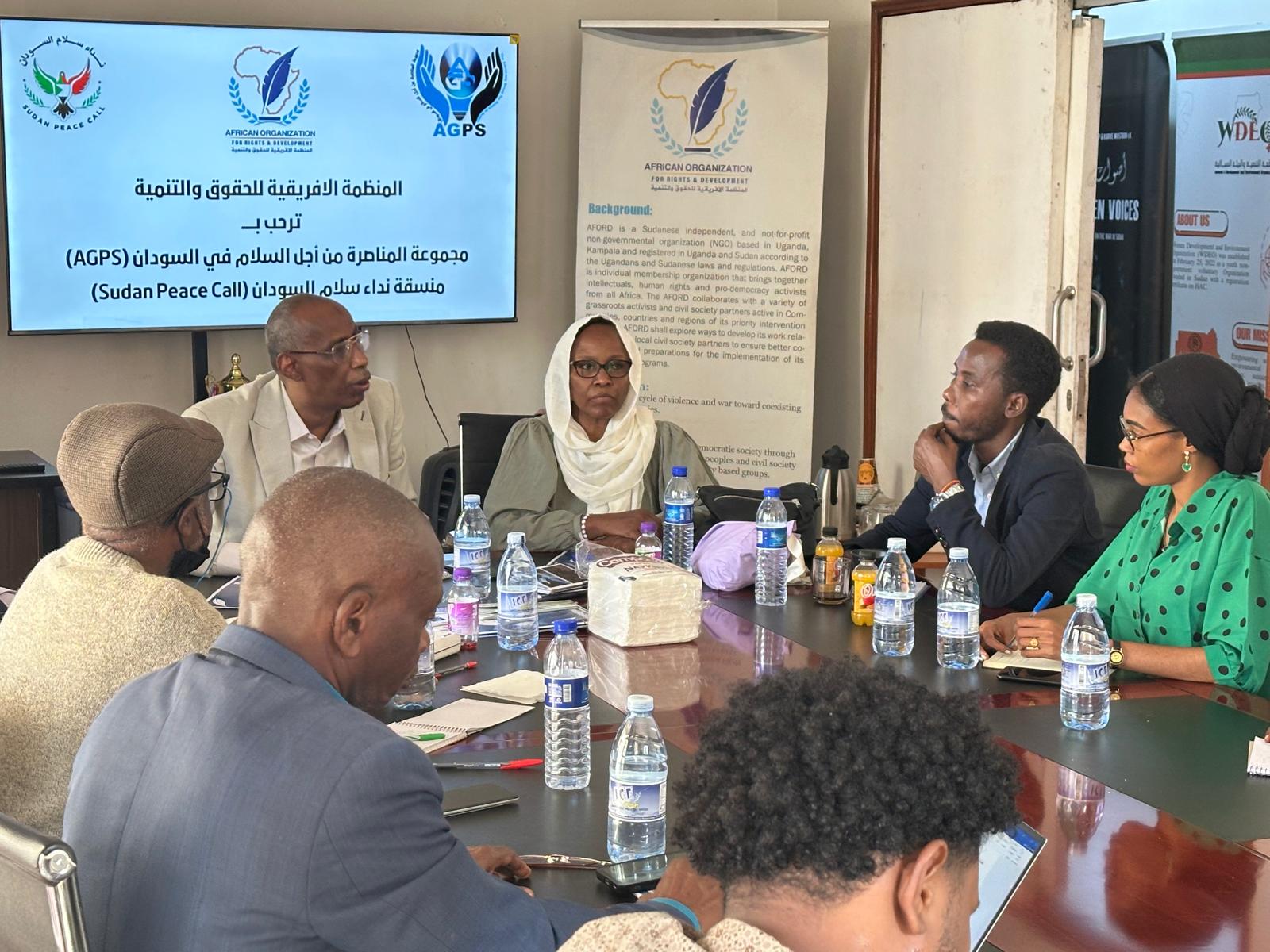
One such initiative, Sudan Peace Call, is developing a peace vision based on a comprehensive field study conducted among Sudanese both inside the country and abroad to assess public perceptions of the war, peace, and Sudan’s future.
Speaking to Mashaweer, initiative member Sawsan Juma said the project emerged after more than a year and a half of discussions on how to move from the language of war to the language of peace.
“We realized that the dialogue had remained confined to political elites,” she said. “Therefore, we turned to grassroots communities and asked Sudanese inside the country, in refugee camps, and across the diaspora about their views on war and peace.”
Juma explained that the study aims to develop a peace narrative that reflects the aspirations of Sudanese citizens rather than those of political elites alone.
She added that the preliminary findings had already been discussed with several Sudanese organizations in Kampala and would be followed by further consultations before the final report is released.
Similarly, Asmaa Ahmed Al-Naeem, Executive Director of the Advocacy for Peace in Sudan Group and Executive Coordinator of the initiative, told Mashaweer that Sudan Peace Call is not intended to compete with existing peace initiatives but rather to complement ongoing efforts to end the conflict.
“We cannot achieve lasting peace without involving ordinary Sudanese,” she said. “Solutions designed without the participation of the people will not endure. We wanted to understand what Sudanese themselves want.”
She explained that the study followed a scientific research methodology, covering all 18 Sudanese states and more than 80 percent of the country’s localities, in addition to Sudanese living in refugee-hosting countries and across the diaspora. A total of 1,668 respondents participated.
According to Al-Naeem, the findings will be translated into policy papers and strategic recommendations that can support organizations and initiatives working on peacebuilding in Sudan.
Strong Public Support for Peace
The study found that 93.2 percent of Sudanese support peace negotiations, a result that participants described as clear statistical evidence challenging claims used to justify the continuation of the war in the name of the Sudanese people.
According to the initiative, the research was based on 1,668 online questionnaires, 30 in-depth qualitative interviews, and a stratified random sample covering all 18 Sudanese states, as well as Sudanese communities in Chad, Egypt, South Sudan, Uganda, the Gulf states, and several other countries.
The findings showed that 74.3 percent support an immediate ceasefire, while 88.3 percent of those who favor a negotiated settlement expressed willingness to actively support such a process. Central Darfur State recorded the highest level of support for peace at 94.7 percent.
The study also identified competition over power and wealth as the leading cause of the conflict, followed by the legacy of the former regime, marginalization, and foreign interference.
It found that 80.9 percent of respondents hold both branches of Sudan’s military establishment responsible for the war, 79.2 percent blamed the former regime, and 73.7 percent attributed responsibility to armed movements.
Confidence in previous peace agreements remained extremely low, with only 14.4 percent expressing high confidence, while 9 percent said they had no confidence in such agreements.
Expert Perspective
Commenting on the findings, civil affairs expert and peace researcher Hatem Younis said Sudan now stands at a critical crossroads as the conflict enters its fourth year, with growing diplomatic activity taking place alongside continued military operations.
Speaking to Mashaweer, Younis said regional and international diplomatic initiatives represent one of the strongest indications that efforts to reach a political settlement are intensifying. However, he stressed that their success will ultimately depend on whether both warring parties are prepared to make genuine concessions and acknowledge that a military victory is no longer achievable.
He added that initiatives grounded in rigorous scientific research reflecting the views of Sudanese citizens can provide meaningful support to the peace process.
“These initiatives do not speak on behalf of any political faction,” he said. “They communicate what Sudanese themselves are saying. When a scientific study shows that more than 93 percent of the population wants peace, that is a message that deserves serious attention from all parties.”
Younis concluded that the findings demonstrate an overwhelming popular consensus in favor of peace and could serve as a solid foundation for any credible political process if properly considered during negotiations and policymaking.
He emphasized that sustainable peace cannot be achieved through political agreements alone but requires broad public participation and the effective use of research that reflects citizens’ priorities and aspirations for Sudan’s future.